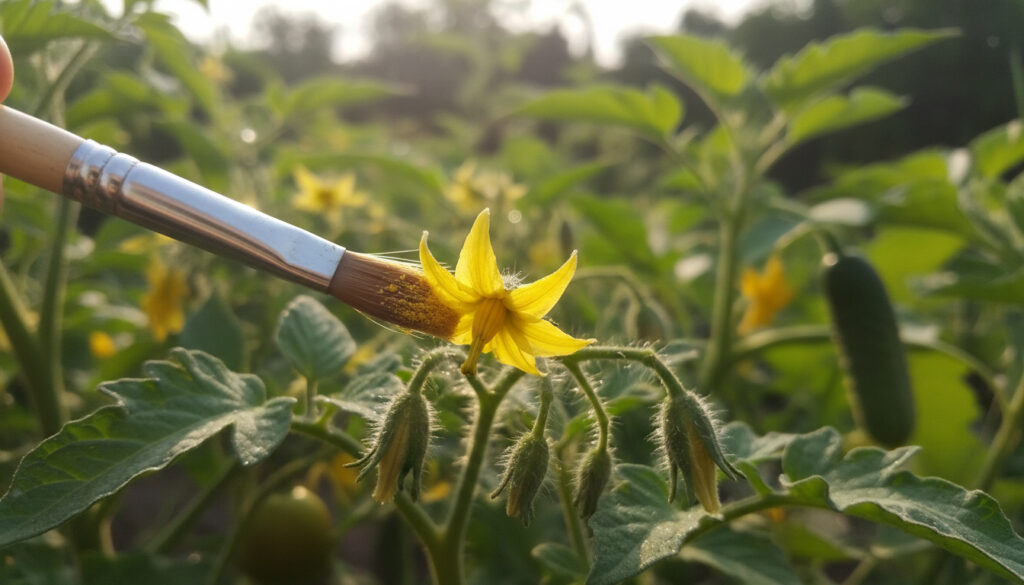
How to Hand Pollinate Flowers – Step-by-Step Guide for Vegetables
Hand pollination offers a reliable solution when natural pollinators remain absent. Also called manual pollination, this technique allows growers to transfer pollen between flowers using simple tools like paintbrushes, cotton swabs, or even electric toothbrushes. The method proves particularly valuable for tomatoes, squash, cucumbers, peppers, and strawberries grown in greenhouses, indoor gardens, or areas experiencing declining bee populations.
The process mimics the vibration and movement of bees to ensure fertilization occurs. Without this intervention, many plants produce small, shriveled, or absent fruits due to incomplete pollination. By taking control of the reproductive process, gardeners secure higher yields and larger fruit sizes regardless of external environmental conditions.
While the technique varies between plant types, the core principle remains consistent: moving viable pollen from the male reproductive organs to the female stigma at the optimal time of day. Understanding these distinctions separates successful harvests from disappointing yields.
How Do You Hand Pollinate Flowers?
Boost yields indoors or when bees are scarce
Q-tip, soft brush, toothpick, or electric toothbrush
Tomatoes, squash, peppers, cucumbers, strawberries
Morning hours when flowers first open
Successful hand pollination requires distinguishing between self-pollinating plants and those with separate male and female flowers. Self-pollinating varieties like tomatoes and peppers contain both reproductive parts within a single bloom, requiring only vibration or gentle agitation to release and distribute pollen. In contrast, cucurbits such as squash and cucumbers produce distinct male and female flowers, necessitating physical transfer of pollen between blooms.
- Mimics natural bee activity to ensure complete fertilization of ovules
- Prevents deformed or undersized fruits caused by insufficient pollen transfer
- Essential for enclosed environments like greenhouses where insects cannot access flowers
- Executes with common household items without specialized equipment
- Increases both fruit quantity and size for multiple vegetable crops
- Supports production during periods of inclement weather that keep bees inactive
- Critical for cucurbit crops when local pollinator populations decline
| Method | Tools Required | Ideal Plants | Optimal Timing |
|---|---|---|---|
| Shaking/Tapping | None or bare fingers | Tomatoes, Peppers | 6-11 AM |
| Brush Swirl | Soft paintbrush | Squash, Cucumbers | Morning |
| Q-tip Transfer | Cotton swab | Peppers, Strawberries | Morning |
| Vibration Technique | Electric toothbrush | Tomatoes, Eggplants | Noon-3 PM |
| Direct Flower Transfer | Whole male flower | Squash, Pumpkins | Early Morning |
| Flicking Motion | Fingers | Tomatoes | 8-10 AM |
What Tools Do I Need for Hand Pollination?
The effectiveness of manual pollination depends largely on selecting appropriate tools for the specific flower structure. Different implements offer varying levels of precision and pollen-carrying capacity.
Can You Use a Q-Tip to Pollinate Flowers?
Cotton swabs serve as effective pollen transfer devices, particularly for smaller flowers like peppers and strawberries. The fibrous texture captures pollen grains when gently swirled inside the bloom. If pollen fails to adhere properly, lightly moistening the swab with distilled water improves collection, though excessive moisture can cause clumping.
Paintbrush for Pollination
Soft-bristled artist paintbrushes function similarly to bee hairs, collecting pollen from male anthers and depositing it onto female stigmas. Brushes work exceptionally well for squash and cucumber flowers, allowing precise application without damaging delicate reproductive structures. Fine-tipped brushes enable targeted pollination in crowded plantings.
Alternative Methods and Specialized Tools
Electric toothbrushes provide mechanical vibration that simulates bee wing movement, causing pollen release in self-pollinating plants like tomatoes. Toothpicks offer precision for tiny flowers, while gardening gloves protect both the gardener’s hands and the plant’s tissues during handling. Some growers use the entire male flower as an applicator, peeling back petals to expose the pollen-laden anthers.
Clean all tools thoroughly between different plant varieties to avoid unintended cross-pollination. Residual pollen from one squash variety transferred to another can result in hybrid fruits with unpredictable characteristics. A quick wipe with rubbing alcohol or soap and water suffices between species.
Research from DripWorks confirms that simple household items match the effectiveness of specialized garden equipment when used correctly.
Best Time to Hand Pollinate and Signs of Success
Timing significantly impacts pollen viability and stigma receptivity. Performing the technique at the wrong hour or during adverse weather conditions wastes effort and fails to set fruit.
Best Time of Day to Hand Pollinate
Morning hours between 6 AM and 11 AM provide the optimal window for most vegetables. During these hours, flowers have recently opened and pollen remains fresh and viable. Temperatures exceeding 85°F or high humidity levels cause pollen to become sticky or nonviable, reducing success rates. Peppers present a notable exception, showing increased receptivity between noon and 3 PM.
How Do You Know If Hand Pollination Worked?
Successful fertilization becomes apparent within days. The most immediate indicator involves petal drop, where the flower sheds its petals within 24-48 hours after successful pollen transfer. Subsequently, the ovary begins swelling, visible as fruit development within three to seven days. Failed attempts result in flower withering without fruit formation, requiring repeated attempts with new blooms.
Colorado State University Extension recommends repeating the pollination process three times weekly for optimal fruit set, particularly for tomatoes and peppers with extended flowering periods. This schedule accounts for the brief window of peak receptivity for individual flowers.
According to Living Towers, consistent timing proves as critical as technique selection for maximizing yields.
Hand Pollinating Tomatoes, Squash, and Cucumbers
Different plant families require distinct approaches based on their floral anatomy. Understanding these differences prevents the common error of applying uniform techniques across incompatible species.
How to Hand Pollinate Tomatoes
Tomatoes possess perfect flowers containing both male and female parts. Gardeners can simply flick the flower stem sharply with a finger to release pollen, or gently shake the entire plant. Alternatively, inserting a soft brush or cotton swab into the blossom and swirling it around ensures pollen contacts the stigma. Electric toothbrushes applied to the flower base provide vibration that mimics bee activity effectively.
How to Hand Pollinate Squash and Cucumbers
Cucurbits require identifying separate male and female flowers. Male flowers attach to long, thin stems and contain pollen-producing anthers at the center. Female flowers display a miniature fruit or swelling at the base of the bloom and contain a central pistil. To pollinate, remove a male flower, peel back the petals to expose the anthers, and touch it directly to the center of a female flower. Alternatively, collect pollen with a brush or cotton swab from the male and apply to the female stigma.
Rough handling damages delicate stigmas and anthers, rendering flowers incapable of reproduction. Apply minimal pressure when transferring pollen, particularly with brush techniques. Damaged flowers cannot recover, eliminating that fruiting opportunity.
Bonnie Plants provides detailed visual guidance on distinguishing between male and female squash flowers, noting that cross-pollination between these separate flowers remains essential for fruit development in cucurbits.
The Hand Pollination Cycle
Understanding the chronological progression from flower to fruit helps gardeners time their interventions appropriately.
- Flower bud opens: Typically occurs in early morning when temperatures moderate and light levels increase.
- Pollinate 8-10 AM: Window of peak pollen viability and stigma receptivity for most vegetable crops.
- Petal drop: Within 24-48 hours, successfully pollinated flowers shed petals, indicating fertilization occurred.
- Fruit swell: Visible enlargement of the ovary begins within 3-7 days after successful pollen transfer.
- Harvest: Mature fruit readiness varies by species, ranging from weeks to months depending on the vegetable.
Botanical Interests notes that parthenocarpic varieties, such as certain seedless cucumbers, develop fruit without pollination entirely, though these remain uncommon in home gardens.
Established Facts and Persistent Uncertainties
- Hand pollination effectively fertilizes both self-pollinating and dioecious vegetable crops
- Morning hours provide highest pollen viability for most species
- Cucurbits strictly require transfer from male to female flowers
- Gentle mechanical vibration successfully mimics bee pollination behavior
- Enclosed growing environments necessitate manual intervention for fruit set
- Precise success rates without visual confirmation of fruit set
- Optimal repeat intervals for every specific cultivar and hybrid variety
- Long-term physiological effects of repeated mechanical handling on plant health
- Threshold levels of pollen transfer required for full versus partial fruit development
Why Gardeners Turn to Hand Pollination
The practice addresses several modern agricultural challenges. Declining wild pollinator populations, particularly in urban environments, leave flowers unpollinated. Greenhouse and indoor growing operations physically exclude bees and other beneficial insects, making manual intervention mandatory for fruit production. Additionally, extreme weather events that keep bees inactive during critical flowering periods necessitate human assistance to maintain yields.
Hand pollination provides genetic control, allowing growers to isolate specific varieties and prevent unwanted cross-breeding between different cultivars. This precision proves valuable for seed saving and maintaining heirloom varieties. The technique also enables production in controlled environments where pollinator maintenance proves impractical.
For those interested in precise culinary applications of home-grown produce, How to Make French Toast – Easy 15-Minute Recipe offers complementary guidance on utilizing fresh garden harvests.
Expert Perspectives on Manual Pollination
Timing and tool selection determine reliability. Pollen viability peaks during morning hours when humidity remains moderate, and gentle vibration techniques consistently outperform haphazard brushing for self-pollinating species.
— Colorado State University Extension, Pueblo County
University extension services consistently emphasize the importance of distinguishing between flower types before attempting pollination. Misidentification of male and female blooms in cucurbits represents the most frequent error among novice gardeners.
Getting Started with Hand Pollination
Mastering hand pollination requires minimal investment and yields significant returns in fruit production. Begin with a single tomato plant to practice vibration techniques before advancing to cucurbits with their separate male and female flowers. Monitor weather conditions to ensure morning applications when pollen remains viable. With consistent application three times weekly, gardeners secure harvests regardless of pollinator availability or environmental constraints.
For additional technical resources on communication and translation needs, see Translate Vietnamese to English – Best Free Tools and Apps 2025.
Frequently Asked Questions
What plants need hand pollination?
Tomatoes, peppers, squash, cucumbers, melons, and strawberries benefit most. Cucurbits like squash and cucumbers require it when grown without bee access, while self-pollinating plants like tomatoes produce better yields with manual assistance indoors.
What are the benefits of hand pollination?
The technique ensures fruit production in greenhouses, during bad weather, or in areas with few pollinators. It increases fruit size and quantity while allowing genetic control over cross-pollination between varieties.
Do I need male and female flowers for all plants?
No. Only cucurbits like squash, cucumbers, and melons have separate male and female flowers. Tomatoes, peppers, and strawberries have perfect flowers containing both reproductive parts, requiring only vibration or gentle agitation.
Can I hand pollinate indoors?
Yes. Indoor and greenhouse growing represents the primary use case for hand pollination, as these environments lack natural wind and insect pollinators. The technique proves essential for fruit set in enclosed spaces.
What are common mistakes when hand pollinating?
Rough handling damages flowers, polling during hot or humid conditions reduces viability, and failing to distinguish male from female flowers in cucurbits prevents fruit set. Using dirty tools can also cause cross-pollination between varieties.
How often should I repeat hand pollination?
Colorado State University Extension recommends performing the technique three times weekly throughout the flowering period to ensure all blooms receive adequate pollen transfer during their brief receptive window.
More related posts
 Henry Thomas: Biography, Movies, Net Worth, and Personal Life
 Mark Harmon: NCIS Exit, Net Worth, and Personal Life
 YNW Melly: Bond Denied in 2026, 2027 Retrial, Death Penalty
 NZD to AUD: Current Rate, History & Conversion Tips
 Moses Itauma: Undefeated British Heavyweight Bio & Record
 Kai Kara-France: Removed from UFC Rankings & Full Profile
 Leslie Bibb: Relationship and Career Facts
