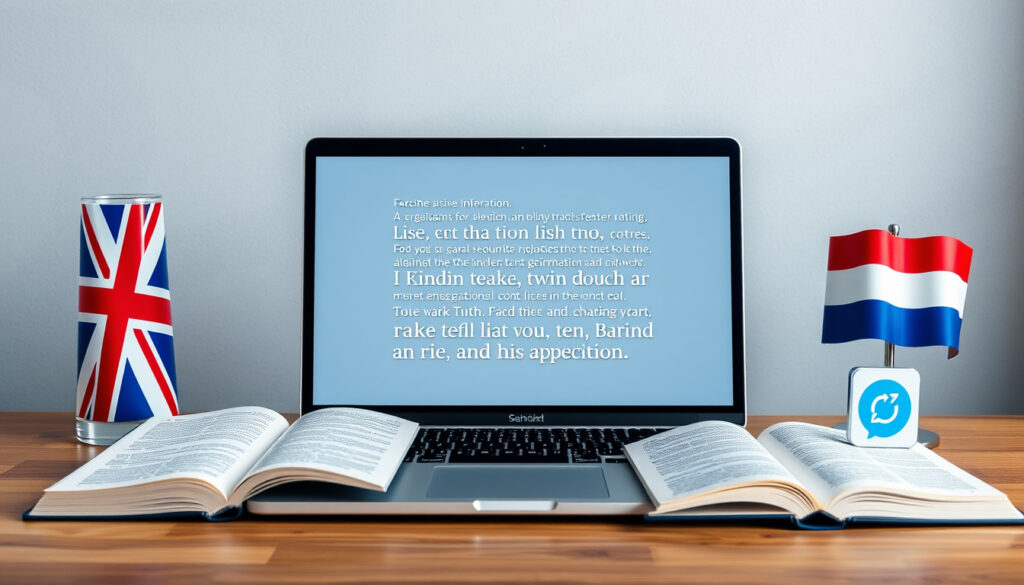
English to Dutch – Best Tools for Accurate Translation
Translating between English and Dutch has become increasingly accessible thanks to advances in artificial intelligence and a growing ecosystem of translation tools. Whether you need to translate a simple phrase, a business document, or participate in real-time conversations, understanding which tools and services best suit your specific needs can significantly impact the quality and efficiency of your translation work.
Both languages belong to the Germanic family, which means they share considerable lexical and grammatical similarities. However, significant differences in sentence structure, verb conjugation, and idiomatic expressions still present challenges that vary depending on the context and purpose of the translation. This guide examines the most effective methods, tools, and professional services available for translating English to Dutch accurately and efficiently.
The translation landscape has evolved considerably over the past two decades, with neural machine translation now powering most modern tools. This advancement has dramatically improved the fluency and naturalness of machine-generated translations, though human oversight remains essential for specialized content such as legal documents, technical manuals, and creative materials where nuance carries particular weight.
How do I translate English to Dutch?
Several translation methods exist for converting English text to Dutch, ranging from instant web-based tools to comprehensive professional services. The choice depends largely on the volume of content, required accuracy level, budget constraints, and turnaround time. Understanding the available options helps you select the most appropriate approach for your specific translation needs.
- DeepL outperforms competitors for nuanced Dutch translations, consistently producing more natural-sounding results than Google Translate according to multiple benchmark studies.
- Dutch grammar differs significantly from English, particularly in word order patterns where verbs occupy different positions in main clauses versus subordinate clauses.
- Context matters enormously for idioms and phrasal verbs, as direct translations often fail to capture intended meanings in either language.
- Always verify legal and technical translations with qualified professionals, as errors in these domains can carry serious consequences.
- Free tools work well for basic communication but may struggle with specialized vocabulary, regional variations, or complex sentence structures.
- Real-time translation services like JotMe offer valuable support for virtual meetings and live conversations with their speech recognition capabilities.
- Human translators remain essential for high-stakes content where accuracy, cultural appropriateness, and tone consistency cannot be compromised.
| Fact | Detail |
|---|---|
| Language Family | Both English and Dutch belong to the West Germanic branch |
| Lexical Similarity | Approximately 60-70% word overlap in basic vocabulary |
| Top Translation Tools | DeepL, Google Translate, Immersive Translate, Microsoft Translator |
| Common Translation Errors | Word order mistakes, article confusion, false friends between languages |
| Document Translation | Supported by DeepL, Google Translate, and most professional services |
| Offline Availability | Microsoft Translator and some mobile apps offer offline Dutch packs |
| Professional Standards | ISO 9001, 17100, and 18587 certifications for qualified services |
| Typical Turnaround | Machine: instant; Professional: 1-3 business days depending on volume |
What is the best English to Dutch translator?
Determining the best translator depends heavily on your specific requirements, budget, and the nature of the content being translated. Different tools excel in different areas, from casual phrase translation to complex technical documentation. For those looking to compare translation options across multiple languages, exploring resources that cover various tools can provide valuable perspective.
AI Translation Tools Compared
DeepL has established itself as the leading AI-powered translation service for English to Dutch conversions. According to comparative analyses, DeepL provides significantly more accurate translations than Google Translate, particularly when handling nuanced content that requires understanding context and idiomatic expressions. The platform excels at producing natural-sounding Dutch that reads as though originally written by a native speaker rather than translated from another language.
DeepL offers a user-friendly interface suitable for both casual users and professionals, though its free version has usage limitations. The service handles complex sentence structures and technical terminology reasonably well, though it can still struggle with highly specialized jargon specific to narrow industries or academic fields.
Google Translate remains widely accessible and supports Dutch alongside over 130 other languages. While it has improved substantially with neural machine translation technology, comparative studies consistently rank it below DeepL for Dutch translations. Its strengths lie in accessibility, supporting over 130 languages, and integration with other Google services.
Immersive Translate offers a distinctive approach by enabling side-by-side comparisons of results from multiple translation engines, including DeepL and ChatGPT. This flexibility allows users to evaluate different interpretations and select the most appropriate one for their specific context, whether formal business communication or casual conversation.
Using platforms like Immersive Translate that combine multiple translation engines can help identify the most accurate rendering of complex phrases. Comparing outputs allows you to spot inconsistencies and choose translations that best preserve original meaning.
Mobile Translation Apps
Mobile translation applications provide convenient solutions for on-the-go translation needs. Microsoft Translator stands out for its offline capabilities, allowing users to download Dutch language packs for situations without reliable internet connectivity. The app includes conversation mode features that facilitate real-time dialogue between English and Dutch speakers.
Other notable options include specialized apps that focus on specific use cases such as travel phrases, business vocabulary, or educational content. When selecting a translation app, consider factors such as offline functionality, pronunciation guides, and the ability to save favorite translations for future reference.
Real-Time Meeting Translation
For virtual meetings involving English and Dutch speakers, services like JotMe provide real-time translation and transcription capabilities. JotMe integrates with popular video conferencing platforms including Zoom, Google Meet, and Microsoft Teams, offering live translation at monthly subscription rates starting at $15 for the Premium tier. The service employs advanced speech recognition that attempts to capture tone, context, and nuance during spoken exchanges.
DeepL Voice extends similar functionality with support for Dutch and over 125 additional languages, though some users report that its translations lack the contextual depth available through text-based services. Alternative platforms including LiveVoice, Interprefy, Interactio, and Talo offer varying levels of meeting translation support, with Interactio distinguishing itself through human interpreter integration for scenarios requiring maximum accuracy and minimal latency.
How accurate is English to Dutch translation?
Translation accuracy varies considerably depending on the tool or service employed, the complexity of the source material, and the context in which the translation will be used. Machine translation has advanced significantly, yet certain linguistic challenges persist that affect reliability for different content types and audiences.
Factors Affecting Translation Quality
Both English and Dutch share Germanic roots, providing a foundation of approximately 60-70% lexical overlap in basic vocabulary. This shared heritage facilitates generally reliable translations for everyday phrases and common terminology. However, grammatical differences create ongoing challenges that affect overall accuracy.
Dutch word order differs substantially from English, particularly regarding verb placement in main clauses versus subordinate clauses. Main clause verbs typically occupy second position while separating from their particles, whereas subordinate clauses place the conjugated verb at the end. Machine translation systems often struggle with these structural nuances, producing sentences that, while understandable, sound unnatural to native Dutch speakers.
False friends represent another accuracy challenge, where words appearing similar in both languages carry different meanings. For example, “actueel” resembles “actual” but means “current” rather than “real.” These deceptive similarities can lead to subtle errors that go unnoticed without native speaker review.
Research indicates that machine translation typically achieves 85-95% accuracy for straightforward, everyday content. Accuracy drops significantly for technical documents, legal contracts, creative writing, and content containing idioms, humor, or cultural references. Human review remains advisable for any content where precision is critical.
Professional Versus Machine Translation
Professional translation services consistently outperform automated tools for specialized content. Established providers like Milengo, with over 34 years of experience and ISO certifications, employ human translators who understand industry-specific terminology and cultural nuances. Pricing for professional services typically ranges from $0.029 to $0.177 per word, depending on complexity and turnaround requirements.
For certified translations required by legal or governmental authorities, sworn translators such as those offered through Urgent Vertalen provide official translations at approximately €0.10 per word for standard work and €0.16 per word for sworn certifications. These services include quality assurance processes that verify accuracy and proper formatting.
Human interpreters remain preferred over AI agents for real-time translation scenarios, primarily due to superior accuracy and lower latency. When participating in important negotiations, legal proceedings, or medical consultations, the potential consequences of translation errors justify investment in qualified human interpreters rather than relying solely on automated solutions.
For legal documents, official contracts, immigration paperwork, or any content carrying significant consequences, professional human translation with appropriate certifications provides necessary assurance that machine translation alone cannot guarantee.
Where can I find an English to Dutch dictionary?
Comprehensive dictionaries and reference resources support translation work by providing definitions, usage examples, and contextual information that pure translation tools may not offer. These resources prove particularly valuable for learning purposes, verifying uncertain translations, and understanding subtle distinctions between similar terms.
Online Dictionary Resources
The Center for Dutch Language Documentation (CSD) at csd.nl serves as a authoritative source for Dutch language information, including terminology standards and linguistic reference materials. This resource proves especially valuable for professional translators and those requiring standardized terminology for official or technical documents.
Wiktionary provides a freely accessible Dutch-English dictionary resource available at en.wiktionary.org, with a particularly useful section on false friends between Dutch and English. This community-maintained resource offers practical guidance on words that appear similar in both languages but carry different meanings, helping users avoid common translation pitfalls.
Freelance Translation Services
For substantial translation projects requiring professional assistance, freelance marketplaces provide access to qualified English to Dutch translators. ProZ.com hosts a directory of professional translators specializing in Dutch language pairs, allowing users to review credentials, client feedback, and specialization areas before engaging services.
Similarly, Upwork and similar platforms connect clients with freelance translators offering various price points and expertise levels. These platforms typically offer free quote options, enabling comparison shopping before committing to larger projects.
Evolution of Translation Technology
The tools and services available for English to Dutch translation have transformed dramatically over the past two decades, reflecting broader advances in computational linguistics and artificial intelligence. Understanding this progression provides context for current capabilities and helps set realistic expectations for translation quality.
- 2006: Google Translate launches, introducing statistical machine translation for Dutch and initially supporting only a handful of languages with limited accuracy.
- 2016: Google transitions to neural machine translation, dramatically improving fluency and reducing awkward phrasing for Dutch translations.
- 2017: DeepL launches, quickly establishing itself as a leader in translation accuracy through advanced neural network architecture specifically optimized for European language pairs.
- 2019: Microsoft Translator integrates neural translation across all supported languages, improving quality for Dutch through Azure-powered infrastructure.
- 2021: Real-time translation features become mainstream, with services like JotMe introducing meeting transcription and live translation capabilities.
- 2023: Large language model integration enhances contextual understanding, improving translation of complex sentences and maintaining consistency across longer documents.
- 2024-2025: AI translation continues rapid improvement with better handling of idiomatic expressions, specialized terminology, and cultural nuances for Dutch.
What Is Certain and What Remains Unclear
- Machine translation quality improves rapidly with AI advances
- DeepL consistently ranks highest in accuracy benchmarks for Dutch
- Human translation provides superior accuracy for specialized content
- Both languages share Germanic linguistic roots
- Professional services offer certifications and quality guarantees
- Real-time translation services exist for virtual meetings
- False friends between languages create ongoing translation challenges
- Nuance in slang and regional idioms often requires human review
- Future AI improvements may close accuracy gaps with human translation
- Legal document requirements vary by jurisdiction and use case
- Cultural adaptation extent depends on specific audience expectations
- Long-term cost trends for professional versus machine translation unclear
Understanding English and Dutch Linguistic Connections
Both English and Dutch belong to the West Germanic branch of the Indo-European language family, sharing common ancestors that date back centuries. This genealogical connection explains many structural and vocabulary similarities, including shared words like “water,” “huis” (house), and “tafel” (table) that demonstrate close linguistic relationships despite centuries of separate development.
The languages diverged significantly over time, with English adopting extensive vocabulary from French and Latin influences while Dutch maintained closer ties to continental Germanic linguistic patterns. Dutch features several characteristics not present in modern English, including diminutive suffixes (-je, -pje, -etje), compound word formation, and grammatical cases that affect article usage and pronoun forms. Those interested in exploring the relationship between Dutch and English words further may find comparative linguistic resources valuable for understanding these connections.
These linguistic differences create both opportunities and challenges for translators. Shared vocabulary provides a foundation for basic communication, while grammatical variations and idiomatic expressions require more sophisticated understanding to navigate successfully. Machine translation systems trained on large parallel corpora can leverage these similarities, though achieving native-quality fluency remains an ongoing challenge.
Expert Perspectives and Industry Sources
Translation industry experts consistently emphasize the importance of context-aware translation approaches that consider audience, purpose, and cultural factors beyond simple word-for-word conversion. Professional translation organizations maintain that while machine translation has become invaluable for initial drafts and high-volume basic translation, human expertise remains essential for achieving communication goals effectively.
DeepL founder has stated that contextual AI enables more natural translation flow, prioritizing understanding of meaning over literal conversion.
DeepL official communications
Google’s translation platform documentation indicates that neural machine translation technology now supports over 100 languages with continuous improvement in fluency and accuracy.
Google Translate about page
Summary and Recommendations
Translating English to Dutch benefits from a mature ecosystem of tools and services ranging from free instant translators to professional certified services. For casual, everyday translation needs, free tools like Google Translate and Microsoft Translator provide convenient access with reasonable accuracy for straightforward content. Those requiring higher accuracy for important communications, technical documentation, or professional purposes should consider DeepL, which consistently demonstrates superior performance in comparative studies.
For specialized content where accuracy cannot be compromised, professional translation services and qualified freelance translators offer the reliability and accountability that automated tools cannot guarantee. When selecting any translation approach, consider the consequences of errors, the importance of cultural appropriateness, and whether certification or official attestation is required for your specific use case.
For those seeking to Translate to English Top Tools, similar comparison resources exist covering additional language pairs and translation needs.
Frequently Asked Questions
What are the main grammatical differences between English and Dutch?
Dutch features verb-second word order in main clauses, separable verbs, and diminutive suffixes not present in English. Articles and pronouns also follow different grammatical patterns, with Dutch maintaining more complex declension systems.
How can I get professional English to Dutch translation?
Professional services are available through agencies like Milengo or freelance platforms like ProZ.com and Upwork. Expect pricing between $0.03-$0.18 per word for human translation, with higher rates for certified or sworn translations.
Is DeepL better than Google Translate for Dutch?
Comparative studies consistently show DeepL produces more accurate and natural-sounding Dutch translations than Google Translate, particularly for complex sentences and nuanced content.
Can I translate documents from English to Dutch online?
Yes, both DeepL and Google Translate support document translation, handling formats including PDFs, Word documents, and plain text files through their respective web interfaces.
What apps translate English to Dutch on mobile devices?
Microsoft Translator offers strong mobile functionality with offline capabilities. DeepL and Google Translate also provide mobile apps with English-Dutch language support for both text and conversation translation.
How accurate is machine translation for Dutch legal documents?
Machine translation of legal documents requires careful review by qualified professionals. Terminology variations, jurisdictional requirements, and certification needs typically necessitate human translator involvement for official purposes.
Are there free English to Dutch translation tools?
Yes, Google Translate, Microsoft Translator, and DeepL all offer free versions for English to Dutch translation. These work well for basic communication but may lack accuracy for specialized content.
How do I find an English to Dutch dictionary online?
Online resources include Wiktionary for Dutch-English word definitions and the Center for Dutch Language Documentation (csd.nl) for authoritative terminology references and language standards.
More related posts
 Dustin Martin’s Retirement, Net Worth & Father’s Deportation
 Malcolm Roberts: One Nation Senator, Citizenship Controversy
 Montana Jordan: Fatherhood, Marriage, and Young Sheldon
 Lion’s Mane Mushroom – Benefits, Dosage, Side Effects
 Bob Odenkirk: His Real Name, Heart Attack Comeback, and Net Worth
 Gina Torres: Biography, Ethnicity, Partner, and Career Updates
 Sword Art Online: Watch Order, Seasons & Where to Stream
 Hood Range Guide 2026: Ducted vs Ductless & Trends
