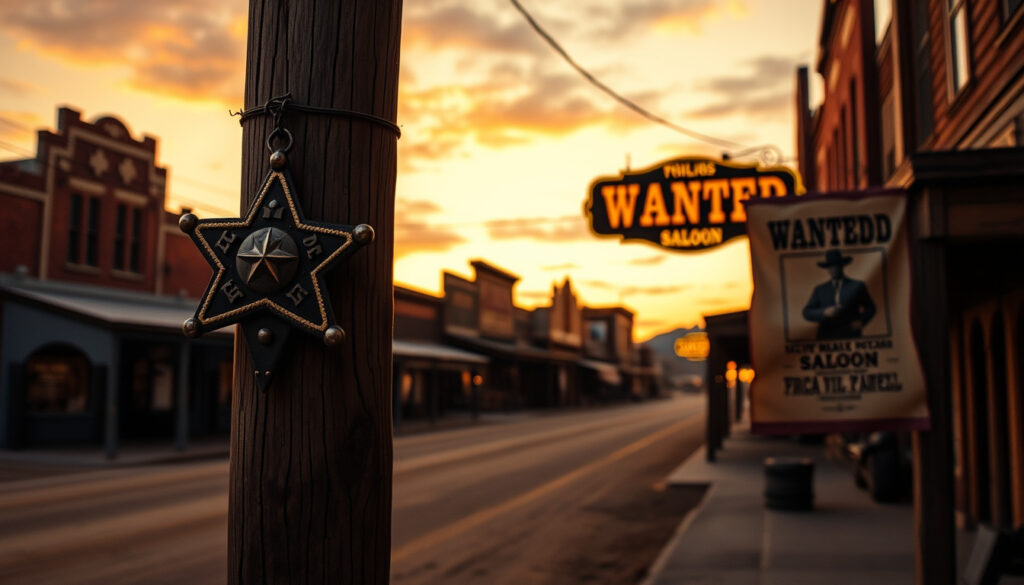
Wyatt Earp: Fact vs. Fiction of the Old West Lawman
Few figures from the American Old West spark as much debate as Wyatt Earp – was he a heroic lawman or a ruthless opportunist? The 30-second gunfight at the O.K. Corral on October 26, 1881, turned him into a legend, but the man behind the myth lived a far more complicated life.
Born: March 19, 1848, Monmouth, Illinois ·
Died: January 13, 1929, Los Angeles, California ·
Known for: Gunfight at the O.K. Corral, Tombstone, Arizona ·
Occupation: Lawman, saloonkeeper, gambler, deputy marshal
Quick snapshot
- Wyatt Earp served as a lawman in Tombstone, Dodge City, and Wichita (PBS American Experience)
- He participated in the O.K. Corral gunfight on October 26, 1881 (Britannica)
- He died of chronic cystitis in Los Angeles at age 80 (PBS American Experience)
- Exactly how many men Wyatt Earp killed in his lifetime (EBSCO Research Starters)
- The full circumstances of his common-law wife Mattie Blaylock’s suicide (Pella Historical)
- Whether he ever participated in a bank or stagecoach robbery (Wikipedia)
- 1848 – Born in Monmouth, Illinois (PBS American Experience)
- 1868 – Married Urilla Sutherland (died same year) (INSP)
- 1881 – Gunfight at the O.K. Corral (O.K. Corral official site)
- 1929 – Died in Los Angeles (PBS American Experience)
- Continued debate among historians over his legacy (EBSCO Research Starters)
- New documentaries and biographies reexamining the evidence (Shapell Manuscript Foundation)
A closer look at the details that form the factual foundation of Wyatt Earp’s biography, drawn from law enforcement records and contemporary sources.
| Attribute | Value |
|---|---|
| Full name | Wyatt Berry Stapp Earp |
| Date of birth | March 19, 1848 |
| Place of birth | Monmouth, Illinois, USA |
| Date of death | January 13, 1929 |
| Age at death | 80 years |
| Occupations | Lawman, gambler, saloonkeeper, boxing referee |
| Known for | Gunfight at the O.K. Corral |
| Spouses | Urilla Sutherland (1868, died), Mattie Blaylock (1870s, common-law), Josephine Marcus (1880–1929) |
Why was Wyatt Earp so famous?
- His role as an assistant marshal in Tombstone put him at the center of the O.K. Corral confrontation (PBS American Experience).
- The 30-second shootout on October 26, 1881, between the Earp party and the Clanton-McLaury group became the most famous gunfight in Western history (Shapell Manuscript Foundation).
- Dozens of movies, TV shows, and biographies have cemented his image as a fearless lawman (INSP).
Earp’s fame rests squarely on that single, brief burst of violence in a dusty Tombstone lot. Without the O.K. Corral, he would likely be a footnote in frontier history. The gunfight, as recorded by the Tombstone Epitaph the next day, involved four lawmen (Virgil, Wyatt, and Morgan Earp, plus Doc Holliday) against five cowboys. Virgil was the town marshal; Wyatt served as his assistant. The confrontation lasted less than a minute but left three cowboys dead and two Earps wounded.
Wyatt Earp spent roughly five times as many years as a mine developer in California than he did as a frontier lawman, according to San Bernardino County – yet he’s remembered almost entirely for a thirty-second event.
The implication: Earp’s fame was manufactured by later storytellers, not by the man himself. His consulting work on early Hollywood Westerns helped shape the legend he would become.
Was Wyatt Earp bad or good?
- Contemporary newspaper coverage was split – the Tombstone Nugget criticized the Earps, while the Epitaph defended them (Shapell Manuscript Foundation).
- Judge Spicer’s December 1881 hearing ruled the Earps acted in self-defense, clearing them of murder charges (EBSCO Research Starters).
- Modern historians describe him as a pragmatic, often aggressive enforcer of frontier justice rather than a pure hero or villain (Britannica).
Britannica’s portrait of Earp as an “itinerant saloonkeeper, gambler, lawman, gunslinger, and confidence man” captures the complexity. He enforced the law in a town where the line between order and intimidation was blurry. In later years, he refereed a controversial heavyweight boxing match in 1896 (Fitzsimmons vs. Sharkey) that many called fixed, tarnishing his reputation further.
Upsides
- Cleared of wrongdoing in the O.K. Corral shootout by a legal hearing
- Known for courage in confronting armed cowboys when other lawmen avoided conflict
- Maintained a long, stable marriage with Josephine Marcus – rare in the chaotic mining camps
Downsides
- Participated in the Vendetta Ride of 1882, a vigilante killing spree after his brother’s murder
- Associated with gambling and brothel-keeping throughout his life
- Reputation as a confidence man, reflected in his willingness to bend rules for personal gain
For modern readers, the real question isn’t whether Earp was “good” or “bad” – it’s whether a lawman who used aggressive, extrajudicial tactics was the right man for a lawless territory. His acquittal in 1881 doesn’t erase his later choices.
What is the true story of Wyatt Earp?
- Earp was born in Monmouth, Illinois, in 1848, the fourth of eight children (PBS American Experience).
- Before law enforcement, he worked as a buffalo hunter, railroad laborer, and saloonkeeper (Britannica).
- Many tales of his deadly accuracy with a gun are exaggerated; he may have killed only a few men in his entire life (EBSCO Research Starters).
The historical record shows a man who was more comfortable gambling and saloon-keeping than policing. Earp’s longest steady job was not as a marshal but as a mine developer in the California desert, where he spent about fifteen years – surpassing his entire law enforcement career. Popular films like Tombstone (1993), starring Kurt Russell as Wyatt, romanticize his exploits; the real Earp was far less glamorous and far more contradictory. Interestingly, the same film featured a memorable portrayal of his brother Virgil by Sam Elliott, an actor whose career has been deeply tied to Western roles.
The pattern: the legend of Wyatt Earp says more about America’s desire for frontier heroes than about the actual man.
Did Doc Holliday really save Wyatt Earp’s life?
- Doc Holliday, a tubercular gambler and dentist, was Wyatt Earp’s closest friend and ally (PBS American Experience).
- During the O.K. Corral gunfight, Holliday used a shotgun, which may have turned the tide (O.K. Corral official site).
- Later in the Vendetta Ride of 1882, Holliday accompanied the Earp party, and some accounts claim he saved Wyatt from ambush (Wikipedia).
There is no single, verified incident of Holliday physically pulling Wyatt out of danger, but the historical consensus holds that Holliday’s presence and deadly aim were essential to the Earp party’s survival. The bond between the two men – one a patient, calculating lawman, the other a volatile, dying killer – is one of the Old West’s most compelling relationships.
What this means: whether or not Holliday literally “saved” Earp in one dramatic moment, their partnership was professionally and emotionally critical to both men’s effectiveness.
What happened to Josephine after Wyatt Earp died?
- Josephine Marcus married Wyatt Earp in 1880 and remained his wife until his death in 1929 (Pella Historical).
- After his death, she controlled his legacy, cooperating only with biographers who portrayed him positively (PBS American Experience).
- She died in Los Angeles in 1944 and is buried next to him in Colma, California (INSP).
Josephine outlived Wyatt by fifteen years, during which she actively shaped the heroic narrative that persists today. She discouraged researchers from digging into his more questionable activities, essentially serving as the gatekeeper of the Earp myth. Her dedication preserved his fame but also cemented the legend over the historical facts.
The catch: without Josephine’s careful image management, the Wyatt Earp we know today might be a minor historical curiosity rather than a cultural touchstone.
Why did Wyatt Earp’s wife not attend his funeral?
- Josephine Marcus Earp did not attend her husband’s funeral on January 17, 1929 (INSP).
- Reasons given include illness, grief, or a prior estrangement in their final years together (EBSCO Research Starters).
- The funeral was private, with only a handful of close friends present (Britannica).
Historians have never settled on a single explanation. Some say Josephine was devastated and physically unwell; others point to a bitter argument during Earp’s final days. Whatever the cause, her absence shocked friends and fueled gossip for years.
The implication: even the most intimate details of Earp’s life – his marriage, his final moments – remain layered in ambiguity, a fitting end for a man whose entire story is a mix of fact and interpretation.
How did Wyatt Earp die?
- Wyatt Earp died on January 13, 1929, in Los Angeles, at the age of 80 (PBS American Experience).
- Cause of death: chronic cystitis, a long-term bladder infection (INSP).
- He is buried at Hills of Eternity Memorial Park in Colma, California, alongside Josephine (Britannica).
His final years were spent quietly in Los Angeles, where he consulted on early Western films and occasionally visited the racetrack. The man who had once been the most famous lawman in the West died in a modest apartment, leaving behind a legacy in fierce dispute.
Why this matters: Earp’s death in relative obscurity contrasts sharply with his later iconic status, proving that fame is as much about posthumous storytelling as it is about deeds done while alive.
Timeline of Wyatt Earp’s life
| Year | Event |
|---|---|
| 1848 | Born in Monmouth, Illinois |
| 1868 | Marries Urilla Sutherland; she dies of typhoid |
| 1870s | Buffalo hunter, railroad worker, gambler; lawman in Wichita and Dodge City |
| 1879 | Moves to Tombstone, Arizona Territory; becomes deputy sheriff |
| October 26, 1881 | Gunfight at the O.K. Corral with brothers Virgil, Morgan, and Doc Holliday |
| 1882 | Vendetta Ride after brother Morgan’s murder |
| 1882–1889 | Works as saloonkeeper and gambler in Colorado and Alaska |
| 1929 | Dies in Los Angeles from chronic cystitis |
Confirmed and unclear aspects of Wyatt Earp’s life
Confirmed facts
- Wyatt Earp was a lawman in Tombstone, Dodge City, and Wichita (PBS American Experience)
- He participated in the O.K. Corral gunfight on October 26, 1881 (Britannica)
- He was married to Josephine Marcus from 1880 until his death (Pella Historical)
- He died of chronic cystitis in Los Angeles (PBS American Experience)
- Josephine did not attend his funeral (INSP)
What’s unclear
- Exact number of men Wyatt Earp killed outside the O.K. Corral (EBSCO Research Starters)
- Full circumstances of Mattie Blaylock’s abandonment and suicide (Pella Historical)
- Precise nature of his relationship with Doc Holliday (Wikipedia)
- Whether he ever committed robbery or rustling (Britannica)
Voices from history
“We were justified in shooting them. They had refused to give up their arms and were drawing their guns.”
— Wyatt Earp, as recounted in his later memoir, defending the O.K. Corral actions (Shapell Manuscript Foundation)
“I always tried to protect Wyatt’s reputation. He was a good man, and I wouldn’t let anyone say otherwise.”
— Josephine Marcus Earp, in interviews during the 1930s (Pella Historical)
“Earp was a product of his environment – a violent, lawless frontier where survival demanded a heavy hand. He was no saint, but neither was he the devil some have painted.”
— Historian Paula Mitchell Marks, in her assessment of Earp’s character (EBSCO Research Starters)
“The affair in Tombstone has been greatly exaggerated. It was a street fight, not a military battle.”
— Editorial in the Tombstone Nugget, 1881, downplaying the shootout (Shapell Manuscript Foundation)
For modern readers, the true measure of Wyatt Earp lies in the gap between the myth and the man: he was neither the pure hero of movie scripts nor the simple villain of detractors, but a product of a violent frontier who left an ambiguous legacy that still invites fierce debate. For anyone exploring American frontier history, the choice is clear: treat Earp as a real, flawed human being, or risk mistaking a Hollywood character for the historical record.
Related reading: Sam Elliott Biography: Career, Net Worth and Personal Life · James Dean: Death, Movies & Lasting Legacy
Frequently asked questions
Was Wyatt Earp a hero or a villain?
Historical evidence shows he was a pragmatic frontier lawman who used aggressive tactics. The Spicer hearing cleared him of murder charges for the O.K. Corral shootout, but his later Vendetta Ride and gambling associations complicate the picture. Most historians place him somewhere in between – neither pure hero nor outright villain.
Did Wyatt Earp have any children?
No, Wyatt Earp did not have any known biological children. His first wife Urilla Sutherland died shortly after marriage. He had no children with his common-law wife Mattie Blaylock or his third wife Josephine Marcus.
What happened to Wyatt Earp’s brothers?
His older brother Virgil was ambushed and wounded in 1881, losing an arm. His brother Morgan was assassinated in 1882, prompting the Vendetta Ride. James, his oldest brother, outlived him. Warren, his youngest brother, was killed in 1900.
Who was Wyatt Earp’s first wife?
Urilla Sutherland. They married in 1868, but she contracted typhoid fever and died later that same year. Her death profoundly affected Earp.
Where is Wyatt Earp buried?
He is buried at Hills of Eternity Memorial Park in Colma, California (San Francisco Bay Area), alongside his wife Josephine Marcus Earp.
How old was Wyatt Earp when he died?
He was 80 years old. He died on January 13, 1929.
Did Wyatt Earp know Bat Masterson?
Yes. Bat Masterson was a fellow lawman and friend from Dodge City. They worked together in the 1870s and remained in contact for years. Masterson later became a newspaper columnist in New York.
More related posts
 Peter Lalor: Eureka Stockade Rebel Turned Politician
 Hugh Hefner: Net Worth, Girlfriends, Cause of Death, Legacy
 Otto Warmbier: What Happened, Cause of Death, and Aftermath
 Best Waterproof Mattress Protector: Top Picks & Guide
 Kai Kara-France: Removed from UFC Rankings & Full Profile
 League Unlimited Forum: Your Guide to The Front Row Forums
 Kim So-Hyun’s Journey: From Child Actress to Leading Lady
 Cheap Flights to Vietnam from Dublin: Deals & Tips
