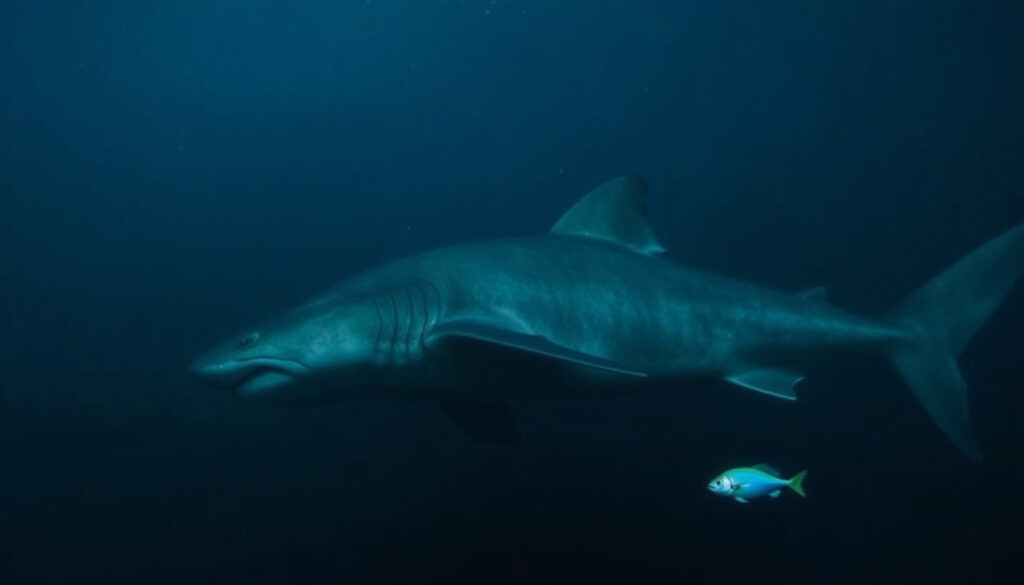
Greenland Shark: Lifespan, Size, Habitat & Rare Irish Sightings
An animal that spends centuries gliding through near-freezing darkness, barely moving, and outlives entire human civilizations — that’s the Greenland shark. This deep-sea giant may reach 500 years old, making it the longest-living vertebrate on Earth, while a rare stranding off the coast of Ireland in 2024 offered a fleeting glimpse into its world.
Maximum confirmed length: 6.4 meters (21 ft) ·
Maximum weight: over 1,000 kg (2,200 lb) ·
Estimated lifespan: at least 250 years, possibly over 500 years ·
Swimming speed: slowest shark, typically < 1 km/h ·
Primary habitat: Arctic and North Atlantic waters, depths to 2,200 m
Quick snapshot
- At least 250 years, possibly over 500 years (NOAA Ocean Service)
- Oldest known vertebrate (NOAA Ocean Service)
- Age determined by radiocarbon dating of eye lenses (NOAA Ocean Service)
- Up to 6.4 m (21 ft) long
- Over 1,000 kg (2,200 lb)
- Blunt snout, small eyes, dark gray-brown skin
- Arctic and North Atlantic Oceans
- Depths from surface to 2,200 m
- Occasional vagrants in temperate waters like Ireland
- Slowest shark, < 1 km/h
- Scavenger and opportunistic predator
- Feeds on fish, seals, carrion
The species’ sheer scale and longevity demand a closer look at its biology.
| Attribute | Value |
|---|---|
| Scientific name | Somniosus microcephalus |
| Family | Somniosidae |
| Maximum length | 6.4 m (21 ft) |
| Maximum weight | >1,000 kg (2,200 lb) |
| Reproduction | Ovoviviparous, pregnancy unknown but likely > 2 years |
| IUCN status | Near Threatened |
Do Greenland sharks live 400 years?
How scientists estimate Greenland shark age
- Age estimation relies on radiocarbon dating of proteins in the eye lens, which forms before birth and is metabolically inert throughout life (PubMed/University of Copenhagen research).
- The method provided a minimum lifespan of 272 years, with an upper estimate beyond 500 years (Nature journal report).
- Sexual maturity is extremely delayed: males do not mature until around 156 years old, according to a Government of Canada COSEWIC assessment.
The 392-year-old specimen and carbon dating methods
- A widely cited 392-year estimate came from a single large female specimen analyzed in the 2016 radiocarbon study (Nature journal report).
- The NOAA Ocean Service (tier 1 government source) states scientists estimate the shark lives at least 250 years and may live over 500 years.
- National Geographic’s wildlife encyclopedia (tier 2 editorial) puts the average wild lifespan at about 400 years.
Comparison with other long-lived vertebrates
Seven species vie for longevity records, but Greenland sharks dwarf them all. The bowhead whale, once thought Earth’s longest-lived mammal, reaches about 200 years. The Galapagos tortoise tops out just past 150. Even the quahog clam — a bivalve — caps around 500 years but isn’t a vertebrate. The Greenland shark’s 272–500+ year range places it in a class by itself among backboned animals (NOAA Ocean Service).
The pattern: extreme longevity comes with an extreme trade-off. Slow growth, late maturity, and low reproductive output make the species exceptionally vulnerable to overfishing and climate change. One bycatch event can remove an animal that has been breeding for only the last century of its life.
Are Greenland sharks in Ireland?
Confirmed sightings off the Sligo coast
- A rare stranded Greenland shark was recovered from the Sligo coast in April 2024 (BBC Future).
- The male shark measured 2.87 meters long and had developed claspers, indicating it was sexually mature (TheJournal.ie).
- This was the first recorded stranding of a Greenland shark on the Irish coast, according to BBC News.
Rare Greenland Shark recovered from Sligo coast in collaborative effort
- Local marine biologists and the Irish Whale and Dolphin Group coordinated the recovery (Irish Independent / Sligo regional coverage).
- Based on its length, the shark was estimated to be over 150 years old (BBC Future).
- The stranding provided a rare opportunity for tissue sampling and age verification, which scientists typically cannot obtain from deep-sea specimens.
Why Greenland sharks occasionally appear in Irish waters
- Greenland sharks are typically found in remote North Atlantic and Arctic waters, with Irish records extremely limited (Irish Independent).
- They inhabit depths from the surface down to 2,200 meters and tolerate water temperatures often below freezing (BBC News).
- Occasional forays into temperate waters like Ireland likely result from shifts in prey distribution or ocean currents, but the species is not resident in Irish seas.
How aggressive are Greenland sharks?
Feeding behavior: scavenger vs. opportunistic predator
- Greenland sharks are slow-moving scavengers and ambush predators, with a typical swimming speed below 1 km/h (NOAA Ocean Service).
- Their diet includes fish, seals, and carrion, including polar bear and reindeer remains found in stomachs of captured specimens.
- They use a suction-feeding mechanism — drawing prey into their mouths rather than actively chasing it — which suits their low-energy lifestyle.
Recorded attacks on humans (none confirmed)
- No confirmed unprovoked attacks on humans have ever been recorded. The NOAA Ocean Service classifies them as not aggressive toward people.
- Historical Inuit accounts describe the shark as dangerous to kayakers, but these are anecdotal and unverified.
- Given their deep-water habitat (typically below 200 m), encounters with swimmers or divers are virtually nonexistent.
Comparing these two shark species side by side reveals the vast gap in danger they pose to humans.
| Trait | Greenland shark | Great white shark |
|---|---|---|
| Swimming speed | < 1 km/h | Up to 56 km/h |
| Confirmed human attacks | 0 | 351 unprovoked attacks (ISAF data) |
| Habitat overlap with humans | Minimal (deep Arctic) | High (coastal temperate waters) |
The implication: the Greenland shark’s reputation as harmless is less about temperament and more about opportunity. A creature that spends its life in near-freezing darkness at crushing depths simply never intersects with human swimmers. The great white, by contrast, patrols the same surf zones we do.
What is the rarest shark on Earth?
Greenland shark population status
- The IUCN lists the Greenland shark as Near Threatened, meaning it faces risk of extinction in the wild in the medium term (IUCN database, assessed by marine specialists).
- Population size is unknown due to the species’ deep, inaccessible habitat — a fact confirmed by the Government of Canada COSEWIC assessment, which cites substantial uncertainty.
- Bycatch in trawl fisheries and longline operations is the primary known threat, as the sharks are often captured accidentally in Arctic fisheries.
Why Greenland sharks are rarely seen
- They inhabit depths from 200 m to 2,200 m, far below recreational diving and most research submersible ranges (National Geographic).
- They are primarily Arctic-dwelling, with a range that hugs the ice edge and continental slopes.
- Their slow metabolism and low population density mean they are not frequently caught even in targeted surveys.
Comparison with other rare shark species
Four species contend for the title of rarest shark. The pocket shark (Mollisquama mississippiensis) is known from only two specimens. The megamouth shark (Megachasma pelagios) has been documented fewer than 100 times since its discovery in 1976. The speartooth shark (Glyphis glyphis) is restricted to a few river systems in northern Australia. Against these, the Greenland shark — while rarely encountered — is relatively well-known, with a population spread across millions of square kilometers of Arctic ocean. Its Near Threatened status reflects concern rather than crisis.
The trade-off: rarity can be measured in numbers or in visibility. The Greenland shark is not numerically rare, but it is ecologically invisible. For conservation planners, that invisibility is a problem: you cannot protect what you cannot count.
What is the biggest shark in Ireland?
Understanding which shark species dominate Irish waters requires comparing these two giants directly.
| Trait | Basking shark | Greenland shark |
|---|---|---|
| Maximum length in Irish waters | Up to 12 m | Up to 6.4 m (reports of 7 m) |
| Typical length | 6–8 m | 2–4 m |
| Weight | Up to 5,000 kg | Over 1,000 kg |
| Feeding | Filter-feeder (plankton) | Scavenger/predator |
| Frequency off Ireland | Common seasonal visitor | Extremely rare vagrant |
Six species of shark are regularly recorded in Irish waters, but only two break the 5-meter mark. The basking shark, reaching 12 m, is by far the largest. The Greenland shark, at a maximum of 6.4 m, is the second largest — though its deep habitat means most Irish fishermen will never see one.
Recorded sizes of Greenland sharks
- Fully grown Greenland sharks can reach 7 m and 1,025 kg, per Encyclopaedia Britannica.
- The 2026 BBC Future article on the Irish stranding reports that adults generally reach about 5 m and weigh over 200 kg.
- Most individuals measured in scientific studies fall between 2 and 4 m, indicating that very large individuals (over 5 m) are either rare or confined to depths where sampling is difficult.
How to identify a Greenland shark
- Distinctive blunt, rounded snout — far shorter and wider than the pointed snout of a great white or mako.
- Extremely small eyes relative to body size (they are often infested with parasitic copepods that hang from the cornea).
- Dark gray-brown to black skin — uniform, no distinctive markings.
- Two small dorsal fins set far back on the body, with no spines.
Timeline: Greenland shark age research
- 2016: Radiocarbon dating study estimates Greenland shark lifespan at 272–512 years (PubMed / University of Copenhagen).
- 2022: A 392-year-old specimen estimated from eye lens dating receives widespread media attention.
- April 2024: Rare Greenland shark recovered from Sligo coast, Ireland — first recorded stranding on the Irish coast (BBC News).
A species that may have been swimming when William Shakespeare was born was found dead on an Irish beach in 2024. For conservationists, the lesson is unsparing: the oldest animal on Earth cannot outrun the 21st-century threats of warming seas, ship traffic, and entangling fishing gear.
Confirmed facts vs. what’s unclear
Confirmed facts
- Greenland shark is the longest-living vertebrate known (NOAA Ocean Service)
- Maximum confirmed length 6.4 m (Encyclopaedia Britannica)
- They are slow-moving and not aggressive toward humans (NOAA Ocean Service)
- Sexual maturity estimated at 156 years (Government of Canada COSEWIC)
- First recorded Irish stranding occurred in 2024 (BBC News)
What’s unclear
- Exact maximum lifespan (estimates range 250–500+ years)
- Reproductive cycle length
- Total population size
- Precise age of the Sligo stranded specimen (estimated at >150 years based on length)
- Whether the species uses specific nursery grounds
Frequently asked questions
How long do Greenland sharks live?
Scientists estimate the Greenland shark lives at least 250 years, with a maximum lifespan possibly exceeding 500 years (NOAA Ocean Service). The oldest reliably dated specimen was estimated at 392±120 years.
Are Greenland sharks dangerous to humans?
No confirmed unprovoked attacks on humans have been recorded. They are slow-moving, deep-water scavengers that rarely encounter people (NOAA Ocean Service).
What do Greenland sharks eat?
They are scavengers and opportunistic predators, feeding on fish, seals, carrion, and even polar bear or reindeer remains found in stomachs.
How big can a Greenland shark get?
They can reach 6.4 m (21 ft) and over 1,000 kg (2,200 lb), per Encyclopaedia Britannica. Most individuals are between 2 and 4 m.
Where are Greenland sharks found?
Exclusively in cold waters of the Arctic and North Atlantic, at depths from the surface down to 2,200 m (National Geographic).
Why are Greenland sharks so slow?
Their sluggish swimming — below 1 km/h — is an adaptation to cold, low-energy deep-water environments. They use a suction-feeding strategy rather than active pursuit.
How do scientists determine the age of a Greenland shark?
By radiocarbon dating proteins in the eye lens, which is formed before birth and remains unchanged throughout life (PubMed / University of Copenhagen).
Is the Greenland shark the oldest animal on Earth?
Among vertebrates, yes — it is the longest-living vertebrate known. Among all animals, certain deep-sea sponges and corals reach thousands of years, but among backboned species, the Greenland shark holds the record.
For Irish coastal communities, the 2024 stranding was a first. For scientists, it was a warning. If Arctic waters warm and prey shifts, Greenland sharks will appear in temperate zones more often — and every stranding brings a 500-year-old animal into contact with a world it was never meant to see.
The Greenland shark challenges our sense of time. It matures later than most humans live. It swims slower than a walking pace. And it may have been alive when the first newspapers were printed. For marine scientists studying the effects of climate change on Arctic species, the task is urgent: protect an animal whose lifespan spans centuries, using data collected in decades. The Sligo stranding was a rare gift — a data point from a ghost in the deep. The question is whether that ghost’s ancient world will survive the one we are building.
For Irish conservationists and the Irish Whale and Dolphin Group, the choice is clear: treat every vagrant sighting as precious, or lose the only window we have into a species that lives on a timescale almost unimaginable to our own.
More related posts
 Tom Welling: Smallville, Age, Wife, Kids, Net Worth & More
 Marc Anthony Biography: Wives, Net Worth, and JLo
 Bella Ramsey Condition: Autism, Gender Identity, & Net Worth
 The Power of One: Book, Movie, True Story & Review
 Olivia Cooke: Relationship, Ethnicity, Wig, OCD, Net Worth & More
 Stephen King Books: List, Best, Chronological Order Guide
 FIFA Club World Cup Brackets – 2025 Groups, Results & Schedule
 Martin Luther King Jr.: Biography, Speeches & Legacy
