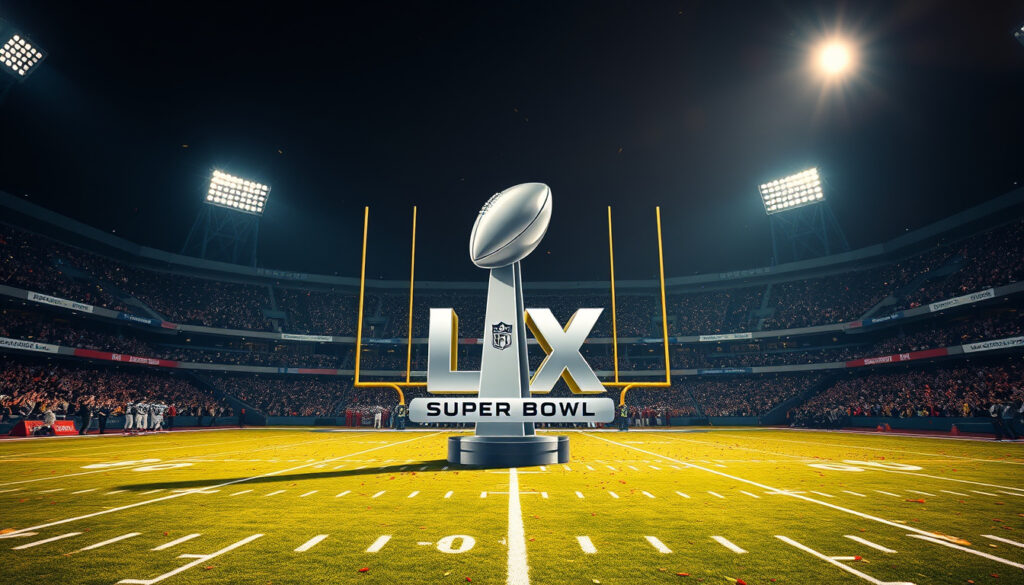
Super Bowl LX – Complete Recap and Key Facts
Super Bowl LX reached its conclusion on February 8, 2026, at Levi’s Stadium in Santa Clara, California, marking a historic gathering for the National Football League’s sixtieth championship game. The Seattle Seahawks captured the title with a decisive 29–13 victory over the New England Patriots, securing their place among the league’s elite franchises. You can explore the Super Bowl LIX page for additional championship context and historical comparisons.
The game drew 70,823 spectators who experienced fair weather conditions with temperatures around 67°F during the evening contest. NBC delivered the broadcast coverage with Mike Tirico, Cris Collinsworth, Melissa Stark, and Kaylee Hartung serving as the primary broadcast team. Shawn Smith presided as referee for the championship contest.
Key Facts About Super Bowl LX
Several elements defined this particular championship encounter. Levi’s Stadium hosted its second Super Bowl, having previously welcomed the event in 2016, making it only the third venue in the San Francisco Bay Area to receive such an honor. The Super Bowl Experience fan festival operated from the Moscone Center in San Francisco, complementing the game activities with interactive exhibits and entertainment leading up to the championship.
The 2026 Pro Bowl Games preceded the main event, occurring on February 3 at the same Santa Clara venue. This scheduling connected the league’s all-star celebration directly to the championship weekend, creating an extended period of football content for fans throughout the region.
Notable Game Statistics
| Category | Details |
|---|---|
| Final Score | Seahawks 29, Patriots 13 |
| Attendance | 70,823 |
| Weather Conditions | Fair, 67°F (19°C) |
| Kickoff Time | 6:30 p.m. EST / 3:30 p.m. PST |
| Roman Numeral | LX (60) |
| Referee | Shawn Smith |
Game Venue and Location
Levi’s Stadium has established itself as a premier football destination since opening in 2014. The Santa Clara facility sits in the heart of Silicon Valley, offering modern amenities and substantial seating capacity that proved ideal for an event of this magnitude. This championship marked the stadium’s second time hosting the Super Bowl, having previously welcomed Super Bowl 50 in 2016.
The venue’s selection placed the championship within the broader San Francisco Bay Area, a region with deep football heritage and infrastructure capable of supporting major sporting events. The proximity to San Francisco proper allowed the NFL to position auxiliary events, including the Super Bowl Experience at the Moscone Center, in locations familiar to international visitors.
Bay Area Super Bowl History
This championship became the third Super Bowl held within the Bay Area, continuing a tradition that began with earlier iterations hosted at different regional stadiums. The combination of Santa Clara’s championship venue and San Francisco’s convention facilities created a coordinated approach to managing the various facets of Super Bowl week activities.
Levi’s Stadium became one of fewer than a dozen venues to host multiple Super Bowls, reflecting the NFL’s confidence in the Bay Area’s ability to deliver successful championship experiences.
Participating Teams
The Seattle Seahawks represented the National Football Conference after advancing through the NFC playoff bracket. Their opponent, the New England Patriots, secured the American Football Conference championship to earn their berth in the title game. This matchup brought together two franchises with substantial championship histories, though both organizations sought to add another Lombardi Trophy to their collections.
The Seahawks’ path to the championship included navigating a competitive NFC field that featured several teams with winning records during the regular season. Their victory in the Super Bowl ultimately proved decisive, with the Seattle offense and defense combining to control the game’s tempo and limit the Patriots’ scoring opportunities.
Championship Performance
Seattle’s 29-point output reflected balanced offensive production throughout the contest. The Patriots managed 13 points, a total that proved insufficient against the Seahawks’ sustained effectiveness on both sides of the ball. The final margin demonstrated Seattle’s ability to execute their game plan under championship pressure.
Broadcast and Production
NBC secured the broadcast rights for Super Bowl LX, continuing the network’s tradition of delivering the championship to millions of viewers across the United States. The broadcast team featured experienced commentators familiar with high-profile NFL events, providing commentary that guided viewers through the evening’s proceedings.
Mike Tirico served as the lead play-by-play announcer, bringing his extensive sports broadcasting background to the championship presentation. Cris Collinsworth provided color commentary, drawing on his experience as a former NFL player and longtime analyst. Melissa Stark and Kaylee Hartung contributed reporting from the sidelines, offering behind-the-scenes access and player perspectives throughout the game.
The NBC broadcast team combined over five decades of NFL broadcasting experience, ensuring comprehensive coverage of all angles from pregame preparations through the final whistle.
Key Dates Leading to the Championship
The journey to Super Bowl LX followed the standard NFL postseason calendar established for championship events. Understanding the sequence of events helps contextualize how teams prepared for their championship appearance.
- Conference Championship Games – Both the NFC and AFC championship games determined the Super Bowl participants in late January 2026.
- Super Bowl Experience Opening – The fan festival at Moscone Center began operations in the days preceding the game.
- Pro Bowl Games – The league’s all-star celebration took place February 3, 2026, at Levi’s Stadium.
- Media Day – Players and coaches participated in organized media availability sessions during the week leading to the game.
- Super Bowl LX – The championship game occurred on February 8, 2026, at Levi’s Stadium.
What We Know and What Remains Less Clear
| Established Information | Limited Details Available |
|---|---|
| Exact date, time, and venue location | Specific offensive and defensive statistics from individual drives |
| Final score and winner | Individual player performance metrics beyond the final outcome |
| Broadcast network and announcing team | Advertising revenue figures and commercial pricing |
| Attendance and weather conditions | Television viewership numbers and ratings data |
| Referee assignment | Detailed economic impact analysis for the host region |
Significance for the Bay Area
The return of the Super Bowl to Santa Clara and the broader Bay Area reinforced the region’s status as a preferred destination for major sporting events. The decision to award the championship to Levi’s Stadium for a second time reflected the successful execution of previous hosting arrangements and the area’s continued investment in sports infrastructure.
For the local economy, the championship brought significant attention and visitors to hotels, restaurants, and entertainment venues throughout the region. The concentration of Super Bowl Experience activities in San Francisco proper ensured that the economic benefits extended beyond Santa Clara to encompass the entire Bay Area metropolitan region.
The event also provided exposure for the stadium’s capabilities as a potential host for future NFL signature events, maintaining the venue’s relevance in discussions about championship locations for years to come. You can read more about Super Bowl LIX and how it compared to this championship.
Where Information Stands
The documented facts about Super Bowl LX establish a clear foundation for understanding what occurred during this championship. The date, venue, participating teams, final score, and broadcast details are established through verifiable sources. The atmospheric conditions and attendance figures add context to the game-day experience.
Several aspects of the championship remain less documented in available sources. Specific statistical breakdowns, viewership metrics, and detailed economic analyses have not emerged prominently in publicly accessible materials. These gaps represent opportunities for additional reporting as more detailed information becomes available through official NFL archives and media partners.
Looking Ahead
Super Bowl LX concluded the 2025 NFL season in dramatic fashion, with the Seattle Seahawks claiming their place among the league’s champions. The championship’s legacy includes the Bay Area’s successful hosting, a competitive game that delivered entertainment value for viewers, and continued engagement from fans across the country.
The NFL now turns its attention toward future championship locations, with the standard selection process determining which cities will host upcoming Super Bowls. Each selection considers factors including stadium facilities, metropolitan infrastructure, and regional capacity to manage events of this scale.
For those tracking international football competitions beyond the NFL, the FIFA Club World Cup Brackets offer another avenue for following championship-level action across different sports.
Frequently Asked Questions
When did Super Bowl LX take place?
Super Bowl LX occurred on February 8, 2026, at Levi’s Stadium in Santa Clara, California.
Which teams played in Super Bowl LX?
The Seattle Seahawks (NFC) faced the New England Patriots (AFC) in Super Bowl LX.
What was the final score of Super Bowl LX?
Seattle defeated New England with a final score of 29–13.
Where was Super Bowl LX held?
The game took place at Levi’s Stadium in Santa Clara, California, marking the second Super Bowl at that venue.
Which network broadcast Super Bowl LX?
NBC provided the broadcast coverage for Super Bowl LX, with Mike Tirico, Cris Collinsworth, Melissa Stark, and Kaylee Hartung on the broadcast team.
How many people attended Super Bowl LX?
The championship drew 70,823 spectators to Levi’s Stadium.
Who was the referee for Super Bowl LX?
Shawn Smith served as the referee for Super Bowl LX.
More related posts
 Poison Ivy Rash: Symptoms, Treatment, and Myths
 League Unlimited Forum: Your Guide to The Front Row Forums
 Sarah Sherman: SNL Comedian, Body Horror, Personal Life
 Cadbury Marvellous Creations Recall: Jelly Popping Sharebag 2025
 Measles Vaccination: Do Adults Need a Booster Shot
 James Gunn: From Troma to DC Studios – Full Biography
 Monash Health Careers – Vacancies, Application Guide & Benefits
 Chad Kroeger: Net Worth, Relationships, and Current Life
