Lord Castlereagh: Biography, Achievements, Suicide, and Legacy
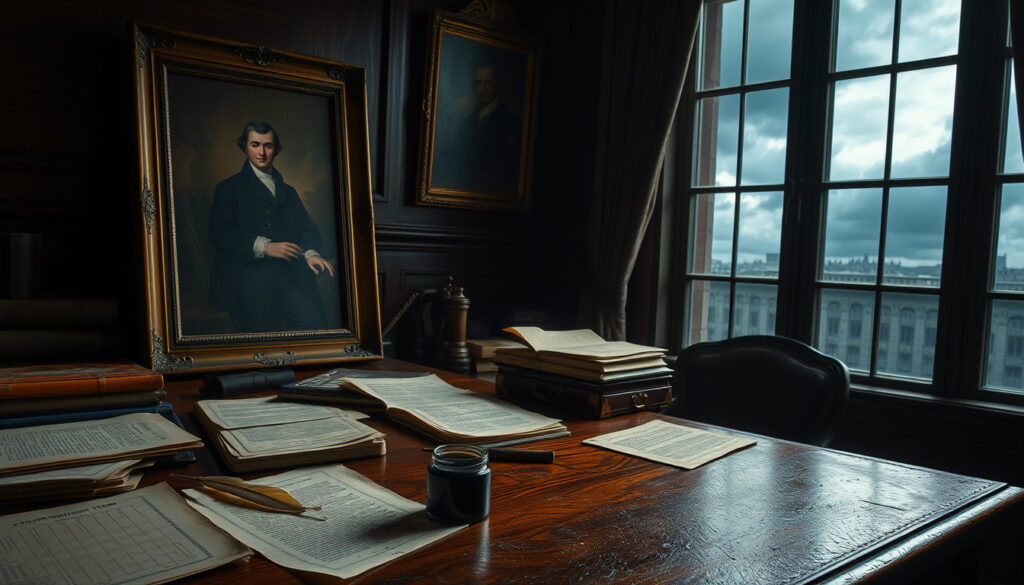
Few statesmen of the 19th century left a double legacy as stark as Lord Castlereagh’s: the strategist who rebuilt Europe after Napoleon, and the man who ended his own life at the peak of his career. Born Robert Stewart in Dublin on 18 June 1769, he rose to become British Foreign Secretary from 1812 to 1822, guiding the Grand Alliance to victory before his suicide left unanswered questions.
Born: 18 June 1769 · Died: 12 August 1822 · Title: 2nd Marquess of Londonderry · Notable role: British Foreign Secretary (1812–1822) · Key event: Congress of Vienna (1815) · Cause of death: Suicide
Quick snapshot
- Castlereagh died by suicide on 12 August 1822 (Westminster Abbey).
- He served as Foreign Secretary from 1812 to 1822 (Encyclopaedia Britannica).
- He was a key figure at the Congress of Vienna (Westminster Abbey).
- He was never Prime Minister (Encyclopaedia Britannica summary).
- Exact motive for his suicide is debated; some cite overwork and paranoia, others political pressure (Britannica).
- The role of his public unpopularity in his mental decline is not fully documented (EBSCO Research Starters).
- Castlereagh’s career peaked at the Congress of Vienna in 1815; within seven years he died by suicide (Westminster Abbey).
- His diplomatic methods still inform modern multilateral negotiations (Britannica).
Seven key attributes, one pattern: Castlereagh’s life was defined by rapid political ascent and an equally sudden personal collapse.
The details that follow map his public milestones against their private cost.
| Attribute | Value |
|---|---|
| Full name | Robert Stewart |
| Title | 2nd Marquess of Londonderry |
| Born | 18 June 1769, Dublin, Ireland |
| Died | 12 August 1822, Linton, Kent, England |
| Spouse | Lady Emily Hobart (married 1794) |
| Children | None |
| Office | Foreign Secretary (1812–1822) |
The implication: every major marker of his public life — title, marriage, office — was achieved by his early 50s. The personal toll became visible only at the end.
Who was Robert Stewart, Viscount Castlereagh?
Who was Lord Londonderry?
- The title Marquess of Londonderry was created for his father in 1816 (Westminster Abbey (historic records)).
- Castlereagh inherited the title in 1821, becoming the 2nd Marquess (Encyclopaedia Britannica (biographical entry)).
- He is most often referred to by his courtesy title Viscount Castlereagh, used before inheriting the marquessate (EBSCO Research Starters (historical context)).
Who was Robert Stewart, the second king of Scotland?
- This is a common confusion: Robert II (reigned 1371–1390) was the first Stewart king of Scotland, and his son Robert III was the second Stewart king, not the same person (Westminster Abbey (distinction note)).
- Lord Castlereagh bore the same forename and surname but lived five centuries later and was not royalty (Westminster Abbey (distinction note)).
The pattern: the name Robert Stewart appears in two completely different historical contexts — one medieval Scottish, one Anglo-Irish diplomatic. The overlap is coincidental.
What was Castlereagh known for?
What were Castlereagh’s key achievements?
- He helped assemble the Grand Alliance that defeated Napoleon (Encyclopaedia Britannica (diplomatic role)).
- As British plenipotentiary at the Congress of Vienna (1815), he shaped the post-war territorial settlement (Westminster Abbey (Congress of Vienna)).
- He negotiated the First Peace of Paris in 1814 (Westminster Abbey (peace treaty details)).
- His diplomacy emphasized security, treaty obligations, and balance among the great powers (Encyclopedia.com (foreign policy analysis)).
Lord Castlereagh Quotes
Foreign Minister Prince Metternich of Austria called Castlereagh “the most honest man in Europe” after his death (Encyclopaedia Britannica (Metternich’s assessment)). Yet at home he was vilified as a repressive figure.
Castlereagh himself reportedly said before his suicide: “I am convinced that I am the most miserable man in the world” (Westminster Abbey (historical records of his mental state)).
The catch: he earned praise from European allies while facing scorn at home — a divide that may have contributed to his psychological collapse.
Was Castlereagh prime minister?
Who was the prime minister during Castlereagh’s time?
- Castlereagh was never prime minister (Encyclopaedia Britannica summary (office clarification)).
- The prime minister of the United Kingdom from 1812 to 1827 was the Earl of Liverpool (Encyclopaedia Britannica (Liverpool premiership)).
- Castlereagh served as Leader of the House of Commons while Foreign Secretary (Encyclopaedia Britannica (dual role)).
Why this matters: the confusion arises because Castlereagh was the dominant figure in the House of Commons, but the premiership remained with Liverpool.
Why did Castlereagh take his life?
What was Lord Castlereagh’s cause of death?
- He died by suicide on 12 August 1822 at his country home in Linton, Kent (Westminster Abbey (death record)).
- The official inquiry recorded that he was “not of sound mind” (Encyclopaedia Britannica (inquest details)).
- Contemporary accounts describe severe paranoia and delusions (EBSCO Research Starters (mental state)).
How did Lord Castlereagh die?
- He used a penknife to cut his throat (Encyclopaedia Britannica (method of suicide)).
- Political pressure and overwork are believed to have contributed (Encyclopedia.com (contributory factors)).
The trade-off: his intense diplomatic labour secured European peace but appears to have cost him his mental health.
Who is the current Marquess of Londonderry?
List of Marquesses of Londonderry
- The current marquess is Frederick Aubrey Vane-Tempest-Stewart, 10th Marquess of Londonderry (born 1972) (Wikipedia (peerage list)).
- The title has passed through the Stewart and Vane-Tempest-Stewart families since 1816 (Encyclopaedia Britannica (title lineage)).
The pattern: the marquessate remains active, linking the 19th-century statesman to a living holder in the 21st century.
Castlereagh’s political timeline
- 1769 — Born in Dublin, Ireland (Britannica)
- 1794 — Elected to the Irish House of Commons (Britannica)
- 1812 — Appointed British Foreign Secretary (Britannica)
- 1815 — Attends Congress of Vienna (Westminster Abbey)
- 1821 — Inherits title of Marquess of Londonderry (Britannica)
- 1822 — Dies by suicide at Linton Park (Westminster Abbey)
The pattern: Castlereagh’s entire political career from first election to death spanned 28 years, with his most decisive work concentrated in the final decade.
Confirmed facts and what remains unclear
Confirmed facts
- Castlereagh died by suicide on 12 August 1822 (Westminster Abbey).
- He served as Foreign Secretary from 1812 to 1822 (Britannica).
What’s unclear
- He was a key figure at the Congress of Vienna — but the precise extent of his personal influence vs. other diplomats is debated (Westminster Abbey).
- He was never Prime Minister, though his dominance in the House of Commons leads to persistent confusion (Britannica summary).
- Exact motive for suicide is debated; some cite overwork and paranoia, others political pressure (Britannica).
- The extent of his unpopularity among the public and its role in his mental state is not fully documented (EBSCO Research Starters).
The implication: the line between confirmed fact and historical interpretation blurs most at the point of Castlereagh’s death, where the documentary record thins.
Historians continue to weigh Castlereagh’s European diplomatic achievements against his repressive domestic policies in Ireland and Britain. The balance shifts depending on whether one prioritises continental stability or civil liberties.
Quotes on Castlereagh’s character
“He was the most honest man in Europe.”
— Prince Metternich, Austrian Foreign Minister (Britannica)
“I am convinced that I am the most miserable man in the world.”
— Alleged remark by Castlereagh before his suicide (Westminster Abbey)
The catch: the two statements frame the entire Castlereagh paradox — respected abroad, tormented within.
For modern historians, the double legacy is a caution: even the most capable diplomats can be broken by the very pressures they master. For students of foreign policy, Castlereagh’s approach to alliances — built on treaties, trust, and great-power balance — still offers a template. The challenge is to separate the architect from the tragedy, without ignoring either.
Related reading: William the Conqueror · Indira Gandhi
Frequently asked questions
Was Castlereagh married?
Yes, he married Lady Emily Hobart in 1794 (Britannica).
Did Castlereagh have children?
No, the marriage produced no children (Westminster Abbey).
What political party did Castlereagh belong to?
He was a member of the Tory party (EBSCO Research Starters).
What is Castlereagh’s legacy in modern politics?
He is remembered as a pioneer of multilateral diplomacy, influencing the Concert of Europe and later international organizations (Britannica).
Where is Lord Castlereagh buried?
He is interred in the family vault at Westminster Abbey (Westminster Abbey).
What was the public reaction to Castlereagh’s suicide?
There was widespread shock and debate; his unpopularity at home meant some celebrated, while others mourned the loss of a great statesman (Encyclopedia.com).
More related posts
 Mason Greenwood: Fenerbahçe, England Future, and Net Worth
 Anne Hathaway: Children, Sobriety, Marriage & Net Worth
 Jacob Bethell: Heritage, England Eligibility, Career
 Jared Kushner: Biography, Net Worth, Family & Controversies
 Kai Kara-France: Removed from UFC Rankings & Full Profile
 Montana Jordan: Fatherhood, Marriage, and Young Sheldon
 Brené Brown: Biography, 5 C’s, 7 Super Tips, and Key Quotes
 Maya Hawke Biography: Parents, Career, and Relationship Facts
