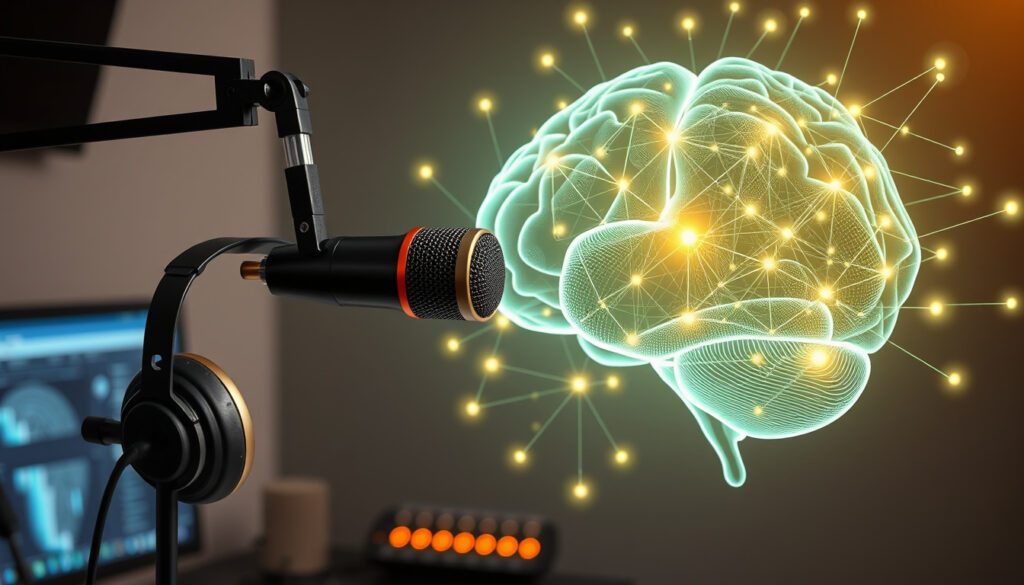
Andrew Huberman: Stanford Neuroscientist & Podcast Host
Every few years, a scientist steps out of the lab and into the mainstream feed — and Andrew Huberman has done both at once. Between a tenured Stanford professorship, a working neuroscience lab, and the Huberman Lab podcast, he has turned brain science into everyday health routines for a global audience, but the gap between what’s certain in his protocols and what’s merely popular is bigger than it looks.
Born: September 26, 1975 ·
Role: Stanford neuroscientist and Huberman Lab host ·
Credential: Ph.D. ·
Known for: Science-based health protocols and the Huberman Lab podcast
Quick snapshot
- Tenured associate professor at Stanford School of Medicine (Stanford Profiles, faculty database)
- Holds a Ph.D. — the “Dr.” is a research doctorate, not an M.D. (Stanford Medicine, faculty directory)
- Huberman Lab podcast launched in 2021 (Creative Artists Agency, speaker profile)
- Born September 26, 1975 (Wikipedia, biography entry)
- Relationship history and number of partners are not documented in the sources reviewed
- Children — names and exact count, if any — are unconfirmed
- Net worth and official height have no reliable published figure in this review
- Ethnic ancestry, religious identity, and tattoo status remain private or unrecorded
- 1975 — born September 26 (Wikipedia, biography entry)
- 2021 — Huberman Lab podcast launches (Creative Artists Agency, speaker profile)
- Pre-podcast — graduate training in the UC system, then a postdoc at Stanford (Stanford Profiles, faculty database)
- Ongoing — Stanford teaching and research continue alongside the show
- Expect continued scrutiny of scientific overreach and product promotion (Vox, independent news outlet)
- The sleep toolkit stays the freest, most concrete entry point for new listeners (Vox, independent news outlet)
- M.D. vs Ph.D. will remain central to credibility debates (Vox, independent news outlet)
- For listeners: verify supplements and disease claims against independent evidence (Vox, independent news outlet)
Eight facts, one pattern: almost everything publicly known about Huberman routes back to a single Stanford appointment and a single podcast brand.
| Label | Value |
|---|---|
| Full name | Andrew David Huberman (Wikipedia, biography entry) |
| Born | September 26, 1975 (Wikipedia, biography entry) |
| Age | 50 (as of May 2026) |
| Nationality | American (Wikipedia, biography entry) |
| Known as | Neuroscientist, author, and podcaster |
| Academic role | Tenured associate professor of neurobiology and ophthalmology at Stanford School of Medicine (Stanford Profiles, faculty database) |
| Podcast | Huberman Lab (Creative Artists Agency, speaker profile) |
| Official podcast descriptor | World’s No. 1 health podcast (self-issued label on the official site) |
Why is Andrew Huberman so famous?
Huberman’s fame is a compound of three things: a tenured Stanford professorship, a podcast that speaks in actionable routines, and a media style that makes neuroscience feel personal. His lab studies brain function, development, and repair, including regeneration relevant to blindness (Stanford Bio-X, interdisciplinary biosciences institute). The podcast gives that research a daily outlet.
What is the Huberman Lab podcast?
- Launched in 2021 (Creative Artists Agency, speaker profile).
- Designed as “science and science-based tools” for everyday life, per the same speaker profile.
- The official site describes it as the world’s No. 1 health podcast (Huberman Lab, official site).
- The free sleep toolkit is one of its most-shared resources.
Huberman isn’t the only long-form host whose personal brand now carries a health-adjacent audience — Chris Williamson: Podcasts, Politics, and Personal Life 2025 follows a similar arc of conversation-driven wellness. The difference is the Stanford lab behind the microphone.
Why do people follow his health advice?
- The advice is concrete: wake at a consistent time, get morning light, cut caffeine by early afternoon.
- It arrives with a credentialed title: tenured associate professor at Stanford School of Medicine (Stanford Profiles, faculty database).
- It’s free: the protocols live in open newsletters rather than paywalls.
- It compresses neuroscience research into a morning checklist — a rare translation skill.
A viewer gets a testable action inside the first ten minutes: go outside, look at daylight, drop the late coffee. That hook is stronger than a general wellness lecture.
The pattern: Huberman’s reach rests on a rare pairing — a top-tier Stanford title and a media engine that turns papers into morning routines. The fame follows because the format works.
Is Dr. Andrew Huberman actually a doctor?
Yes, with an asterisk: the title is real, but it comes from a research doctorate, not a medical license. That distinction drives most of the “Dr. Huberman” confusion online.
Is the Dr. from an M.D. or a Ph.D.?
- Stanford Medicine identifies him as Andrew Huberman, Ph.D. (Stanford Medicine, faculty directory).
- The “Dr.” title follows from that doctorate; no source in this review describes him as an M.D.
- In academic settings, “Dr.” for a Ph.D. holder is standard — the friction starts when listeners assume a clinician.
A Ph.D. in neurobiology qualifies Huberman to interpret brain research, design studies, and teach neuroscience. It doesn’t qualify him to diagnose, prescribe, or treat — and the institutional sources reviewed here don’t claim otherwise.
What is Huberman’s role at Stanford?
- Tenured associate professor of neurobiology and ophthalmology at Stanford School of Medicine (Stanford Profiles, faculty database).
- Director of the Huberman Laboratory, where the research focus includes brain development, visual perception, stress and resilience, and neural plasticity (Stanford Medicine, faculty directory).
- His work on visual fear circuits is tied to tools for anxiety disorders (Stanford Bio-X, interdisciplinary biosciences institute).
What this means: the M.D. vs Ph.D. distinction isn’t pedantry — it defines how far his authority should travel. A research doctorate says “trust the neuroscience talk.” It doesn’t say “trust the prescription.”
How trustworthy is Andrew Huberman?
Trust here is a spectrum, not a switch. The sources split into two groups: institutional records that document his expertise, and independent reporting that questions how far that expertise should stretch.
What supports Huberman’s credibility?
- A tenured faculty role at Stanford School of Medicine, with appointments on the public record (Stanford Profiles, faculty database).
- A research record in brain function, development, and repair — with regeneration work aimed at blindness (Stanford Bio-X, interdisciplinary biosciences institute).
- Free, structured protocols such as the sleep toolkit, which give listeners a concrete starting point without a paywall.
- An open format: episodes are long, public, and repeatable — you can check the claims yourself.
What should readers check before following his advice?
- Whether the claim is a protocol or a peer-reviewed conclusion. Vox’s assessment: the show has substantial credentials and reach, but sometimes exceeds the limits of medical evidence (Vox, independent news outlet).
- Whether the topic sits inside neurobiology. The further a claim moves from brain science into disease treatment, the more outside evidence you need.
- Whether a supplement is being promoted. Treat product mentions as marketing until an independent source verifies the ingredient and dose.
- Whether a clinician would agree. For anything medical, the podcast is a starting point, not a prescription.
Academic credentials don’t transfer automatically to every wellness claim. A Ph.D. in neurobiology covers brain function; it doesn’t cover cardiology, oncology, or supplement formulation.
The trade-off: strong credentials raise the floor of the content, but they don’t guarantee every claim clears the medical-evidence bar — and the higher the reach, the louder the scrutiny.
Why don’t people like Andrew Huberman?
“Dislike” is the wrong frame. The criticism is specific, and it clusters around a few recurring themes rather than one unified scandal.
What are the common complaints?
- Science communication that sounds more certain than the evidence. Vox reported that subject-matter experts had questioned aspects of the podcast’s science even before the 2024 New York Magazine coverage of his personal life reset the public conversation (Vox, independent news outlet).
- A format that blurs explanation and endorsement: long episodes, strong claims, and product mentions in the same breath.
- Commercial partnerships that make some listeners wonder whose interests the recommendations actually serve.
- Personal-life controversies that have little to do with neuroscience but dominate public perception.
How should a neutral article treat these criticisms?
- Acknowledge the criticism without repeating unverified personal accusations.
- Distinguish “criticized by scientists” from “disproven by science” — they are not the same thing.
- Note that audience reactions vary widely; there is no single unified reason behind the backlash.
Critics are often arguing with the format as much as the man. A show that sounds certain about everything will attract skepticism from scientists trained to hedge — that’s the cost of sounding confident.
What this means: the backlash is less a verdict on Huberman’s character than a warning about the incentives of science communication at scale.
Does Andrew Huberman have many girlfriends?
The short answer: the sources reviewed for this article don’t document his relationship history. This question belongs in the “unconfirmed” category, right next to several other personal-life details.
Does Huberman have a child?
- No verified names or counts of children appear in the supplied references.
- The sources used here cover his professional record — Stanford appointments, research focus, podcast history — not family records.
- Until a reliable source documents this, the accurate answer is “unconfirmed,” not a headline.
What ethnicity is Andrew Huberman?
- Nationality: American, as established in the fact table above.
- Ethnic ancestry is a separate question, and the sources reviewed here don’t document it.
- Religious identity is likewise unrecorded in these sources.
A biography can be accurate and still incomplete. Where the paper trail stops, this article stops too — that’s the difference between a fact-checked profile and a gossip column.
Why this matters: the loudest personal-life questions are the least documented, and a credible article shouldn’t fill that gap with speculation.
How many hours of sleep does Andrew Huberman recommends?
Sleep is the foundation of Huberman’s protocol stack — and the advice is strikingly concrete. The official sleep toolkit (Huberman Lab, official site) is the clearest summary of what he actually recommends.
Why is sleep central to Huberman’s protocols?
- Huberman says most adults need roughly eight hours of sleep per night, with individual variation.
- He treats sleep as the anchor for focus, mood, and physical recovery — if sleep slips, the other protocols pay for it.
- The toolkit’s structure is circadian: light early, caffeine early, darkness late.
What sleep habits does Huberman pair with this recommendation?
- Get outdoor light within 30–60 minutes of waking, and again in the late afternoon before sunset.
- Keep a consistent wake time and go to sleep when sleepiness first appears.
- Avoid caffeine within 8–10 hours of bedtime.
- Limit bright, especially overhead, light between 10 p.m. and 4 a.m.
The pattern: everything in the protocol is designed around circadian anchors — light early, caffeine early, darkness late — and that’s a low-risk framework you can test in a week.
What does Huberman say about caffeine?
Caffeine is where the podcast’s practical side meets a biological limit. His main documented rule is about timing, not total caffeine avoidance.
Huberman’s caffeine timing advice
- Avoid caffeine within 8–10 hours of bedtime, per the official sleep toolkit (Huberman Lab, official sleep toolkit).
- In podcast episodes, Huberman has also discussed delaying caffeine for 90 to 120 minutes after waking, though that specific timing guidance isn’t in the toolkit text reviewed here.
- The logic is consistent with his sleep-first framework: caffeine late in the day costs sleep, and sleep is the non-negotiable.
What about nicotine?
- Huberman has discussed nicotine publicly as a highly addictive substance with effects on focus and mood.
- The sources reviewed for this article cover his sleep and caffeine guidance in detail; the nicotine conversations are referenced in his broader content but not fully transcribed in these materials.
- Treat any nicotine discussion as a warning about addiction risk, not a product endorsement.
Two popular search questions — which organ coffee affects most, and what cardiologists say to add to coffee — are medical questions, not podcast topics. The sources reviewed here document caffeine timing, not organ-level claims or cardiologist endorsements.
Which organ is most affected by coffee — and what do cardiologists say to add?
- The reviewed sources don’t include a peer-reviewed answer to either question.
- What is documented: Huberman’s toolkit focuses on caffeine’s timing relative to sleep, not on organ-specific effects.
- For heart-health questions about coffee, a cardiologist is the right source — not a wellness podcast.
The takeaway: when a caffeine question turns into a medical question, Huberman’s toolkit stops being the right source. That’s not a knock on the science — it’s a reminder of its scope.
Pros and cons of following Huberman’s advice
A quick scorecard for anyone deciding how much weight to give the episodes:
Upsides
- Credentials are verifiable: tenured Stanford professorship on the public record (Stanford Profiles, cited above).
- Protocols are free and concrete, like the sleep toolkit (Huberman Lab, cited above).
- Core habits — morning light, consistent wake time, caffeine cutoff — are low-risk and easy to test.
- Research background in brain function, development, and repair (Stanford Bio-X, cited above).
Downsides
- Some claims sound more certain than the evidence supports (Vox, independent news outlet).
- Topics can drift outside his neurobiology specialty, where his authority is thinner.
- Commercial and supplement promotion raises questions about bias.
- The title “Dr.” invites confusion about whether he’s a clinician.
What this means: Huberman is most useful as a translator of neuroscience into habits, and least reliable when the content drifts into treatment claims or product endorsements.
How to evaluate a Huberman protocol before you try it
A six-step filter that takes about ten minutes and works for any episode:
- Match the claim to the credential. Neurobiology, sleep mechanics, focus? His training fits. Disease treatment or supplement dosing? Find another authority.
- Read the toolkit before the commentary. The sleep toolkit is the canonical text for his sleep advice (Huberman Lab, official sleep toolkit).
- Ask what the underlying study actually showed. Independent reporting has flagged moments where the show’s confidence outran the evidence (Vox, independent news outlet).
- Treat supplement mentions as marketing. If the product is sold by a partner, the incentives need a closer look.
- Run a low-cost self-test. Morning light, consistent wake time, caffeine cutoff — track two weeks and judge for yourself.
- Take medical conditions to a clinician. Ph.D. credentials are research credentials; they aren’t a treatment plan.
The implication: the protocols are safe to test when they’re behavioral, cheap, and reversible — and riskier when they involve supplements, doses, or disease claims.
Andrew Huberman: key dates
Five moments, one pattern: a long academic runway, then a very fast media curve.
| Period | Event |
|---|---|
| 1975 | Born September 26. |
| Pre-podcast | Graduate training in neuroscience in the University of California system, then postdoctoral work at Stanford (Stanford Profiles, faculty database). |
| 2021 | Huberman Lab podcast launches (Creative Artists Agency, speaker profile). |
| 2020s | Podcast grows into a global health property; public criticism of evidence strength grows alongside the audience (Vox, independent news outlet). |
| Ongoing | Teaching and neuroscience research at Stanford continue alongside the show (Stanford Medicine, faculty directory). |
What this means: the public story has two phases — a long academic runway, then a very fast media curve. The criticism arrived only after the curve got steep.
What’s confirmed and what’s still unclear
The cleanest way to read Huberman coverage: separate the institutional record from the rumor mill.
Confirmed facts
- Born September 26, 1975; American (Wikipedia, biography entry).
- Tenured associate professor of neurobiology and ophthalmology at Stanford School of Medicine (Stanford Profiles, faculty database).
- Holds a Ph.D.; the “Dr.” title is a research doctorate, not an M.D. (Stanford Medicine, faculty directory).
- Hosts the Huberman Lab podcast, launched in 2021 (Creative Artists Agency, speaker profile).
- Has published free sleep and caffeine protocols in his public content (Huberman Lab, official sleep toolkit).
What’s unclear
- Relationship history and number of romantic partners.
- Names and exact number of children, if any.
- Specific ethnic ancestry and religious identity.
- Net worth and official height.
- Tattoo status.
The same discipline — separating documented facts from rumors — shows up in our fact-focused profile of Khamzat Chimaev: Health, Record, and Net Worth Facts.
What this means: when a detail doesn’t have a source, the accurate answer is “unconfirmed” — and that label protects the reader more than a confident guess.
What the sources say
“Huberman’s research focuses on brain development, visual perception and repair, stress and resilience, and neural plasticity.”
— Stanford Medicine, faculty profile
“Huberman Lab is the world’s No. 1 health podcast.”
— Huberman Lab, official site
Vox’s assessment: Huberman Lab has substantial credentials and reach, but sometimes exceeds the limits of medical evidence.
— Vox, independent news outlet
“Get outdoor light within 30–60 minutes of waking, and again in the late afternoon before sunset.”
— Huberman Lab, official sleep toolkit
The pattern: the same man looks different depending on which source you read — a credentialed researcher on Stanford’s pages, a confident broadcaster on his own, and a cautionary case study in the press.
The practical takeaway
The most useful way to read Huberman is as a translator, not a prescriber. His Stanford credentials are documented, his protocols are concrete, and his reach is real; the friction appears when a podcast claim starts to feel like a medical instruction. For the average listener, the decision is clear: borrow the cheap, testable habits — morning light, consistent wake times, an early caffeine cutoff — and take anything that comes with a supplement link or a disease claim to a clinician first.
Frequently asked questions
Short answers to the questions that keep surfacing in search.
What are Andrew Huberman’s books?
None of the sources reviewed for this article name a traditional book by Huberman. His published work runs through the Huberman Lab podcast, the YouTube channel, and the free newsletter toolkits — including the official sleep toolkit.
How old is Andrew Huberman?
Born September 26, 1975, he is 50 years old as of May 2026.
What is Andrew Huberman’s net worth?
No official figure appears in the sources reviewed here. Online estimates exist, but none rise to a documented, reliable source — so this item stays unconfirmed.
Does Andrew Huberman have tattoos?
No reliable source in the reviewed materials confirms or denies tattoos. This is an unconfirmed personal detail.
What is Andrew Huberman’s religion?
The reviewed sources establish his nationality (American) but don’t document religious identity or specific ethnic ancestry.
How tall is Andrew Huberman?
Height is not documented in the sources reviewed for this article.
More related posts
 Chloe Bennet: Relationships, Ethnicity, and Career
 Ben Cousins in 2025: Health Scare, Sobriety & Father’s MND
 Alan Dale: From Neighbours to Lost, Dynasty and More
 Aisha Dee: Ethnicity, LGBTQ Identity, TV Career, Net Worth
 Josiah Karapani: Grand Final Rise and 2026 Controversy
 Claudia Jessie: Age, Husband, Eye Condition, and More
 Daniel Arzani returns to Melbourne City on loan, eyes World Cup
 Martin Luther King Jr.: Life, Legacy, and Key Questions Answered
