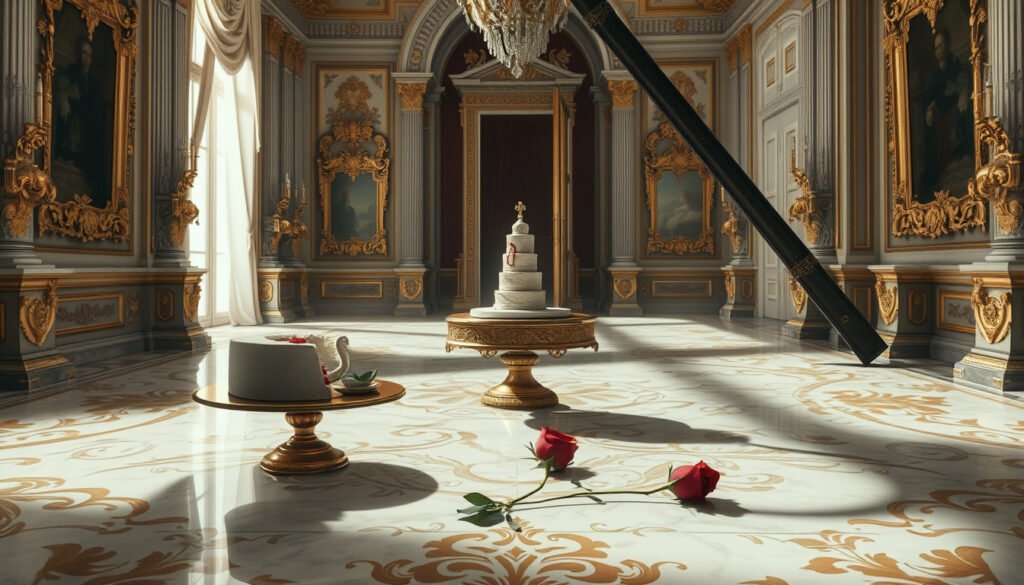
Marie Antoinette: Biography, Execution, Children, and Last Words
Marie Antoinette remains one of history’s most recognizable queens, yet much of her story is buried under centuries of myth and propaganda. Few figures have been so thoroughly reimagined — from a frivolous spendthrift to a martyr of the French Revolution.
Born: November 2, 1755 · Died: October 16, 1793 · Children: 4 (2 survived infancy) · Married to: Louis XVI (1770) · Execution method: Guillotine
Quick snapshot
- Executed by guillotine on October 16, 1793 (Encyclopaedia Britannica)
- Had four children with Louis XVI (Encyclopaedia Britannica)
- Did not say “Let them eat cake” (Wikipedia)
- Marriage unconsummated for seven years (Encyclopaedia Britannica)
- 1755: Born in Vienna
- 1770: Married Louis XVI
- 1789: French Revolution begins
- 1793: Executed by guillotine
- Surviving daughter exiled, later returned to France
- Younger son died in prison, proclaimed Louis XVII by royalists
- Burial moved to Saint-Denis basilica in 1815
- Enduring symbol of monarchical excess and martyrdom
Here are seven data points that frame her life and death:
| Label | Value |
|---|---|
| Full name | Maria Antonia Josepha Johanna von Habsburg-Lothringen |
| Birth | November 2, 1755, Vienna, Austria |
| Death | October 16, 1793, Paris, France |
| Spouse | Louis XVI of France |
| Children | 4 (Marie Thérèse, Louis Joseph, Louis Charles, Sophie) |
| Cause of death | Execution by guillotine |
| Burial | Basilica of Saint-Denis, France |
Why was Marie Antoinette so famous?
Her fame is built on propaganda — much of it fabricated by revolutionaries who needed a symbol of royal corruption. The real Marie Antoinette was often a scapegoat for France’s deeper problems.
Her role as Queen of France during the French Revolution
- An Austrian archduchess who became queen consort at age 19 (Encyclopaedia Britannica)
- Her reputation was deliberately destroyed by revolutionary propaganda that painted her as a foreign spy (World History Encyclopedia)
- She stood as the most visible woman in France during a period of extreme social upheaval
The myth of “Let them eat cake”
- The phrase “Let them eat cake” never came from Marie Antoinette — it was attributed to an earlier princess (Wikipedia)
- Revolutionaries used the anecdote to make her seem callous and out of touch with the starving poor
Her lavish lifestyle at Versailles
- Known for extravagant fashion, gambling, and the Petit Trianon, her personal retreat (Château de Versailles)
- Her spending became a symbol of aristocratic excess, though she was far from the only noble with expensive tastes
Her trial and execution
- Tried by the Revolutionary Tribunal beginning October 14, 1793 (Wikipedia)
- Found guilty of high treason and executed by guillotine two days later (Encyclopaedia Britannica)
Bottom line: Marie Antoinette’s fame is inseparable from the propaganda that destroyed her. Revolutionaries needed a figure to blame, and she — foreign, female, and visibly luxurious — was the perfect target.
Why did they execute Marie Antoinette?
The French Revolution and the fall of the monarchy
- The Revolution began in 1789; by 1792 the monarchy was abolished and the royal family was imprisoned in the Temple (Encyclopaedia Britannica)
- After Louis XVI’s execution in January 1793, Marie Antoinette became a political liability and a rallying symbol for foreign monarchies
The trial and charges of treason
- She was accused of high treason: conspiring with Austria and other foreign powers against France’s security (World History Encyclopedia)
- Revolutionaries also alleged sexual abuse of her son Louis-Charles — a charge now widely regarded as unfounded and designed to dehumanize her (German Wikipedia)
- The tribunal’s verdict was all but predetermined: she was found guilty on October 15, 1793
The execution on October 16, 1793
- She was taken to the Place de la Révolution (now Place de la Concorde) and beheaded in front of a crowd (History)
- Her last words, according to reports, were “Pardon me, Monsieur, I did not do it on purpose” — said after stepping on the executioner’s foot (Encyclopaedia Britannica)
- Her body was thrown into an unmarked grave before eventual reburial at the Basilica of Saint-Denis (Wikipedia)
The implication: Marie Antoinette was executed not just for her actions but for what she symbolized — a foreign queen who embodied the old regime. The revolutionary tribunal used her gender and motherhood as weapons, making the trial a spectacle of political destruction.
How many babies did Marie Antoinette have?
The fate of her children shaped her legacy. Only one survived the Revolution, and the youngest, Louis-Charles, died in captivity after being separated from her — a tragedy that royalist propaganda used both for and against her.
Marie Thérèse Charlotte (1778)
- Born December 19, 1778, known as Madame Royale (Wikipedia)
- Only child to survive to adulthood; lived until 1851
Louis Joseph, Dauphin of France (1781–1789)
- Born October 22, 1781, died at age seven from what was likely tuberculosis (Wikipedia)
- His death devastated Marie Antoinette, who was already struggling with public criticism
Louis Charles, Dauphin (1785–1795)
- Born March 27, 1785; recognized by royalists as Louis XVII after his father’s execution (Wikipedia)
- Imprisoned and supposedly mistreated; died in the Temple at age 10
Sophie Hélène Béatrice (1786–1787)
- Born July 9, 1786, died on June 19, 1787 (Wikipedia)
- Her death intensified the queen’s grief and contributed to her emotional withdrawal
The catch: Marie Antoinette’s motherhood was both a personal trial and a political liability. She bore four children in a ten-year span, yet only one lived to carry the Bourbon legacy. The loss of her sons, especially the dauphins, weakened the monarchy’s future and fueled rumors about her health and her marriage.
Why was Marie Antoinette’s marriage not consummated for 7 years?
Louis XVI’s physical condition (phimosis)
- Louis likely suffered from a condition called phimosis, making sexual intercourse painful or impossible (Encyclopaedia Britannica)
- He eventually underwent a minor surgical procedure (circumcision) that resolved the issue, but not until 1777
The couple’s youth and lack of communication
- Marie Antoinette was 14 and Louis 15 when they married in 1770 — both shy and poorly prepared for intimacy (Wikipedia)
- Court gossip and political pressure from Austria only made the situation worse
Emperor Joseph II’s intervention in 1777
- Marie Antoinette’s brother, Holy Roman Emperor Joseph II, visited Versailles in 1777 to pressure the couple and encourage medical treatment (Encyclopaedia Britannica)
- After Joseph’s visit, the marriage was finally consummated and Marie Antoinette became pregnant the following year
The pattern: The unconsummated marriage was a source of humiliation for both husband and wife, but it also undermined Marie Antoinette’s political standing. An heir was essential for the monarchy, and the delay fueled rumors that the king was impotent or that the queen was unfaithful.
What disease did Marie Antoinette have?
Tuberculosis (possible)
- After her imprisonment, historical accounts describe symptoms consistent with tuberculosis — weight loss, coughing, and weakness — but no definitive diagnosis exists (Wikipedia)
- Her eldest son, Louis Joseph, died of tuberculosis, suggesting a family vulnerability
Uterine cancer (debated)
- Some historians, based on autopsy records and symptoms described during her imprisonment, have suggested she may have had uterine cancer (Wikipedia)
- The evidence is circumstantial and not universally accepted
Depression and stress-related ailments
- Marie Antoinette suffered from severe anxiety, insomnia, and what contemporaries called “vapors” (Château de Versailles)
- The loss of a child, the political pressure, and eventually the trauma of imprisonment took a heavy toll on her mental health
Bottom line: Marie Antoinette’s health remains a medical cold case. What is clear: she lived under extraordinary stress, and both her physical and psychological suffering were exploited by her enemies and later romanticized by her defenders.
Timeline of Marie Antoinette’s life
From queen to prisoner in less than 20 years, her personal milestones were always entangled with national crisis:
| Date | Event |
|---|---|
| 1755 | Born in Vienna |
| 1770 | Marries Louis, Dauphin of France |
| 1774 | Louis XVI becomes king; Marie Antoinette becomes queen |
| 1777 | Holy Roman Emperor Joseph II visits to resolve marital issues |
| 1778 | First child, Marie Thérèse, born |
| 1781 | Birth of Louis Joseph (Dauphin) |
| 1785 | Birth of Louis Charles (future Louis XVII) |
| 1786 | Birth of Sophie (died 1787) |
| 1789 | French Revolution begins; royal family confined to Tuileries |
| 1791 | Failed flight to Varennes |
| 1792 | Monarchy abolished; family imprisoned in Temple |
| 1793 (March) | Louis XVI executed |
| 1793 (October) | Marie Antoinette tried and executed |
What this means: From queen to prisoner in less than 20 years, Marie Antoinette’s timeline captures the collapse of an entire political system. Her personal milestones — births, deaths, surgeries — were always entangled with national crisis.
Confirmed facts
- She was executed by guillotine on October 16, 1793 (Encyclopaedia Britannica)
- She had four children, two of whom died in infancy (Encyclopaedia Britannica)
- She did not say “Let them eat cake” (Wikipedia)
- Her marriage was not consummated for seven years due to Louis XVI’s medical condition (Encyclopaedia Britannica)
- Her body was initially buried in an unmarked grave before later reburial at Saint-Denis (Wikipedia)
What’s unclear
- Exact cause of her physical illness (tuberculosis vs. uterine cancer vs. something else)
- Whether she had an affair with Count Fersen (evidence is circumstantial)
- The fate of her severed head after execution (some stories claim it was recovered, but no confirmed chain)
- The precise nature of Louis XVI’s condition (phimosis or another anatomical issue)
Quotes that shaped her image
“Let them eat cake.”
— Apocryphally attributed to Marie Antoinette when told the people had no bread. The phrase was actually attributed to an earlier princess and used as propaganda against the queen. (Wikipedia)
“Pardon me, Monsieur, I did not do it on purpose.”
— Marie Antoinette’s last words, reportedly spoken to executioner Henri Sanson after accidentally stepping on his foot. (Encyclopaedia Britannica)
“Louis must die so that the country may live.”
— Maximilien Robespierre, justifying the king’s execution. (Encyclopaedia Britannica)
“She was the most unfortunate of women.”
— Edmund Burke, Reflections on the Revolution in France, expressing pity for her fate. (EBSCO Research Starters)
Marie Antoinette’s story is not simply a tragedy of personal bad decisions. It is a case study in how political revolution uses propaganda to dehumanize its targets, especially women. For modern audiences, the lesson is clear: the caricature of a heartless queen tells us more about the revolutionaries who created it than about the woman who died under the guillotine. Her real legacy lies in the questions she continues to force — about power, gender, and who gets to write history.
ebsco.com, revolution.chnm.org, biography.com, encyclopedia.com, thesun.co.uk
Frequently asked questions
Was Louis XVI faithful to Marie Antoinette?
Historical accounts suggest Louis XVI was faithful. No credible evidence of affairs on his part exists, though Marie Antoinette was rumored to have a relationship with Swedish count Axel von Fersen. The evidence for an affair is circumstantial and debated among historians.
Did they ever find Marie Antoinette’s head after execution?
After her execution, her head was displayed to the crowd, then placed in her coffin alongside her body, which was buried in an unmarked grave at the Madeleine cemetery. In 1815, her remains were exhumed and reburied at the Basilica of Saint-Denis. The exact chain of custody of her head after the initial display is unclear, but it was not preserved separately.
What were Marie Antoinette’s last words?
According to eyewitness accounts, she leaned over to the executioner Henri Sanson after accidentally stepping on his foot and said, “Pardon me, Monsieur, I did not do it on purpose.”
Did Marie Antoinette really say ‘Let them eat cake’?
No. The phrase “Qu’ils mangent de la brioche” (Let them eat cake) was attributed to her by revolutionaries, but it had been recorded earlier in connection with other royals, including Marie-Thérèse, wife of Louis XIV. Marie Antoinette likely never said it.
How old was Marie Antoinette when she died?
She was 37 years old at the time of her execution on October 16, 1793.
Where is Marie Antoinette buried?
She was initially buried in an unmarked grave at the Madeleine cemetery in Paris. In 1815, her remains were exhumed and transferred to the Basilica of Saint-Denis, the traditional burial site of French royalty.
What happened to Marie Antoinette’s children after her death?
Her eldest daughter, Marie-Thérèse Charlotte, survived the Revolution and later returned to France, living until 1851. Her younger son, Louis-Charles, died in prison in 1795 at age 10, likely from tuberculosis and mistreatment. He was recognized by royalists as Louis XVII.
Related reading
- Edward VII: Biography, Reign, and Lasting Legacy — a parallel portrait of a European monarch navigating political change.
- Emmanuel Macron: Age, Wife, Children, and Term Limit — a modern French leader profile that provides context on France’s political evolution since the monarchy.
More related posts
 Tom Liberatore: Age, Concussions, Pub Ownership, and Career
 LA Clippers vs Nuggets Match Player Stats (2025-26)
 Vittoria Ceretti: Age, Relationship with Leonardo DiCaprio, Net Worth
 Arthur Jones Death: Cause, Family & NFL Career
 Sir Donald Bradman: Records, Net Worth, and War Service
 Edward VIII: Abdication, Life, and Legacy
 Timberwolves vs Lakers Match Player Stats: Box Score & Analysis
 Spotify Web Player: Free Music & Podcasts for Everyone
