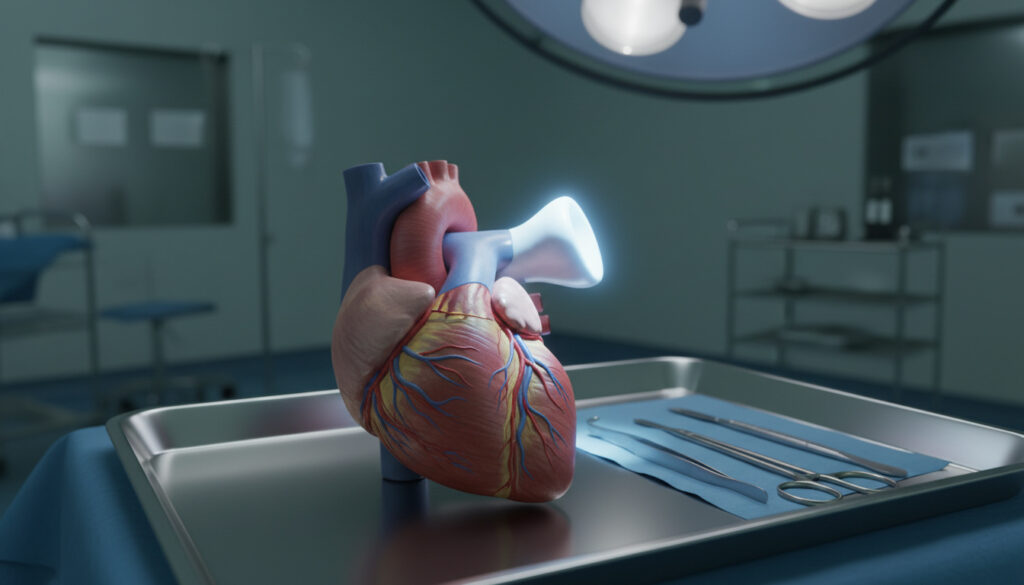
Marfan Syndrome Symptoms – Recognize Signs Early
Marfan syndrome represents a genetic disorder of connective tissue caused primarily by mutations in the FBN1 gene, which encodes the fibrillin-1 protein essential for structural integrity. The condition affects approximately one in 5,000 individuals worldwide, manifesting across skeletal, cardiovascular, ocular, and dural systems with highly variable severity. While some individuals present with life-threatening aortic complications in early adulthood, others experience only mild skeletal features that require minimal intervention.
Symptom presentation follows no universal pattern, even among family members sharing identical genetic mutations. The 2010 revised Ghent nosology provides the current diagnostic framework, emphasizing cardiovascular imaging and molecular confirmation alongside clinical examination. Early recognition remains critical, as the syndrome carries significant risk of aortic root dilatation that can progress to aneurysm or dissection without preventive monitoring.
What Are the Common Symptoms of Marfan Syndrome?
Skeletal, Cardiovascular, Ocular, Skin/Dura
Tall stature, long limbs, arachnodactyly, pectus deformities
Aortic root dilation and potential dissection
1 in 5,000 individuals globally
- Symptom severity ranges from isolated skeletal abnormalities to fatal cardiovascular events
- Systematic screening and early detection significantly improve long-term survival outcomes
- Genetic mutations in FBN1 produce highly variable clinical expression even within families
- The revised Ghent criteria standardize diagnosis by weighting aortic, ocular, and genetic findings
- Children typically display growth-related features; adults more commonly show cardiovascular progression
- Aortic monitoring proves essential regardless of external symptom severity
- Approximately 25 percent of cases arise from spontaneous mutations without family history
| Symptom Category | Common Signs | Severity Range |
|---|---|---|
| Skeletal Build | Tall stature, long arms, reduced upper-to-lower segment ratio, arachnodactyly | Mild disproportion to severe structural deformity |
| Spinal/Thoracic | Scoliosis, kyphosis, pectus carinatum, pectus excavatum, protrusio acetabuli | Postural discomfort to respiratory restriction |
| Ocular | Ectopia lentis, myopia >3 diopters, retinal detachment risk | Correctable vision loss to blindness |
| Cardiovascular | Aortic root dilatation (Z-score ≥2), mitral valve prolapse, chest pain | Asymptomatic to fatal dissection |
| Craniofacial | Dolichocephaly, enophthalmos, downslanting palpebral fissures, retrognathia | Cosmetic variation to airway compromise |
| Other Systems | Skin striae, dural ectasia, pneumothorax | Incidental findings to chronic pain |
Skeletal Symptoms and Physical Features
Disproportionate growth patterns often constitute the earliest observable indicators of Marfan syndrome. Individuals typically exhibit reduced upper-to-lower body segment ratios and arm spans exceeding their heights by significant margins. Arachnodactyly—characterized by long, slender fingers—produces positive wrist and thumb signs when tested against standard physical examination protocols.
Spinal and Thoracic Manifestations
Scoliosis affects the majority of patients, frequently progressing during adolescent growth spurts and contributing one point toward the diagnostic systemic score. Pectus carinatum (protrusion of the sternum) receives two scoring points under Ghent criteria, while pectus excavatum (hollowed chest) or general asymmetry earns one point. Additional skeletal markers include reduced elbow extension, hindfoot deformity (pes planus or vertical talus), and protrusion of the acetabulum into the pelvic cavity.
Rapid growth disproportionately affecting limbs often serves as the earliest skeletal warning sign in children. The wrist sign—where the thumb overlaps the fingers when encircling the opposite wrist—and the thumb sign—where the thumb extends beyond the ulnar border of the hand—collectively contribute three points toward the diagnostic systemic score when both are present.
Facial features may include dolichocephaly (elongated skull), enophthalmos (sunken eyes), downslanting palpebral fissures, malar hypoplasia (flattened cheekbones), and retrognathia (recessed jaw). These characteristics collectively contribute one point when three of five appear together.
Cardiovascular Symptoms and Risks
Cardiovascular manifestations present the primary mortality risk in Marfan syndrome, requiring lifelong surveillance regardless of outward physical presentation. The aortic root—the section of the aorta exiting the heart—demonstrates progressive dilatation in the majority of patients, measurable via echocardiogram through standardized Z-scores.
Aortic Complications and Monitoring
In adults, aortic root dilatation reaching a Z-score of 2 or greater satisfies major diagnostic criteria and signals elevated risk for aneurysm formation or dissection. The threshold increases to Z-score ≥3 for individuals under 20 years, reflecting normal aortic growth patterns in pediatric populations. Some patients experience chest pain associated with vascular strain, though many remain asymptomatic until catastrophic events occur.
Aortic root dilatation represents the most life-threatening manifestation of the syndrome. Adults require surgical intervention evaluation at Z-score ≥2, while adolescents use the stricter threshold of ≥3. Regular echocardiographic surveillance remains essential even when patients report no cardiovascular symptoms.
Valvular Abnormalities
Mitral valve prolapse occurs frequently, contributing one point to the systemic diagnostic score. This valvular dysfunction may cause arrhythmias, fatigue, or palpitations, though many cases remain hemodynamically stable with monitoring. The combination of mitral valve involvement and aortic root dilation significantly increases the complexity of clinical management.
Eye and Ocular Symptoms
Ocular involvement affects the majority of individuals with Marfan syndrome, with manifestations typically appearing during childhood or adolescence. These features not only threaten vision but serve as major diagnostic criteria when combined with cardiovascular findings.
Lens Dislocation and Refractive Errors
Ectopia lentis—dislocation of the eye’s crystalline lens—constitutes a major diagnostic criterion under revised Ghent guidelines. When accompanied by aortic root dilatation or confirmed FBN1 mutation, ectopia lentis confirms Marfan syndrome diagnosis even without family history. Orphanet diagnostic criteria emphasize this combination’s specificity.
Myopia exceeding three diopters contributes one point to the systemic score, while lens dislocation serves as a major standalone criterion. Regular ophthalmologic surveillance includes screening for retinal detachment risk, which increases significantly in this population due to connective tissue fragility.
High-grade myopia often progresses rapidly during growth periods, requiring frequent prescription adjustments. The risk of retinal detachment necessitates immediate evaluation for sudden visual changes, flashes, or floaters.
Evolution of Diagnostic Understanding
-
Antoine Marfan first describes the constellation of skeletal features in a pediatric patient, establishing the initial clinical recognition of the syndrome.
-
Researchers identify mutations in the FBN1 gene on chromosome 15 as the primary genetic cause, enabling molecular diagnostic capabilities.
-
The revised Ghent nosology replaces previous diagnostic schemes, prioritizing aortic root measurement, ectopia lentis, and genetic confirmation over family history alone. Published in the Journal of Medical Genetics, these criteria reduce diagnostic bias and improve sensitivity.
-
Molecular confirmation through genetic testing identifies causative mutations in greater than 95 percent of clinically diagnosed cases, facilitating targeted family screening and prenatal diagnostics.
Severity, Pain, and Diagnostic Certainty
| Established Clinical Facts | Variable or Uncertain Aspects |
|---|---|
| FBN1 mutations definitively cause the syndrome | Exact timing of aortic complication onset in individual patients |
| Systemic score ≥7 indicates significant systemic involvement | Predictability of specific symptom severity within families |
| Aortic dilation follows measurable Z-score trajectories | Individual response to prophylactic medications without surgery |
| Ectopia lentis confirms diagnosis when combined with aortic findings | Long-term outcomes of mild phenotypes without cardiovascular history |
| Inheritance follows autosomal dominant patterns | Penetrance variation causing skipped generations or de novo presentations |
Pain manifests variably across the condition’s spectrum. Some individuals report chest pain associated with aortic root dilation or valvular dysfunction, while others experience musculoskeletal discomfort from scoliosis, pectus deformities, or dural ectasia. However, many patients, particularly young adults, remain entirely pain-free despite significant cardiovascular involvement, complicating self-assessment of severity.
What Causes Marfan Syndrome Symptoms?
Mutations in the FBN1 gene produce defective fibrillin-1 protein, compromising the structural integrity of connective tissues throughout the body. This protein normally provides elasticity and strength to tendons, ligaments, blood vessels, and the eye’s suspensory ligaments. Genomic Education Programme resources confirm that while the condition follows autosomal dominant inheritance patterns, approximately one-quarter of cases arise from spontaneous mutations without parental transmission.
The genetic defect produces secondary effects on transforming growth factor-beta signaling, contributing to the tissue fragility characteristic of the syndrome. Understanding the genetic basis helps distinguish Marfan from phenotypically similar conditions such as Loeys-Dietz syndrome, which involves mutations in TGFBR1 or TGFBR2 genes and typically presents with more aggressive vascular disease, bifid uvula, and widely spaced eyes.
Clinical Sources and Evidence Base
Diagnosis relies on seven rules, prioritizing aortic root dilatation (Ao), ectopia lentis (EL), FBN1 mutation, systemic score, and family history. In the absence of family history, the presence of Ao and EL, Ao and FBN1 mutation, Ao and systemic score ≥7, or EL and FBN1 known to cause aortic disease confirms the syndrome.
Revised Ghent Nosology, Journal of Medical Genetics, 2010
The identification of a bona fide FBN1 mutation in the presence of aortic root dilatation is sufficient for diagnosis, even without ectopia lentis or major skeletal features.
Current clinical practice emphasizes integration of cardiac imaging, ophthalmologic examination, and genetic testing. NHS diagnostic protocols require assessment of the aortic Z-score via echocardiogram, slit-lamp examination for lens dislocation, and genetic consultation for FBN1 sequencing in suspected cases.
Summary of Clinical Presentation
Marfan syndrome produces multisystem symptoms ranging from tall stature and long digits to potentially fatal aortic complications, all stemming from defects in the FBN1 gene. The revised Ghent criteria provide standardized diagnosis through evaluation of aortic root measurements, lens dislocation, systemic scoring, and molecular confirmation. While skeletal and ocular features often appear during childhood, life-threatening cardiovascular risks typically require surveillance across the lifespan. Early intervention protocols focus on beta-blocker therapy, activity modification, and prophylactic aortic surgery when diameters exceed safety thresholds.
Frequently Asked Questions
Is Marfan syndrome painful?
Some individuals experience chest pain from cardiovascular strain or musculoskeletal discomfort from spinal deformities, though many remain asymptomatic until complications develop.
Can Marfan syndrome symptoms be mild?
Yes, clinical presentation varies widely. Mild cases may show only subtle skeletal features like tall stature or arachnodactyly without immediate cardiovascular risk.
At what age do symptoms typically appear?
Skeletal signs often emerge during childhood growth spurts, while serious aortic complications more commonly manifest in adulthood, though pediatric screening remains essential.
How is Marfan syndrome diagnosed?
Diagnosis follows the 2010 revised Ghent criteria, integrating echocardiographic aortic measurement, eye examination for lens dislocation, systemic feature scoring, and FBN1 genetic testing.
What distinguishes Marfan from Loeys-Dietz syndrome?
Loeys-Dietz involves TGFBR1/2 mutations and typically presents with bifid uvula, hypertelorism, and more aggressive vascular disease than seen in Marfan syndrome.
More related posts
 Malcolm Roberts: One Nation Senator, Citizenship Controversy
 Neymar Jr: Inheritance, Net Worth, and Career Downfall
 Nick Daicos: Complete Profile – Salary, Stats, Family
 Jake Weatherald: Biography, Age, Father, and Cricket Career
 Sword Art Online: Watch Order, Seasons & Where to Stream
 All Might: Biography, Powers, and Key Moments in My Hero Academia
 Liam Neeson and Pamela Anderson: Dating or Just Friends
 Hollow Knight Silksong: Release, Price, Difficulty & More
