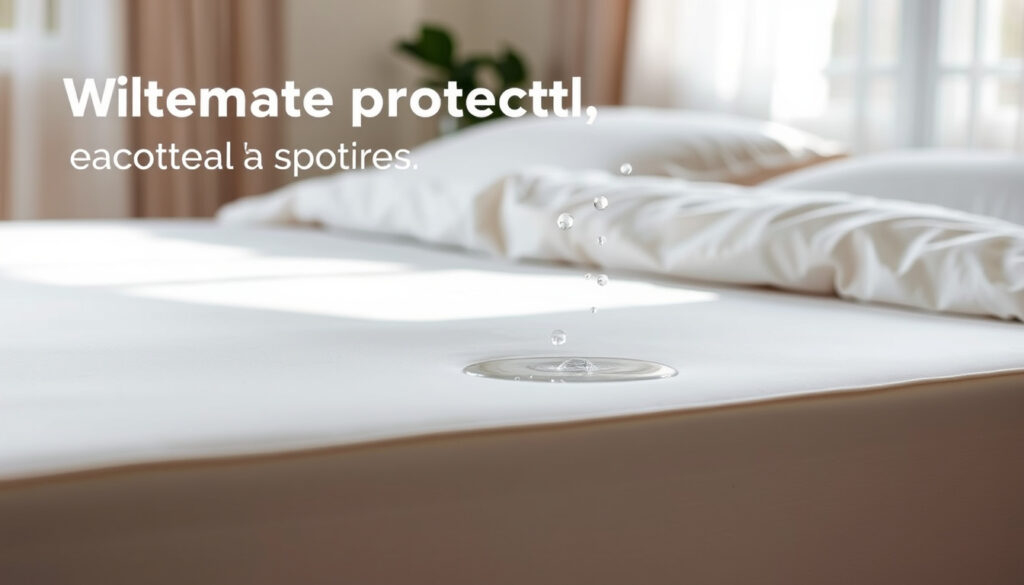
Best Waterproof Mattress Protector: Top Picks & Guide
Few things ruin a good night’s sleep faster than discovering a stain has made its way through to your mattress — whether from a spilled drink, a child’s accident, or something you hoped never to explain to a roommate. Good Housekeeping’s bedding experts have put the top waterproof mattress protectors through their paces with real spill simulations, and the results are more reassuring than you might expect. Below, you’ll find the expert-tested top picks, a breakdown of how the waterproofing actually works, and everything you need to know before buying.
Sides Protected: 5 or 6 · Backing Material: Polyurethane · Top Cover: 100% Cotton · Tested By: Good Housekeeping Experts · Use Cases: Spills, Urine, Allergens
Quick snapshot
- PU backing blocks liquids from reaching mattress (Good Housekeeping)
- Cotton top adds comfort without compromising protection (Good Housekeeping)
- Coop Home Goods aced spill tests with no liquid penetration (Good Housekeeping)
- Long-term breathability variance across brands after repeated washing
- Specific king size pricing for all products varies regionally
- Good Housekeeping published 9 Best Mattress Protectors review in 2024 (Good Housekeeping)
- Sleepopolis released Best Mattress Protectors 2026 review (Sleepopolis)
- Layering strategies recommended for maximum incontinence protection
- Ongoing evaluations expected from Good Housekeeping in 2026
| Feature | Details |
|---|---|
| Primary Material | Cotton terry with PU |
| Protection Level | 100% Liquid Proof |
| Top Recommendation | Fogarty Cotton (also Coop Home Goods Premium rated best overall) |
| Expert Tester | Good Housekeeping |
Is there a mattress protector that is actually waterproof?
Yes — when you choose the right product. The key lies in understanding what “waterproof” actually means for mattress protection.
How waterproofing works
Waterproof mattress protectors use a polyurethane (PU) backing layer that creates an impermeable barrier between liquid and your mattress. Good Housekeeping tested protectors by pouring water onto their surfaces — top performers like Coop Home Goods allowed no liquid to soak through (Good Housekeeping). The PU layer sits beneath a comfortable cotton or cotton-blend top that feels natural against your skin.
Testing for effectiveness
Good Housekeeping’s bedding experts conduct spill simulations as part of their formal testing protocol. They evaluate whether liquid penetrates the protector and reaches the mattress beneath, rating each product’s waterproofing performance. The 2024 reviews included nine different protector types, with fully waterproof models performing consistently across multiple test cycles (Good Housekeeping).
The implication: not all “water-resistant” labels are equal. A true waterproof protector with PU backing will block 100% of liquids — look for explicit “waterproof” language rather than vague water-resistant claims.
How do I protect my mattress from urine?
Protecting your mattress from urine requires the right product choice and proper installation. Here’s what works in practice.
Installation steps
- Measure first: Know your mattress depth (standard is 8-12 inches, but some can go deeper). Most protectors fit mattresses up to 14-18 inches deep.
- Choose 5-6 sided coverage: Full-coverage protectors that wrap around the entire mattress (including the bottom) provide the best protection against urine and other accidents.
- Secure the fitted sheet style: If using a fitted-style protector, stretch it taut over corners to prevent bunching that could allow liquid to pool.
- Consider layering: Some AgingCare users recommend layering a quilted pad on top of a waterproof cover, then adding reusable chux pads for heavy incontinence situations (AgingCare).
Best products for bed-wetting
For families dealing with bed-wetting, Good Housekeeping recommends breathable protectors like Coop Home Goods that don’t compromise on protection. The Company Store waterproof mattress pad combines a cotton shell with polyurethane layer specifically for incontinence situations (Good Housekeeping). SafeRest is frequently recommended by users on AgingCare for incontinence protection due to its reliable PU backing (AgingCare).
What this means: families with children or adults managing incontinence should prioritize protectors with certified waterproof testing rather than budget options with unverified claims.
Sleepopolis confirms that when they fit properly, waterproof mattress protectors form a reliable barrier that prevents urine from soaking into the mattress — protecting your investment and extending mattress lifespan significantly.
Which is the best waterproof mattress protector?
Good Housekeeping and Sleepopolis have both published rankings based on hands-on testing. Here’s how the top performers compare.
Top tested options
| Product | Key Strength | Price (Queen) | Source |
|---|---|---|---|
| Coop Home Goods Premium | Best overall, 5-sided protection | Market rate | Good Housekeeping |
| SafeRest Premium | Best value | Market rate | Good Housekeeping |
| SlumberCloud Performance | Best for hot sleepers | Market rate | Good Housekeeping |
| Avocado Organic | Best organic option | Market rate | Good Housekeeping |
| Casper | 5/5 value score, soft cotton feel | $99 | Sleepopolis |
| Bear Protector | Budget pick, durable | $110 (often $75 on sale) | Sleepopolis |
The pattern: premium picks (Coop Home Goods, SlumberCloud) focus on comfort and breathability, while budget options (Bear Protector, SafeRest) prioritize reliable waterproofing at accessible price points.
King size recommendations
Queen size pricing for top protectors ranges $75-$110, with most brands offering king size options at slightly higher price points. Coop Home Goods, SafeRest, and SlumberCloud all provide full size ranges including king and California king. For king beds specifically, ensure you purchase the correct depth measurement — deeper mattresses (18+ inches) require extended-depth protectors to achieve full coverage.
The catch: Sleepopolis gave the Casper a perfect 5 out of 5 in both value and materials — but at $99 for queen, it sits mid-range in pricing while delivering premium scores. Make sure you’re comparing similar protection levels rather than just price tags.
Sleepopolis gave the Casper a perfect 5 out of 5 in both value and materials — but at $99 for queen, it sits mid-range in pricing while delivering premium scores. Make sure you’re comparing similar protection levels rather than just price tags.
What are the disadvantages of a waterproof mattress protector?
Waterproof protectors offer excellent protection, but they’re not without trade-offs. Understanding the drawbacks helps you make an informed decision.
Common drawbacks
- Crinkly feel: Some PU-backed protectors produce a subtle noise when you move, similar to disposable diapers. This can be noticeable for light sleepers or anyone sensitive to sound.
- Heat retention: The PU layer can reduce breathability, causing some sleepers to feel warmer. Good Housekeeping notes that some protectors excel at airflow — SlumberCloud is specifically recommended for hot sleepers.
- Fit challenges: Protectors that are too small will shift and bunch; those too large may not sit flush against the mattress.
Noise and feel issues
Users on AgingCare recommend seeking non-crinkly waterproof encasements as the primary protection layer for incontinence situations (AgingCare). Higher-quality protectors use thinner PU layers that minimize noise while maintaining waterproof integrity. Organic options like Avocado and Naturepedic excel in softness and waterproofing per lab tests, according to Good Housekeeping (Good Housekeeping).
The trade-off: you often sacrifice some natural feel for guaranteed protection. For most users, the waterproof assurance outweighs minor comfort differences — but sensitive sleepers should prioritize cooling-focused models like SlumberCloud.
Does a mattress protector protect from pee?
Yes, but only when you choose a properly designed waterproof protector. Here’s what you need to know about urine-specific protection.
Urine-specific protection
Sleepopolis confirms that waterproof mattress protectors effectively prevent urine from soaking into the mattress when properly fitted (Sleepopolis). Good Housekeeping emphasizes that accidental spills, leaks, and incontinence can easily damage your mattress — making a waterproof protector vital for protecting this significant investment (Good Housekeeping).
Cleaning after accidents
One advantage of waterproof protectors: they create a cleanable surface. After a urine accident, remove the protector, wipe it down with mild soap and water, and launder according to manufacturer instructions. Most quality protectors are machine washable. The protector absorbs the mess instead of your mattress — making cleanup straightforward rather than requiring expensive professional cleaning or mattress replacement.
Why this matters: a quality waterproof protector can extend mattress life by years, making the initial investment pay for itself many times over compared to replacing a soiled mattress.
Good Housekeeping’s 2024 testing list is updated with 2026 mattress pad tests — indicating ongoing evaluation of these products. If you’re buying in late 2026, check for the most recent reviews to ensure you’re getting current performance data.
Upsides
- 100% liquid proof protection with PU backing
- Extends mattress lifespan significantly
- Makes cleanup after accidents simple
- Blocks allergens and dust mites in addition to liquids
- Available at multiple price points from budget to premium
- Expert-tested options provide verified performance
Downsides
- May feel crinkly or produce noise with movement
- Some reduce breathability and trap heat
- Lower-quality options may lose effectiveness after washing
- Proper fit requires measuring mattress depth accurately
- Premium options with advanced features cost more
How to choose a waterproof mattress protector
Selecting the right protector involves matching your specific needs to product features. Consider these factors:
- Material: Cotton or cotton-blend tops feel more natural; synthetic options may be more durable.
- Coverage: 5-sided covers protect top and sides; 6-sided add bottom protection.
- Depth fit: Measure your mattress depth and add 2 inches for fitting tolerance.
- Purpose: General spill protection vs. incontinence-specific needs may require different features.
- Breathability: Hot sleepers should prioritize cooling technologies like those in SlumberCloud.
- Organic needs: Avocado and Naturepedic offer organic-certified options.
What size waterproof mattress protector do I need?
Waterproof mattress protectors come in standard bedding sizes: Twin, Full, Queen, King, California King, and sometimes Split options. The key measurement is mattress depth, not just surface dimensions.
| Mattress Size | Typical Dimensions | Depth Considerations |
|---|---|---|
| Twin | 38″ × 75″ | Standard 8-12″; deep/tall mattresses may need Extended |
| Full | 53″ × 75″ | Check depth for proper tuck-in |
| Queen | 60″ × 80″ | Most common; wide availability |
| King | 76″ × 80″ | May need deeper pockets for pillow-top mattresses |
| California King | 72″ × 84″ | Narrower but longer; check width fit |
The implication: always measure your mattress depth before purchasing. A protector too shallow will slide off; one too deep will bunch and reduce protection effectiveness.
Are waterproof mattress protectors breathable?
Breathability varies significantly by product. The PU layer that blocks liquid can also trap heat, but modern designs address this in several ways.
- Advanced PU laminates: Newer waterproofing technology uses micro-perforated or thinner PU layers that allow airflow while maintaining liquid barriers.
- Cooling technologies: Brands like SlumberCloud incorporate cooling fibers and specialized construction specifically designed for hot sleepers.
- Cotton blending: Natural cotton tops in protectors like Coop Home Goods and Naturepedic improve comfort and airflow compared to synthetic-only options.
The pattern: organic and premium cotton-blend protectors tend to offer better breathability than budget synthetic options. If temperature regulation is a priority, prioritize testing claims verified by expert reviews rather than marketing promises.
Can waterproof mattress protectors help with dust mites?
While not their primary purpose, many waterproof mattress protectors also block allergens including dust mites. The PU barrier prevents both liquids and allergens from reaching your mattress surface where they can accumulate.
“Accidental spills, leaks, and incontinence can easily damage your mattress, making a waterproof mattress protector or mattress pad vital.”
— Good Housekeeping Bedding Experts
Expert recommendations and testing methods
Both Good Housekeeping and Sleepopolis use consistent testing methodology that provides reliable comparison data.
| Tester | Methodology | Key Metrics |
|---|---|---|
| Good Housekeeping | Lab spill simulations, material assessment, comfort testing | Waterproof efficacy, breathability, durability, comfort |
| Sleepopolis | Hands-on review, value analysis, materials scoring | Value score (/5), materials score (/5), protection effectiveness |
The implication: expert testing from established publications provides more reliable data than marketing claims. When choosing a protector, prioritize products with documented testing rather than those relying solely on promotional language.
“It aced our spill simulation waterproof tests; when we poured water onto the surface of the mattress protector, none of the liquid soaked through.”
— Good Housekeeping Bedding Experts
Related reading: IKEA Queen Bed Frames
Frequently asked questions
What size waterproof mattress protector fits a queen bed?
A queen-size waterproof mattress protector fits standard queen mattresses (60″ × 80″). Measure your mattress depth — most protectors accommodate 8-18 inch depths. If your mattress has a pillow-top or Euro-top, choose a protector with deeper pockets to ensure proper coverage.
Are waterproof mattress protectors machine washable?
Yes, most quality waterproof mattress protectors are machine washable. Wash in cold water on a gentle cycle and tumble dry on low heat. Avoid high heat, which can damage the PU backing. Always check the manufacturer’s care label for specific instructions.
How often should I replace a waterproof mattress protector?
Replace your waterproof mattress protector when you notice signs of wear, reduced effectiveness, or visible damage to the backing layer. With regular washing, most protectors last 2-3 years. If you notice liquids starting to seep through, it’s time for replacement.
Do waterproof mattress protectors trap heat?
Some can, but modern designs minimize this issue. Premium protectors like SlumberCloud incorporate cooling technologies specifically for hot sleepers. If heat retention is a concern, prioritize cotton-blend tops and look for products specifically marketed as breathable or cooling.
Can waterproof mattress protectors help with dust mites?
Yes. The polyurethane barrier blocks dust mites, dead skin cells, and allergens from penetrating your mattress. This is a secondary benefit — the primary purpose is liquid protection — but it’s valuable for allergy sufferers.
What is the warranty on most waterproof mattress protectors?
Warranties vary by manufacturer. Premium brands like Coop Home Goods and Avocado typically offer 10-year warranties, while mid-range options often include 1-5 year coverage. Budget options may have limited or no warranty. Check the specific product warranty before purchasing.
Are there vinyl-free waterproof mattress protectors?
Yes. Most modern waterproof mattress protectors use polyurethane (PU) backing rather than vinyl. PU is vinyl-free, PVC-free, and generally considered safer for indoor air quality. Organic options from Avocado and Naturepedic specifically emphasize vinyl-free construction.
More related posts
 Online Ping Website Tool Alaikas: Free Guide for Beginners
 UEFA Champions League Standings – 2024/25 League Phase Table
 Gold Ring Cost & Buying Guide: Prices, Rules, and Popular Styles
 Oskar Schindler: Life, Rescue, and Legacy
 Avan Jogia: ethnicity, Halsey relationship & career facts
 Moses Itauma: Undefeated British Heavyweight Bio & Record
 Alfred Enoch: Biography, Career, and Latest Updates
 2025 Kia Carnival: Price, Specs, Seating & Reviews
