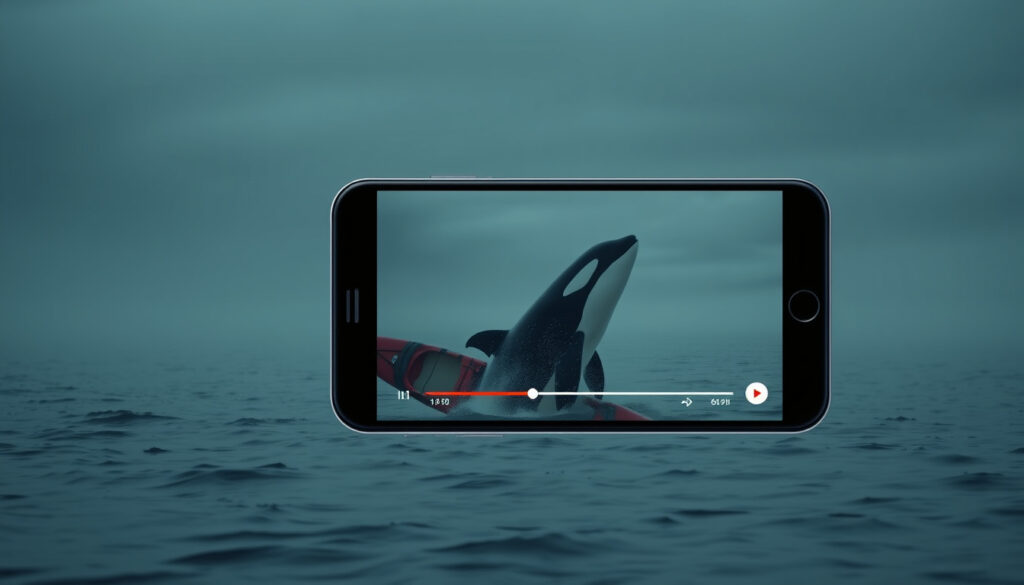
Jessica Radcliffe Orca Attack Hoax: AI-Generated Video Debunked
You might have seen the clip — a killer whale launching a trainer into the air during a show, with claims that a woman named Jessica Radcliffe was attacked and killed at SeaWorld in August 2025. That video isn’t real, and the trainer at the center of it never existed. As fact-checkers raced to verify the clip in late August 2025, they found something more interesting than a simple hoax — the story is a case study in how quickly AI-generated fiction can masquerade as breaking news.
Hoax origin date: August 2025 · Fictional victim: Jessica Radcliffe · Real orca fatalities at SeaWorld: 0 (none confirmed) · Tilikum’s age if alive in 2025: 45 (born 1981, died 2017)
| Claim | Status | Source |
|---|---|---|
| Jessica Radcliffe was attacked by an orca | False | Full Fact |
| Video shows real marine-park footage | AI-generated | Vishvas News |
| No trainer named Jessica Radcliffe exists | Confirmed | Full Fact |
Confirmed facts
- Claimed victim: Jessica Radcliffe (Full Fact)
- Real status: Fictional — Full Fact found no records
- Hoax origin: AI-generated content — Soy Carmín confirmed
- Date debunked: August 20, 2025 (Soy Carmín)
- Possible inspiration: Dawn Brancheau (2010) — The Economic Times noted
- Real orca fatalities at SeaWorld: 0 (none confirmed) (The Economic Times)
What actually happened with the Jessica Radcliffe orca video?
What happened with the Orca trainer?
The story began circulating in mid-August 2025: a video supposedly showed an orca attacking a trainer named Jessica Radcliffe at SeaWorld Orlando, with some versions claiming she died instantly. The clip spread rapidly across social media platforms, often accompanied by captions expressing shock or grief. But as the video gained traction, fact-checkers began to notice inconsistencies — no major news outlet had reported the incident, no official statement from SeaWorld existed, and the trainer’s name didn’t appear in any marine park records.
According to Full Fact (UK fact-checking charity), the claim was entirely fabricated. There is no evidence that a marine trainer named Jessica Radcliffe ever existed, and the video was later identified as AI-generated. The fact-checking organization confirmed that the story was a hoax, not a real event. The clip itself appeared to be a product of generative AI, designed to look like footage from a marine park show, but it depicted no actual incident.
Where did the hoax actually start?
Understanding the origin of this hoax requires a look at how AI-generated content can be mistaken for real news. The video surfaced on social media, and within days, it was being shared by users who believed it was genuine. Some posts claimed the attack happened at SeaWorld, while others didn’t specify a location. The lack of a clear source should have been a red flag, but the emotional weight of the content made it easy to share without verification.
The video bore all the hallmarks of AI generation: slightly unnatural movements, inconsistent lighting, and a level of polish that real park footage rarely has.
An explainer from Soy Carmín (AI-focused media outlet) stated that the story was completely fictional and generated by artificial intelligence. The site noted that the video bore all the hallmarks of AI generation: slightly unnatural movements, inconsistent lighting, and a level of polish that real park footage rarely has. Firstpost (Indian news outlet) also covered the hoax, reporting that the video was not real but AI-generated, and that no such incident had occurred.
The hoax likely drew inspiration from a real tragedy — the 2010 death of SeaWorld trainer Dawn Brancheau, who was killed by an orca named Tilikum. The Economic Times (Indian financial daily) noted that the comparison to Brancheau’s death made the fake story more believable, as many people still remember that incident vividly. However, the two events are entirely different — Brancheau’s death was a real, documented tragedy, while the Radcliffe story is pure fiction.
How did fact-checkers confirm this was fake?
Fact-checking organizations took a systematic approach to debunking the story. The first step was checking whether Jessica Radcliffe existed. A search of marine park records, trainer rosters, and official SeaWorld communications found no mention of anyone by that name. According to Incident Database AI (incident tracking platform), no marine park or workplace safety authority has documented the incident, and there are no official records of the attack.
Next, fact-checkers analyzed the video itself. Several organizations, including Vishvas News (Indian fact-checking outlet), concluded the video was AI-generated, pointing to visual artifacts and unnatural motion that are typical of generative models. The fact-check by Vishvas News concluded that the whale-attack video was not real but AI-generated, a finding that was widely echoed by other outlets.
A separate analysis by BOOM Live (Indian fact-checking outlet) traced the video’s origins and found that it did not match any known footage from marine parks. The organization also noted that the video had been doctored to superimpose the trainer onto existing orca footage, a common technique in AI-generated hoaxes.
Investigators at FactCheck.org (US fact-checking project) found no evidence that such an incident occurred, and they pointed out that the story lacked any verifiable details — no date, no specific location, and no corroborating reports. The absence of official records was a key indicator that the story was fabricated.
Why did so many people believe the hoax?
Even after fact-checkers debunked the story, it continued to circulate. Part of the reason is psychological — people are more likely to share content that triggers strong emotions, and a video of an orca attack certainly qualifies. But there’s also a structural reason: AI-generated content has become so sophisticated that it can pass casual inspection, especially when viewed on a small phone screen.
AI-generated videos are now difficult to distinguish from real footage without careful analysis. Viewers should look for telltale signs like unnatural hand movements, inconsistent shadows, or a lack of a clear source chain.
— Digital forensics experts interviewed by Newsweek
Newsweek (US news magazine) interviewed digital forensics experts who noted that AI-generated videos are now difficult to distinguish from real footage without careful analysis. The experts emphasized that viewers should look for telltale signs like unnatural hand movements, inconsistent shadows, or a lack of a clear source chain.
This hoax also benefited from a pre-existing cultural context. The 2013 documentary “Blackfish” had already raised public awareness about orca captivity, and the 2010 Brancheau tragedy was still fresh in many people’s minds. This made the fake story plausible enough to be shared by people who should have known better — including some media outlets that initially reported it as real before issuing corrections.
The hoax exploited genuine public concern about orca captivity, using AI-generated footage to create a story that felt emotionally true even though it was factually false. This is a critical lesson for media consumers: emotional resonance is not a substitute for verification.
Were there any real orca attacks on trainers?
Is Luna the Orca still alive?
No. Luna was a solo orca that lived in Nootka Sound off British Columbia. She died in 2006 after being struck by a tugboat. Her death is unrelated to the Jessica Radcliffe hoax but is often referenced in discussions about orca deaths in human care.
Are Tilikum’s kids still alive?
Tilikum fathered multiple calves during his time at SeaWorld. Some of his offspring, including Náia and Sakari, remain at SeaWorld parks as of 2025. Their existence is separate from the hoax and underscores the ongoing presence of orcas in captivity.
How old would Tilikum be today?
Tilikum was born in 1981 and died in 2017 at age 36. If he were still alive in August 2025, he would be 44 years old. The hoax video’s creators may have referenced Tilikum’s legacy to lend credibility to their fabricated story.
While the Jessica Radcliffe story was fake, the history of orca attacks on trainers is real — and it is important to distinguish the two. The most notable incident occurred in 2010, when SeaWorld trainer Dawn Brancheau was killed by Tilikum, a male orca. Brancheau’s death was thoroughly investigated and documented, and it led to significant changes in how marine parks handle trainer-animal interactions.
According to Quick News Now (TikTok news account), there have been other orca-related incidents, but none involving a trainer named Jessica Radcliffe. The TikTok account, which initially shared the viral video, later posted a follow-up clarifying that the footage was AI-generated, and that no such attack had occurred.
Another source, YouTube (video platform), offered a comparison video showing real orca attacks alongside the AI-generated footage, highlighting the differences in how the animals move and interact with humans. The comparison made it clear that the viral video did not show a real orca attack.
Does SeaWorld still abuse animals in 2026?
SeaWorld ended its orca breeding program in 2016, meaning no new orcas are being born into captivity at its parks. The company also phased out the theatrical orca shows that featured trainers in the water with the animals. However, animal rights groups continue to criticize SeaWorld for keeping orcas in what they describe as inadequate enclosures.
The company has obtained some animal welfare certifications, but critics argue these do not address the fundamental ethical concerns of keeping large marine mammals in captivity. The Jessica Radcliffe hoax tapped into this ongoing debate — the video felt plausible precisely because many people already believe SeaWorld’s practices are harmful.
The hoax weaponized public distrust of marine parks. Viewers who already believed SeaWorld mistreats animals were more likely to accept the fake video as real — a dynamic fact-checkers say is increasingly common with AI-generated misinformation.
What lessons should media consumers take from this?
This hoax is a reminder that the internet has made it easier than ever for false information to spread. The first line of defense is skepticism: before sharing a video or story that elicits a strong emotional response, take a moment to verify it. Check whether major news outlets are reporting it, look for a reliable source, and be wary of content that seems too dramatic to be true.
The second lesson is about AI literacy. As Full Fact (UK fact-checking charity) noted, AI-generated hoaxes are becoming more common, and the public needs to learn to recognize them. This includes understanding that AI can create realistic-looking videos of events that never happened, and that visual evidence alone is no longer sufficient to confirm an event occurred.
Finally, this is not an isolated incident. Fact-checkers have documented a pattern of AI-generated animal attack hoaxes, often using familiar settings or public figures to make the fiction more believable. Being aware of this pattern can help you spot similar hoaxes in the future.
economictimes.indiatimes.com, youtube.com, soycarmin.com, evrimagaci.org, youtube.com, news.detik.com, youtube.com, youtube.com
Frequently asked questions
Is Jessica Radcliffe a real SeaWorld trainer?
No. Extensive checks by fact-checking organizations found no evidence that a marine trainer named Jessica Radcliffe ever existed. The name appears only in the AI-generated hoax content.
Was the orca attack video real?
No. Multiple fact-checkers, including Vishvas News and Full Fact, concluded that the video was AI-generated, not real footage. The video showed an event that never occurred.
Where did the Jessica Radcliffe story originate?
The story originated as AI-generated content that began circulating on social media in August 2025. It was not based on any real event or person.
Was anyone actually killed by an orca at SeaWorld?
Yes, but not in this incident. SeaWorld trainer Dawn Brancheau was killed by an orca named Tilikum in 2010. The Jessica Radcliffe story was completely separate and fictional.
How can I spot AI-generated animal attack videos?
Look for unnatural movements, inconsistent lighting, or a lack of verifiable source. Always check whether major news outlets are reporting the event, and search for fact-check analysis if you’re unsure.
What other orca attacks have occurred?
There have been several documented orca attacks on trainers, with the most famous being Dawn Brancheau in 2010. Some incidents at SeaWorld and other marine parks have been documented by incident databases, but none involving a trainer named Jessica Radcliffe.
Are there any known AI-generated animal attack hoaxes?
Yes, fact-checkers have documented a growing pattern of AI-generated animal attack hoaxes. The Jessica Radcliffe story is one example, but similar hoaxes have circulated involving other animals and settings.
What should I do if I see the Jessica Radcliffe video?
Do not share it without checking. Recognize that it is AI-generated fiction, and consider sharing the fact-check analysis instead to help stop the spread of misinformation.
More related posts
 Diamond Stud Earrings: Cost, Size & Style Buying Guide
 Manute Bol: Height, Cause of Death, Family, and Legacy
 Angela Rayner: Biography, Children, and Net Worth
 Hugh Hefner: Net Worth, Girlfriends, Cause of Death, Legacy
 Qinwen Zheng: Ranking, Age, Coach, and Olympic Controversy
 2025 Kia Carnival: Price, Specs, Seating & Reviews
 Hilux for Sale in Ireland: Used & New Buyer’s Guide
 Alex Albon: Coma Claims, Engagement, and F1 Career
