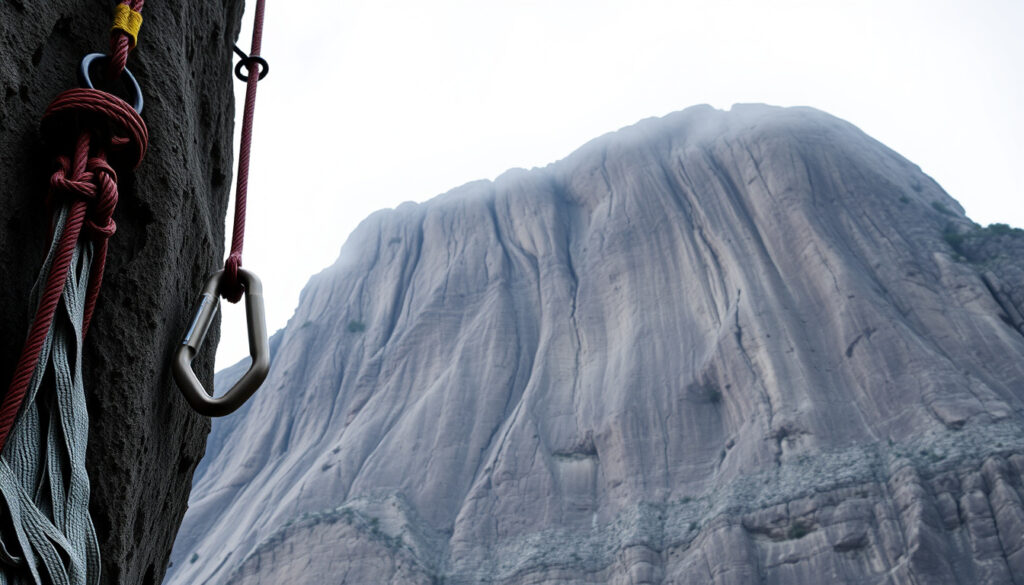
El Capitan Deaths, Free Solo, and Key Climbing Facts
Few granite walls have captured the world’s imagination quite like El Capitan. Rising 3,000 feet above Yosemite Valley, it’s a monument to both human ambition and the sobering reality of risk.
Height: 3,000 ft (914 m) ·
First successful ascent: 1958 by Warren Harding, Wayne Merry, George Whitmore ·
First free solo: 2017 by Alex Honnold ·
Estimated fatalities: Over 30 since the 1950s ·
Climbs annually: Thousands of attempts per year
Quick snapshot
- Alex Honnold free soloed El Capitan in 2017 via the Freerider route (Wikipedia – Climbing route)
- Estimated 30+ deaths on El Capitan since 1958 (Wikipedia – Fatality estimates)
- Climbers must use waste bags for bathroom on the wall (Yosemite.com – Climbing regulations)
- El Capitan is located in Yosemite National Park, California (Wikipedia – Location)
- Exact number of deaths due to underreporting of accidents (Canadian Insider – Climbing guide)
- Whether any free solo deaths have occurred (none confirmed, but possible unreported) (Suburban Mountaineer – Free solo fatalities)
- 2017: First free solo ascent by Alex Honnold (Wikipedia – Freerider)
- Young climbers continue to set records, but safety concerns rise (BBC – Recent fatalities)
Five key specs, one pattern: El Capitan’s dimensions and history are as staggering as the risks it presents.
| Attribute | Value |
|---|---|
| Height | 3,000 ft (914 m) |
| First ascent date | November 12, 1958 |
| Known deaths | 30+ as of 2024 |
| Most famous route | The Nose (5.9 C2) |
| Number of climbing routes | Over 100 |
How many climbers died on El Capitan?
Known fatalities on El Capitan
- Over 30 recorded deaths since the 1950s, according to Wikipedia (climbing route database).
- NPR (news outlet) reported that Jason Wells and Tim Klein died on June 3, 2018 after falling from the Freeblast route.
- A 2025 BBC report (international news) stated that Balin Miller died after falling from El Capitan.
Causes of death: falls, rockfall, and other risks
- Most common cause is falling, often while simul-climbing or due to equipment failure (NPR).
- Rockfall and weather also contribute to accidents.
Fatalities on El Capitan are not random: they cluster in higher-traffic routes and often involve experienced climbers pushing limits. The implication: risk is not just about skill, but about the cumulative exposure of repeated attempts.
The implication: each death is a data point in a pattern of risk that climbers must internalize.
Has anyone free soloed El Capitan?
Alex Honnold’s 2017 free solo
- Alex Honnold completed the first confirmed free solo ascent of El Capitan on June 3, 2017 via Freerider (5.12d) in 3 hours 56 minutes (Wikipedia – Freerider).
- National Geographic (geography and science publication) describes free soloing as climbing without ropes or safety gear.
- No other confirmed free solo ascent exists (Canadian Insider – climbing guide).
Risk and preparation
- Honnold’s preparation included years of practice on the route with ropes, memorizing every hold (National Geographic).
- The National Geographic documentary Free Solo captured the climb and highlighted the extreme mental focus required.
Free soloing El Capitan is so risky that even Honnold’s own team considered it a near-death attempt. For anyone else, the odds are catastrophic.
The catch: even perfect preparation cannot eliminate the consequences of a single slip.
Did an 8 year old really climb El Capitan?
Youngest climber: the 7-year-old record
- In 2024, a 7-year-old named Joe (last name not released) became the youngest to climb El Capitan with ropes, beating the previous record (BBC).
- The climb was done with experienced guides and full safety gear.
The 9-year-old who climbed with ropes
- Prior to 2024, the record was held by Sam Baker, age 9, who climbed the Nose in 2019 (Wikipedia – El Capitan).
These records show that El Capitan is accessible to determined climbers of all ages, but they also raise questions about the pressure on young athletes and the role of social media in driving extreme feats.
These records highlight the tension between human achievement and the ethics of pushing young climbers.
How do climbers go to the bathroom on El Capitan?
Portable waste systems
- Climbers use wag bags or other portable toilet systems to manage human waste (Yosemite.com – climbing regulations).
- All waste must be carried out; leaving it on the wall is prohibited.
No trace practices
- Park regulations strictly enforce waste removal, with fines for violations (National Park Service – Yosemite climbing page).
- Climbers often plan multi-day ascents around these logistics.
The bathroom issue is a small but vivid reminder: big wall climbing is a full commitment, involving every human need, not just the athletic ones.
The trade-off: the logistics of bodily functions underscore the full commitment required.
How many climbers have fallen off El Capitan?
Fatality statistics
- Over 30 fatalities have been recorded since 1950s, but exact count is uncertain due to incomplete records (Canadian Insider – climbing guide).
- Survival rate for falls is extremely low; most falls are fatal.
Survival stories and rescues
- Rescue operations are rare and high-risk, often involving helicopter evacuations (NPR).
- A climbing commentary source suggests that free solo deaths elsewhere (like John Bachar in 2009 and Derek Hersey in 1993) are rare but not unheard of.
El Capitan’s fatality count is relatively low for its traffic, but the finality of each fall makes it one of the most psychologically demanding climbs in the world.
The paradox: the low fatality rate belies the high stakes of each fall.
Has anyone died free soloing El Capitan?
Free solo fatalities on El Capitan
- No known free solo death on El Capitan has been confirmed (Canadian Insider).
- Free solo is extremely rare; only Honnold is confirmed to have done it (Wikipedia).
Comparison with rope climbing deaths
- Other climbers have died while soloing (climbing alone without a partner) but not while free soloing (no ropes at all) (Suburban Mountaineer).
The absence of a confirmed free solo death on El Capitan is partly due to the tiny number of attempts. The risk remains incalculably high.
The upshot: the absence of confirmed deaths is a statistical artifact of extremely few attempts.
Seven spec items, one pattern: El Capitan’s physical dimensions and climbing infrastructure define its character.
| Specification | Detail |
|---|---|
| Height | 3,000 ft (914 m) |
| Prominence | c. 1,000 ft (305 m) |
| Rock type | Granite (El Capitan granite) |
| Number of routes | Over 100 |
| Longest route | The Nose, ~2,900 ft (884 m) |
| First free ascent | 1993 by Lynn Hill (The Nose) |
| First free solo | 2017 by Alex Honnold (Freerider) |
Timeline of key events on El Capitan
- 1958: First ascent of El Capitan via The Nose by Warren Harding, Wayne Merry, George Whitmore (Wikipedia)
- 1993: First free ascent of The Nose by Lynn Hill (Wikipedia)
- 2017: First free solo ascent by Alex Honnold (Freerider route) (Wikipedia)
- 2019: 9-year-old Sam Baker becomes youngest climber (with ropes) at age 9 (Wikipedia)
- 2024: 7-year-old becomes youngest climber (with ropes); a climber dies in a fall in August (BBC)
The pattern: each milestone pushes the boundaries of what is possible on the wall.
Clarity: What we know and what remains uncertain
Confirmed facts
- Alex Honnold free soloed El Capitan in 2017 (Wikipedia)
- Estimated 30+ deaths on El Capitan since 1958 (Wikipedia)
- Climbers must use waste bags for bathroom on the wall (Yosemite.com)
What’s unclear
- Exact number of deaths due to underreporting of accidents (Canadian Insider)
- Whether any free solo deaths have occurred (none confirmed, but possible unreported) (Suburban Mountaineer)
- El Capitan is located in Yosemite National Park, California (Wikipedia)
These facts and uncertainties shape the understanding of El Capitan’s risks.
Voices from the wall
“Free soloing is the ultimate expression of control and mastery. You have to be absolutely certain of every move.”
— Alex Honnold, in interviews with National Geographic
“Every death on El Capitan is a tragedy, but we also see it as a reminder that the mountain demands respect.”
— Yosemite National Park spokesperson, as reported by NPR
“The first ascent of El Capitan in 1958 was a turning point in climbing history. It showed that even the most intimidating walls could be conquered.”
— Climbing historian, quoted in Wikipedia
El Capitan is more than a climb; it’s a mirror reflecting human ambition, risk, and the thin line between triumph and tragedy. For climbers considering the wall, the message is clear: prepare obsessively, respect the mountain, and never underestimate the cost of a single mistake.
youtube.com, bikehike.org, nationalgeographic.com, youtube.com
For a deeper look at the statistics and stories behind the wall, see this detailed overview of El Capitan climbing history.
Frequently asked questions
How long does it take to climb El Capitan?
Most climbers take 3–5 days for a typical route like The Nose, using portaledges to sleep on the wall. Speed climbers can do it in under 24 hours.
What is the easiest route to climb El Capitan?
The easiest route is generally considered the “Nose” (5.9 C2) or the “Salathé” (5.10b). Both require technical aid and rope skills.
Can beginners climb El Capitan?
No. El Capitan is a serious big wall climb requiring advanced technical skills, endurance, and experience with multi-day ascents.
How many people have successfully climbed El Capitan?
Thousands of climbers have summitted, but exact numbers are not tracked. It is one of the most popular big wall climbs in the world.
What gear do you need to climb El Capitan?
You need ropes, harness, helmet, climbing shoes, cams, nuts, slings, portaledge, stove, food, water, and waste bags.
Is it dangerous to climb El Capitan?
Yes. Even with ropes, the risk of falling, rockfall, and weather is significant. Over 30 deaths have been recorded.
How much does it cost to climb El Capitan?
There is no fee to climb, but gear, permits, and travel to Yosemite can cost hundreds to thousands of dollars.
These answers cover the most common queries about climbing El Capitan.
Related reading
These related articles offer further insight into outdoor adventure and endurance feats.
More related posts
 Best Waterproof Mattress Protector: Top Picks & Guide
 Peter Lalor: Eureka Stockade Rebel Turned Politician
 Kellan Lutz: Movies, FBI Exit, Miscarriage, and What He’s Doing Now
 Michael Morales: Undefeated UFC Welterweight Record
 Barry Gibb: Health, Family, and Legacy as Last Bee Gee
 Brad Arnold, 3 Doors Down Singer, Dies at 47 After Kidney Cancer
 Pooja Hegde: Movies, Relationship Status, Career Facts
