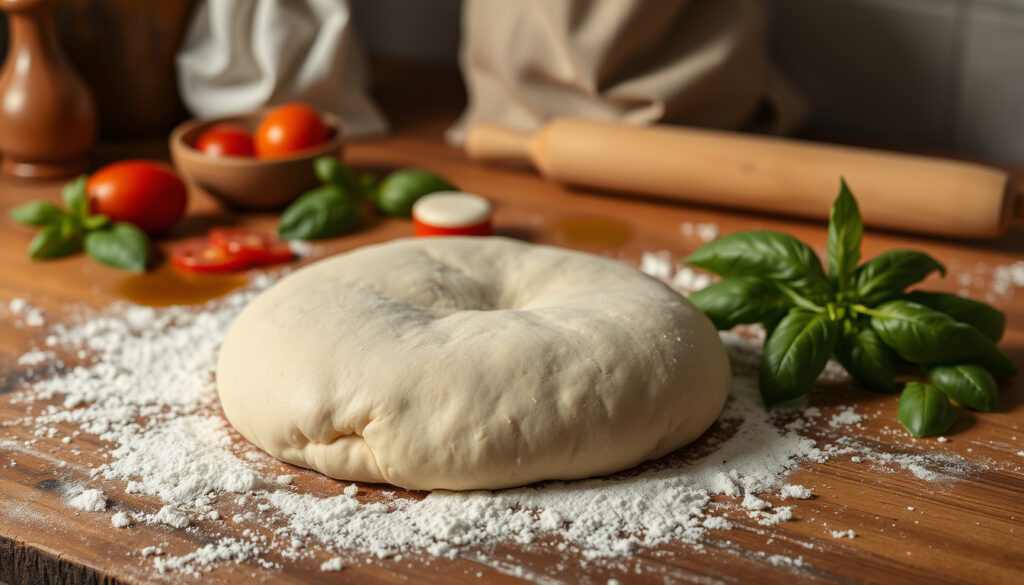
Pizza Dough Recipe: Ingredients, Tips & Mistakes
Anyone who has tried stretching a wad of sticky dough into something resembling a pizza circle knows the frustration. Making great pizza dough at home is less about secret techniques and more about understanding science-backed principles to mix, knead, rise, shape, and bake a crust that rivals your local pizzeria’s.
Pizza dough rising time: 1-2 hours at room temperature or overnight in the refrigerator ·
Typical hydration range: 55% to 70% of flour weight ·
Recommended flour type: Italian Tipo 00 or bread flour ·
Basic pizza dough ingredients: flour, water, salt, yeast, olive oil (optional) ·
Oven temperature for pizza: 500°F / 260°C or higher
Quick snapshot
- 4 cups (500 g) bread flour or Tipo 00 (Sally’s Baking Addiction (established food blog))
- 1 ½ cups (360 ml) warm water (JoyFoodSunshine (popular recipe site))
- 2 teaspoons (7 g) active dry yeast (Sugar Spun Run (baking expert))
- 2 teaspoons (12 g) salt (Preppy Kitchen (cooking authority))
- 1 tablespoon (15 ml) olive oil (optional) (Sally’s Baking Addiction (established food blog))
- Mix dry ingredients, add water and oil (JoyFoodSunshine (popular recipe site))
- Knead 8-10 minutes until smooth (Sally’s Baking Addiction (established food blog))
- Let rise 1-2 hours at room temperature (Sally’s Baking Addiction (established food blog))
- Punch down, divide, shape, and rest 20 minutes (YouTube cooking channel)
- Top and bake at highest possible temperature (Sally’s Baking Addiction (established food blog))
- Large mixing bowl (Preppy Kitchen (cooking authority))
- Pizza stone or steel (JoyFoodSunshine (popular recipe site))
- Paddle or peel (Sally’s Baking Addiction (established food blog))
- Oven thermometer (optional but helpful) (Sally’s Baking Addiction (established food blog))
- 4 core ingredients (flour, water, yeast, salt) (Sally’s Baking Addiction (established food blog))
- Active prep time: 15 minutes + rising time (JoyFoodSunshine (popular recipe site))
- Yields 1 large (12-inch) or 2 medium (10-inch) pizzas (Sugar Spun Run (baking expert))
- Oven temperature: 500°F / 260°C or higher (Preppy Kitchen (cooking authority))
Four facts, one pattern: the dough starts with four core ingredients, but the real work is in technique.
| Label | Value |
|---|---|
| Ingredient Count | 4 core (flour, water, yeast, salt) |
| Total Prep Time | Active: 15 minutes + rising time |
| Dough Yield | Makes 1 large pizza (12-inch) or 2 medium (10-inch) |
| Ideal Oven Temp | 500°F / 260°C or as high as possible |
What are the ingredients in homemade pizza dough?
Essential ingredients ratio
- Flour, water, salt, and yeast make the core dough (Sally’s Baking Addiction (established food blog))
- Olive oil is optional but aids texture (JoyFoodSunshine (popular recipe site))
- Sugar is not necessary but helps browning and yeast activation (Sugar Spun Run (baking expert))
Why each ingredient matters
- Flour provides the protein (gluten) that gives the dough structure and chew — bread flour has 12-14% protein while all-purpose has 9-11% (Preppy Kitchen (cooking authority))
- Water hydrates the flour and activates the yeast; warm water (105-115°F / 40-46°C) is critical for dissolving yeast quickly (Sally’s Baking Addiction (established food blog))
- Yeast produces carbon dioxide gas that makes the dough rise — active dry yeast needs proofing in warm water for 5 minutes until foamy (Sally’s Baking Addiction (established food blog))
- Salt is essential for both flavor and gluten structure; it strengthens the protein network and controls yeast activity (JoyFoodSunshine (popular recipe site))
- Olive oil adds tenderness and helps create a crispier, more golden crust (Sugar Spun Run (baking expert))
The home baker is far more likely to ruin a dough through incorrect ingredient ratios — too much water creates a sticky mess, too little flour yields a wet, unworkable paste — than through any exotic ingredient choice. Getting the 4:2:1:0.02 ratio of flour, water, salt, and yeast right is the single highest-leverage step.
The implication: mastering ratios early eliminates most beginner failures.
How to make a basic pizza dough?
Follow these numbered steps for a reliable dough.
- Dissolve yeast in warm water (105-115°F) with a pinch of sugar; let sit 5 minutes until foamy.
- Combine flour and salt in a bowl; add yeast mixture and olive oil.
- Mix into a shaggy ball, then knead on a floured surface for 8-10 minutes until smooth and elastic.
- Place in an oiled bowl, cover, and let rise 1-2 hours at room temperature until doubled.
- Punch down dough, divide into portions, and shape into tight balls.
- Let balls rest 20 minutes to relax gluten.
- Stretch by hand into 12-inch circles, pinch edges for crust rim.
- Top and bake at highest oven temperature (500°F+) on preheated stone for 10-15 minutes.
Mixing and kneading steps
- Start by dissolving the yeast in warm water (105-115°F / 40-46°C) with a pinch of sugar and let it sit for 5 minutes until foamy (Sally’s Baking Addiction (established food blog))
- In a large bowl, combine flour and salt, then pour in the yeast mixture and olive oil (JoyFoodSunshine (popular recipe site))
- Mix until the dough forms a shaggy, cohesive ball, then knead on a floured surface for 8-10 minutes until smooth and elastic (Sally’s Baking Addiction (established food blog))
- If the dough is too sticky, add flour in small increments rather than all at once (Sally’s Baking Addiction (established food blog))
- The target dough texture is smooth, elastic, and slightly tacky rather than dry (Preppy Kitchen (cooking authority))
First rise and shaping
- Place the dough in a lightly oiled bowl, cover with plastic wrap or a damp towel, and let rise for 1-2 hours at room temperature until doubled in size (Sally’s Baking Addiction (established food blog))
- Punch down the dough to release gas bubbles, then divide into portions on a floured surface (Sugar Spun Run (baking expert))
- Shape each piece into a tight ball by tucking the edges underneath (Preppy Kitchen (cooking authority))
Stretching tips and second rise
- Let the dough balls rest for 20 minutes at room temperature — this relaxes the gluten, making the dough easier to stretch and less likely to snap back (YouTube cooking channel)
- Stretch the dough by hand, starting from the center and working outward — avoid using a rolling pin, which deflates air bubbles (JoyFoodSunshine (popular recipe site))
- Shape into a 12-inch circle and pinch the edges to create a crust rim (Sugar Spun Run (baking expert))
The pattern: consistency in time and temperature outpaces any fancy ingredient.
What is the secret to making good pizza dough?
High heat and short bake
- Preheat your oven to 500°F / 260°C or as high as it goes, ideally with a pizza stone or steel inside for at least 30 minutes (JoyFoodSunshine (popular recipe site))
- A pizza stone absorbs heat and transfers it to the dough instantly, creating a crispier bottom crust compared to a bare baking sheet (Sally’s Baking Addiction (established food blog))
- Bake for 10-15 minutes until the crust is golden brown and the cheese is bubbling — rotating the pizza halfway through ensures even cooking (Preppy Kitchen (cooking authority))
Hydration control
- Hydration refers to the percentage of water relative to flour weight: 60-70% is ideal for home pizza ovens (Sally’s Baking Addiction (established food blog))
- Higher hydration (65-70%) produces a more open, airy crumb but requires careful handling to avoid a sticky mess (JoyFoodSunshine (popular recipe site))
- Lower hydration (55-60%) is easier for beginners to shape but yields a denser, less crisp crust (Sugar Spun Run (baking expert))
Cold fermentation technique
- Cold rise refers to fermenting the dough in the refrigerator for 24-72 hours (Instructables (DIY community))
- This slow fermentation converts more starches into simple sugars and produces more flavor compounds through enzymatic activity (Sally’s Baking Addiction (established food blog))
- The result is a more complex, slightly tangy taste and a browner, crispier crust (JoyFoodSunshine (popular recipe site))
The single most impactful change a home cook can make is preheating the oven to its maximum setting with a stone or steel inside. No amount of flour selection or rising time will compensate for a 425°F oven that cannot deliver the caramelization and oven spring needed for a professional-grade crust.
Which flour is best for pizza?
Tipo 00 flour characteristics
- Tipo 00 is an Italian flour milled to a very fine texture from high-protein (13-14%) wheat (Preppy Kitchen (cooking authority))
- It produces an incredibly smooth, silky dough that stretches easily without tearing (JoyFoodSunshine (popular recipe site))
- Best suited for high-heat pizza ovens (800-900°F / 425-480°C) but works well in home ovens at 500°F (Sally’s Baking Addiction (established food blog))
Bread flour as an alternative
- Bread flour has a protein content of 12-14%, which supports strong gluten development and a chewy crust (Sally’s Baking Addiction (established food blog))
- It is widely available and often cheaper than Tipo 00 (Sugar Spun Run (baking expert))
- Produces a slightly more robust, honeycomb-like crumb structure (Preppy Kitchen (cooking authority))
All-purpose flour suitability
- All-purpose flour contains 9-11% protein, which yields a softer, less chewy crust (JoyFoodSunshine (popular recipe site))
- It works in a pinch but produces a less crisp bottom crust and a dough that is more prone to tearing when stretched thin (Sally’s Baking Addiction (established food blog))
- Home bakers who only have all-purpose can improve results by adding vital wheat gluten (2 teaspoons per cup of flour) to boost protein (Sugar Spun Run (baking expert))
A comparison of three flour types, one pattern: higher protein flour delivers a stronger, crisper, and more forgiving dough. For most home bakers, bread flour hits the sweet spot between performance and availability.
| Flour Type | Protein Content | Crust Texture | Best Oven Temperature | Availability |
|---|---|---|---|---|
| Tipo 00 | 13-14% | Super smooth, silky, crisp | High (500°F+) | Specialty stores, online |
| Bread Flour | 12-14% | Chewy, robust, honeycomb | 500°F | Widely available |
| All-Purpose Flour | 9-11% | Soft, less crisp, prone to tearing | 425-475°F | Very widely available |
The catch: oven temperature dictates the best flour choice more than premium pricing.
What are common pizza dough mistakes?
Over-kneading the dough
- Kneading longer than 12-15 minutes develops too much gluten, making the dough stiff and resistant to stretching (Sally’s Baking Addiction (established food blog))
- Over-kneaded dough snaps back aggressively when you try to shape it, forcing you to use a rolling pin (JoyFoodSunshine (popular recipe site))
- Signs you have over-kneaded: the dough is tough, tight, and resists indentation when pressed (Preppy Kitchen (cooking authority))
Using cold water or a cold room
- Cold water (below 105°F / 40°C) slows yeast activity significantly, leading to a longer, unpredictable rise time (Sally’s Baking Addiction (established food blog))
- If your kitchen is below 70°F / 21°C, the dough will rise 2-3 times slower than expected (JoyFoodSunshine (popular recipe site))
- Too much flour during kneading dries out the dough, making it stiff and less elastic (Sally’s Baking Addiction (established food blog))
Stretching too thin or too thick
- Stretching the dough to less than 1/8 inch (3 mm) in the center causes it to tear or become too fragile to hold sauce and cheese (JoyFoodSunshine (popular recipe site))
- Aiming for a 1/4 inch (6 mm) center thickness with a slightly thicker rim (1/2 inch / 12 mm) yields the best balance of crust and support (Sugar Spun Run (baking expert))
- Using a rolling pin deflates the dough’s gas cells, resulting in a flat, dense crust (Preppy Kitchen (cooking authority))
Not enough salt
- Salt strengthens the gluten network, which helps the dough hold its shape and rise evenly (Sally’s Baking Addiction (established food blog))
- Dough without enough salt tastes flat and bland, regardless of sauce or toppings (JoyFoodSunshine (popular recipe site))
- The correct amount is 2% of the flour weight — about 2 teaspoons (12 g) for 4 cups (500 g) of flour (Preppy Kitchen (cooking authority))
Over-proofing or under-proofing
- Under-proofed dough (less than 45 minutes at room temperature) fails to develop enough gas cells, resulting in a dense, heavy crust (Sally’s Baking Addiction (established food blog))
- Over-proofed dough (more than 4 hours at room temperature without refrigeration) collapses when stretched because the gluten structure weakens (JoyFoodSunshine (popular recipe site))
- Cold fermentation (24-72 hours in the fridge) is actually safe and beneficial because the cold slows yeast activity, preventing over-proofing (Instructables (DIY community))
Most pizza dough mistakes boil down to three root causes: incorrect water temperature, too much or too little flour, and impatience with rising time. The home cook who invests in a digital scale, an instant-read thermometer, and a timer will eliminate 80% of these issues before the dough even hits the oven.
How long should pizza dough rise?
Room temperature rise time
- Room temperature rise time is 1-2 hours at 70-75°F / 21-24°C (Sally’s Baking Addiction (established food blog))
- The dough is ready when it has doubled in size and springs back slowly when poked with a finger (JoyFoodSunshine (popular recipe site))
- If the kitchen is cooler (< 70°F / 21°C), the rise can take 3-4 hours; if warmer (> 80°F / 27°C), reduce to 45-60 minutes (Preppy Kitchen (cooking authority))
Cold fermentation time
- Cold fermentation in the refrigerator for 24-72 hours yields the best flavor through slow enzymatic breakdown of starches (Instructables (DIY community))
- The dough can be made up to 3 days in advance and refrigerated in an oiled, covered bowl (Sally’s Baking Addiction (established food blog))
- Cold-fermented dough needs to rest at room temperature for 30-45 minutes before shaping to relax the gluten (JoyFoodSunshine (popular recipe site))
Signs dough is ready
- Doubled in size compared to the original ball before rising (Sally’s Baking Addiction (established food blog))
- When poked with a floured finger, the indentation fills back slowly but not completely (JoyFoodSunshine (popular recipe site))
- The dough surface is smooth and slightly springy to the touch (Preppy Kitchen (cooking authority))
What this means: time is the hidden ingredient — plan ahead if you want depth.
Can I make pizza dough without yeast?
Yeast substitutes for dough
- Baking powder (1 1/2 teaspoons per cup of flour) can replace yeast for a quick, no-rise dough (Sally’s Baking Addiction (established food blog))
- Baking soda plus an acid (like buttermilk or yogurt) also works as a chemical leavener (JoyFoodSunshine (popular recipe site))
- The dough needs immediate use after mixing — no rising time is required (Preppy Kitchen (cooking authority))
Characteristics of no-yeast dough
- Crust is significantly crispier and thinner than yeast-risen dough, similar to a cracker or flatbread (Sugar Spun Run (baking expert))
- Texture is denser and less airy because there is no fermentation creating gas cells (JoyFoodSunshine (popular recipe site))
- Best for thin-crust or Roman-style pizzas where a shatteringly crisp base is desired (Preppy Kitchen (cooking authority))
The home baker who skips yeast gains speed (15 minutes vs. 2 hours) and a reliably crisp bottom crust, but loses the chewy, airy texture that defines classic Neapolitan pizza. This is a legitimate choice — not a cheat — for those who prefer a thin, crunchy base or cannot wait for a yeast rise.
The catch: no yeast means no fermentation flavor — if you want chew, stick with the classic method.
“Tipo 00 flour yields an incredible super-smooth texture that is a joy to work with.”
— Jamie Oliver (celebrity chef and cookbook author, via recipe sources)
“This homemade pizza dough recipe is designed for beginners — it yields two soft, chewy crusts every time.”
— Sally McKenney, Sally’s Baking Addiction (established baking blog with 15+ years of recipes)
“The classic pizza dough recipe needs just four ingredients: flour, salt, water, and yeast.”
— Ooni Pizza Ovens (manufacturer of home pizza ovens, via recipe documentation)
Making pizza dough at home is a skill that rewards precision and patience. For the home cook who invests in a digital scale, a pizza stone, and a 24-hour cold fermentation, the payoff is a crust that rivals anything from a wood-fired pizzeria. For those short on time, the same-day method still delivers a satisfying, crisp-bottomed pizza that beats delivery. The choice between speed and depth of flavor is yours — but now you know the tools, the ratios, and the traps to avoid. Similar precision applies to other kitchen projects like our Pad Thai Recipe and serving on durable Corelle Dinnerware.
For those who prefer a quicker method, the three-ingredient pizza dough eliminates the need for yeast and lengthy rising times.
Frequently asked questions
Can pizza dough be made ahead and refrigerated?
Yes, pizza dough can be made up to 3 days ahead and stored in the refrigerator in an oiled, covered bowl. Cold fermentation actually improves flavor through enzymatic activity. Let the dough rest at room temperature for 30-45 minutes before shaping.
Why is my pizza dough tough?
Tough dough usually comes from over-kneading (more than 12-15 minutes), too much flour added during kneading, or using cold water that prevented proper gluten development. If the dough resists stretching, let it rest for 20 minutes to relax the gluten.
Should I use cold or warm water for pizza dough?
Use warm water between 105-115°F / 40-46°C to activate the yeast properly. Cold water below 105°F slows yeast activity and leads to a slow, unpredictable rise. Hot water above 120°F kills the yeast entirely.
Can I freeze pizza dough?
Yes, pizza dough freezes well for up to 3 months. After the first rise, divide the dough into portions, wrap tightly in plastic wrap, and place in a freezer bag. Thaw in the refrigerator overnight before letting it come to room temperature and shaping.
What if I don’t have a pizza stone?
You can use a preheated baking sheet turned upside down, a cast iron skillet, or a pizza steel. The key is a thick, heat-retaining surface preheated in the oven. Even a bare baking sheet works — the crust will just be less crisp on the bottom.
How do I get a crispy bottom crust?
Preheat your oven to its maximum temperature (500°F / 260°C or higher) with a pizza stone or steel inside for at least 30 minutes. Use a hydration of 60-70%, include olive oil in the dough, and place the pizza directly on the hot stone. Baking on a perforated pan also helps.
Why does my dough shrink back when I try to stretch it?
This happens when the gluten has not relaxed enough. Let the dough ball rest at room temperature for 20-30 minutes after dividing — this allows the gluten strands to loosen, making the dough pliable and easy to stretch without snapping back.
More related posts
 Online Ping Website Tool Alaikas: Free Guide for Beginners
 Rolex Day Date – History Models Prices Presidents Watch
 NZD to AUD: Current Rate, History & Conversion Tips
 Judge Judy: Biography, Family, Net Worth, and Latest Updates
 Colonel Sanders: KFC Founder, Lawsuits, and Net Worth
 Sarah Ferguson ABC: Journalist Behind 7.30
 Pixel 8 Pro in 2026: Still Worth It? Full Review & Comparison
 Otto Warmbier: What Happened, Cause of Death, and Aftermath
