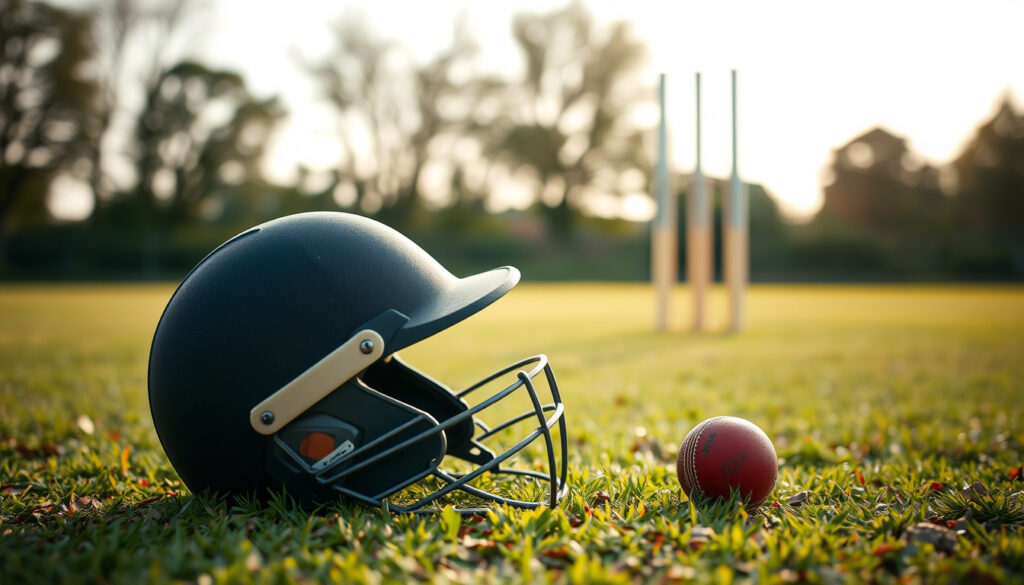
Phillip Hughes: Cause of Death, Inquest & Legacy
Few moments in sport have shaken the cricket world as profoundly as the death of Phillip Hughes. The 25‑year‑old Australian batsman died two days after being struck on the neck by a bouncer during a Sheffield Shield match.
Date of death: 27 November 2014 ·
Age at death: 25 years ·
Cause of death: Vertebral artery dissection and subarachnoid haemorrhage after being struck by a cricket ball ·
Bowler: Sean Abbott ·
Inquest ruling: No medical intervention could have saved him ·
Match: Sheffield Shield, South Australia vs New South Wales
Quick snapshot
- Date: 25 November 2014 (BBC News)
- Match: Sheffield Shield (ESPNcricinfo)
- Bowler: Sean Abbott (ABC News)
- Injury: ball to the neck (Wikipedia)
- Emergency surgery (BBC News)
- Vertebral artery dissection (NSW Coroners Court)
- Subarachnoid haemorrhage (BBC News)
- Death on 27 November 2014 (BBC News)
- Helmet standards revised (cricket.com.au)
- Neck guards introduced (cricket.com.au)
- Cricket Australia policy changes (cricket.com.au)
Here are the verified personal and incident details recorded by official sources.
| Field | Detail |
|---|---|
| Full name | Phillip Joel Hughes (Wikipedia) |
| Date of birth | 30 November 1988 (Wikipedia) |
| Place of birth | Macksville, New South Wales (Wikipedia) |
| Date of death | 27 November 2014 (BBC News) |
| Age at death | 25 years (BBC News) |
| Cause of death | Vertebral artery dissection and subarachnoid haemorrhage (NSW Coroners Court) |
| Bowler | Sean Abbott (ABC News) |
| Inquest verdict | Accidental death, no preventable measures (ABC News) |
What was the cause of Phillip Hughes’ death?
Mechanism of injury
- Hughes was struck on the neck by a short‑pitched delivery (bouncer) during a Sheffield Shield match at the Sydney Cricket Ground on 25 November 2014 (Wikipedia).
- The impact caused a vertebral artery dissection – a tear in the wall of the artery that supplies blood to the brainstem (NSW Coroners Court).
Pathology report findings
- The dissection triggered a catastrophic subarachnoid haemorrhage – bleeding into the space surrounding the brain (BBC News).
- Hughes underwent emergency surgery but never regained consciousness. He died on 27 November 2014 at St. Vincent’s Hospital, Sydney (BBC News).
The implication: the medical outcome was determined by the nature of the injury, not by any failure of response.
Who bowled the ball that hit Phillip Hughes?
Sean Abbott’s role in the incident
- Sean Abbott, a New South Wales bowler, delivered the bouncer that struck Hughes (ABC News).
- The coroner found no unsportsmanlike conduct: Abbott was bowling within the laws of the game (ABC News).
Abbott’s subsequent career
- Abbott continued playing professional cricket, representing New South Wales and later Australia in limited‑overs formats (ESPNcricinfo).
- He received extensive psychological support from Cricket Australia (ABC News).
The bowler who delivered the fatal ball was himself a young player who became a secondary victim. Abbott’s resilience – he returned to first‑class cricket within months – was widely recognised.
The pattern: Abbott’s continued career demonstrates that athletes can overcome traumatic events with support.
Could Phillip Hughes have been saved?
Inquest findings
- NSW Coroner Michael Barnes concluded “absolutely nothing could have been done to save him” (ABC News).
- The coroner stated that even if Hughes had been wearing the most modern neck protection at the time, the injury would not have been prevented (ABC News).
Medical impossibility
- Neurosurgeon Dr. John Fuller testified that the vertebral artery dissection was so sudden and severe that no surgical technique available could have repaired it in time (ABC News).
- The coroner’s formal findings noted that the injury was “one of those rare, freakish incidents” where the ball entered a gap between the helmet and the shoulder (NSW Coroners Court).
For cricket authorities, the inquest answer was blunt: no rule change or protective gear that existed in 2014 would have saved Hughes. That shifted the focus from blame to future prevention.
What this means: the safety debate shifted from preventing a specific injury to reducing overall risk.
Did Sean Abbott go to Phillip Hughes’ funeral?
Funeral attendance
- Sean Abbott attended the funeral in Macksville on 3 December 2014 (ABC News).
- He was visibly distressed and was accompanied by teammates and Cricket Australia staff (ABC News).
Public mourning
- The cricket community united in grief. Both teams wore black armbands and a minute’s silence was observed at grounds around Australia (BBC News).
- Hughes’s family publicly thanked supporters and asked for privacy during the funeral (ABC News).
The community’s response underscored the widespread grief and unity in cricket.
How old was Phillip Hughes when he died?
Birth and death dates
- Phillip Hughes was born on 30 November 1988 (Wikipedia).
- He died on 27 November 2014, three days short of his 26th birthday (BBC News).
- Age at death: 25 years (BBC News).
Circumstances of his last match
- Hughes was playing for South Australia against New South Wales in the Sheffield Shield at the Sydney Cricket Ground (ESPNcricinfo).
- He had scored 63 runs in the first innings and was batting on 0 when he was hit (ABC News).
The tragedy: a promising life cut short just before his 26th birthday.
Timeline of the tragedy and reforms
- 25 November 2014 – Hughes is struck on the neck by a bouncer during a Sheffield Shield match at the SCG (Wikipedia).
- 27 November 2014 – Phillip Hughes dies from his injuries at St. Vincent’s Hospital, Sydney (BBC News).
- 28 November 2014 – Cricket Australia announces a special tribute; both teams wear black armbands (BBC News).
- 3 December 2014 – Funeral held in Macksville; Sean Abbott attends (ABC News).
- 2015–2016 – Inquest hearings examine the medical response and circumstances (ABC News).
- 2015–present – Development and mandatory use of neck protectors and improved helmet standards in professional cricket (cricket.com.au).
The safety reforms accelerated by Hughes’s death are now embedded in international cricket. But the inquest made clear that some risks cannot be eliminated entirely – the trade‑off is between protection and the essential nature of the game.
The catch: reforms can reduce but not eliminate the inherent dangers of the sport.
Confirmed facts
- Cause of death: vertebral artery dissection due to cricket ball strike (NSW Coroners Court)
- Bowler: Sean Abbott (ABC News)
- Inquest ruling: no intervention could have saved him (ABC News)
- Funeral attendance: Abbott present (ABC News)
What’s unclear
- Whether different helmet design could have prevented the specific injury (inquest found no) (ABC News)
- Exact moment of loss of consciousness onfield (ABC News)
Voices from the inquest and beyond
“Absolutely nothing could have been done to save him” – Coroner Michael Barnes, summarising the inquest findings
– ABC News
“This was a one‑in‑a‑million injury. The vertebral artery was torn in a way that is almost never seen in blunt trauma” – Dr. John Fuller, neurosurgeon
– ABC News
“I’m struggling to come to terms with what has happened. I’d like to thank everyone for their support” – Sean Abbott, in a public statement
– ABC News
The tragedy of Phillip Hughes is not just a story of a young athlete lost, but a watershed moment that forced cricket to confront its own risks. The inquest provided closure on the medical impossibility of survival, while the safety reforms – now mandatory in professional cricket – represent a tangible legacy. For the cricket authorities in Australia, the lesson is clear: the game must continue to evolve its safety standards, because the cost of inaction is measured not in runs but in lives.
youtube.com, facebook.com, cricketweb.net, instagram.com, reddit.com
Frequently asked questions
What type of ball hit Phillip Hughes?
A short‑pitched delivery (bouncer) bowled by Sean Abbott. It struck Hughes on the neck, just below the helmet.
Did Phillip Hughes have any pre‑existing medical conditions?
No. He was a fit, healthy 25‑year‑old professional cricketer with no known conditions that contributed to the injury.
How did Sean Abbott’s career continue after the accident?
Abbott returned to professional cricket within months, playing for New South Wales and later representing Australia in limited‑overs matches. He received psychological support from Cricket Australia.
What specific safety changes were made to cricket helmets?
Helmet standards were revised to include a neck guard (a stem guard attached to the back of the helmet) and improved padding. These became mandatory in professional cricket from 2016.
Was the Sheffield Shield match stopped after the incident?
The match was abandoned immediately after the injury. Players and officials rushed to Hughes’s aid and the game was not resumed.
How did the Hughes family respond to the inquest?
The family accepted the coroner’s findings and have since advocated for improved safety in cricket, particularly through the Phillip Hughes Trust.
What records did Phillip Hughes set in his career?
Hughes is the only player in history to score a century on Test debut for Australia (against South Africa in 2009). He also scored back‑to‑back centuries in the same match – a rare feat.
Related reading
- SCO vs REN: Latest Head‑to‑Head, Live Score & Stats – Big Bash League cricket coverage
- Cam Rayner: Biography, Stats, Partner, Height – Biography of another Australian sportsman
More related posts
 Lion’s Mane Mushroom – Benefits, Dosage, Side Effects
 The Power of One: Book, Movie, True Story & Review
 Werribee Health Care: GP Clinic Services, Reviews & Booking
 Jane Turner: Biography, Age, Net Worth, and Kath & Kim Career
 James Gunn: From Troma to DC Studios – Full Biography
 JBL Flip 6 Review: Still Worth It? Comparison vs Flip 7
 Brittney Griner: Verified Facts on Gender, Career & Detention
 Reduce PDF Size: Free Online, Mobile & Desktop Tools
