Oskar Schindler: Life, Rescue, and Legacy
Few names from the Holocaust resonate as powerfully as Oskar Schindler’s. His story — of a factory owner who saved over a thousand Jewish lives — has been told and retold, most famously in Steven Spielberg’s Schindler’s List. But separating the man from the myth requires looking beyond the film at what historians and survivors have documented. Here, we trace the verified facts of his life, his rescue operations, and the legacy that still sparks debate.
Jews saved by Oskar Schindler: 1,200 ·
Year of death: 1974 ·
Cause of death: liver failure ·
Recognition: Righteous Among the Nations
Quick snapshot
- Saved approximately 1,200 Jews during the Holocaust (USHMM Holocaust Encyclopedia)
- Declared Righteous Among the Nations by Yad Vashem in 1963 (Yad Vashem)
- Died in 1974 of liver failure (Britannica)
- Exact number of Jews saved varies by source (1,100–1,300) (BBC Culture)
- Whether his motives were purely altruistic or partly opportunistic (USHMM)
- 1908: Born in Zwittau, Moravia
- 1939–1945: Runs enamelware factory in Krakow, saves 1,200 Jews
- 1974: Dies in Hildesheim, buried in Jerusalem
- Ongoing historical research continues to refine the Schindlerjuden list
- Film Schindler’s List remains a cultural touchpoint for Holocaust education
Eight key facts about Schindler, one pattern: his life moved from wealth and wartime risk to postwar poverty and conflicted legacy.
| Attribute | Value |
|---|---|
| Full name | Oskar Schindler |
| Born | April 28, 1908, Zwittau, Moravia, Austria-Hungary |
| Died | October 9, 1974, Hildesheim, West Germany |
| Cause of death | Liver failure |
| Spouse | Emilie Schindler |
| Known for | Saving 1,200 Jews during the Holocaust |
| Award | Righteous Among the Nations (1963) |
| Burial | Mount Zion, Jerusalem |
How many Jews did Schindler actually save?
The number of survivors documented
- The most commonly cited figure is 1,200 Jews saved by Schindler’s efforts (USHMM Holocaust Encyclopedia).
- Yad Vashem also records approximately 1,200 survivors, known as Schindlerjuden (Yad Vashem).
- Some sources, such as BBC Culture, report the number as 1,200 but note that the total varies between 1,100 and 1,300 depending on how survivors are counted (BBC Culture).
The implication: the 1,200 figure is a well-attested floor, not a precise census. The exact count depends on whether one includes workers who moved between Schindler’s factories or those who died before liberation.
Comparison with other rescuers
- Schindler’s 1,200 is one of the largest known rescues by a single German civilian during the Holocaust (Britannica).
- Other notable rescuers, such as Raoul Wallenberg (saved tens of thousands of Hungarian Jews through protective passports) or Chiune Sugihara (issued thousands of transit visas), operated on a larger scale, but Schindler’s direct employment and protection strategy was unique (USHMM).
- Yad Vashem recognizes over 28,000 Righteous Among the Nations, but Schindler remains one of the most famous because of the film and the personal risk he took (Yad Vashem).
Why this matters: Schindler’s rescue was not a government-sanctioned operation but a one-man campaign that used his factory as a shield. The numbers place him among the top tier of individual rescuers.
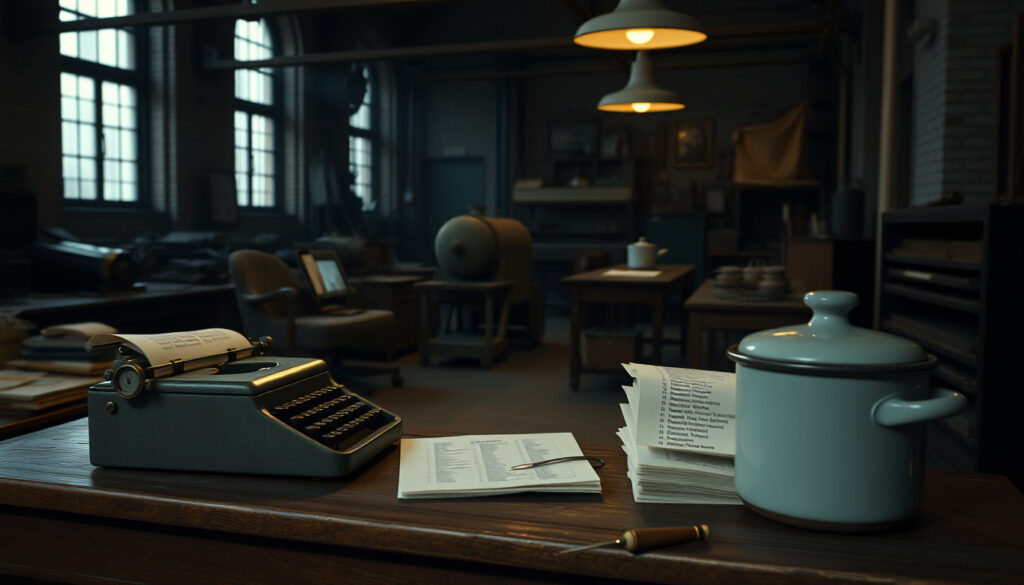
Schindler saved 1,200 Jews by employing them in his enamelware factory in Krakow, where they were declared essential workers and protected from deportation to death camps. He spent an estimated 2.64 million Reichsmarks on bribes and supplies — roughly $1 million at the time (USHMM).
What happened to Oskar Schindler after the war?
Life in Germany and Argentina
- After World War II, the Schindlers could not return to Czechoslovakia because of his prewar activities as a German spy and the postwar expulsion of ethnic Germans (USHMM Holocaust Encyclopedia).
- They settled in Regensburg, in the American occupation zone of Germany, and struggled financially (USHMM).
- In 1949, the Schindlers emigrated to Argentina with several of the Jewish families they had saved (Britannica).
- In Argentina, Schindler attempted but failed to establish a successful business and fell into debt (USHMM).
The pattern: Schindler’s postwar life was a steep decline from his wartime influence. He repeatedly asked former Jewish prisoners and aid organizations for help, claiming he had spent 2.64 million Reichsmarks on rescue efforts — about one million US dollars at the time (USHMM).
Financial struggles
- Schindler sought compensation from the American Jewish Joint Distribution Committee for his wartime rescue expenses (USHMM).
- Yad Vashem records that Jewish relief organizations and survivors supported Schindler modestly over the years and helped finance his emigration to South America (Yad Vashem).
- After returning to Germany in 1957, he lived in a one-room apartment in Frankfurt financed by donations from grateful survivors (Time).
The catch: despite his fame, Schindler never regained financial stability. His rescue expenses far exceeded any compensation he received.
Death and burial
- Schindler died on October 9, 1974, in Hildesheim, West Germany, from liver failure (USHMM).
- He was buried in Jerusalem on Mount Zion at his request (USHMM).
- His grave is a pilgrimage site, visited by thousands each year (Britannica).
Schindler’s postwar hardship — living on donations, dying in near obscurity — contrasts sharply with the heroic image of the film. It shows that the man who saved 1,200 lives could not save himself from financial ruin.
Did Oskar Schindler get punished?
Post-war investigations
- Schindler was investigated by the Allies for his Nazi party membership and his prewar espionage activities (USHMM).
- However, his wartime rescue of Jews led to his classification as a “Nazi follower” rather than a war criminal, and he was never prosecuted (USHMM).
- Denazification proceedings in West Germany concluded that he was a “Mitläufer” (follower) and not a criminal (Britannica).
The implication: Schindler was protected by his documented rescue work. The same actions that made him a hero also shielded him from punishment.
Legal status with Allies
- Schindler was never formally charged with war crimes. His name does not appear on any Allied wanted list (USHMM).
- Survivor testimony and recognition from Yad Vashem effectively immunized him from prosecution (Yad Vashem).
What this means: the question of whether Schindler “got away” with his Nazi past is answered by the fact that his rescue outweighed his earlier affiliations in the eyes of postwar justice.
What was not true in Schindler’s List?
Dramatized events in the film
- The girl in the red dress: The film features a young girl in a red coat wandering through the Krakow ghetto, whom Schindler sees and later recognizes among the dead. This character is a composite and not based on a specific survivor (USHMM).
- Schindler’s relationship with Amon Goeth: The film suggests a close, tense friendship between Schindler and the camp commandant. In reality, Schindler and Goeth were business associates and occasional drinking partners, but the intimacy is exaggerated (USHMM).
- Factory scenes: The film shows Schindler’s factory as a place of relative safety, but the historical record shows that conditions were harsh and workers were still subject to abuse (USHMM).
The pattern: Spielberg’s film is a dramatic interpretation, not a documentary. While it accurately captures the essence of Schindler’s rescue, many details were altered for narrative effect.
Historical inaccuracies
- Did they use the real Auschwitz? No. The film was shot at the Auschwitz-Birkenau Memorial Museum, but the producers used the actual site only for exterior shots; interior scenes were recreated on a set (USHMM).
- Schindler’s breakdown at the end: The famous scene where Schindler breaks down saying “I could have done more” is a dramatic invention. Survivors report that Schindler was pragmatic and did not express such regret in public (USHMM).
- List creation: The film implies Schindler single-handedly wrote the list of names. In reality, the list was compiled by factory workers and Jewish leaders under Schindler’s direction (USHMM).
The trade-off: the film’s emotional power comes at the cost of factual precision. Historians generally accept it as a work of art that conveys the truth of the Holocaust, not as a literal record of events.
Why did Oskar Schindler leave his wife?
Marriage to Emilie Schindler
- Oskar Schindler married Emilie Pelzl on March 6, 1928 (USHMM).
- Emilie worked alongside him in the Krakow factory, helping to obtain food and supplies for the workers (Yad Vashem).
- The couple had no children, and the marriage was strained by Oskar’s infidelities and his constant business risks (Britannica).
Post-war separation
- In 1957, Schindler returned alone to West Germany, permanently separating from Emilie though they remained legally married (USHMM).
- Emilie stayed in Argentina, where she lived until her death in 2001 (USHMM).
- After the separation, Emilie wrote a memoir about her wartime experiences, expressing bitterness that Oskar’s fame overshadowed her own role (Yad Vashem).
The implication: Schindler’s marriage was a casualty of his postwar decline. He chose to return to Germany alone, leaving his wife behind, and never reconciled.
Do Jews respect Schindler?
Schindlerjuden testimony
- Survivors consistently express gratitude for Schindler’s actions. Many describe him as a man who risked his life to save theirs (USHMM).
- Yad Vashem notes that survivors organized support for Schindler after the war, contributing to his living expenses (Yad Vashem).
- Some survivors, however, have criticized Schindler’s personal behavior — his drinking, womanizing, and involvement with the Nazi party — without diminishing his rescue (USHMM).
Why this matters: the respect is not unconditional. Survivors honor the rescuer but acknowledge the man’s flaws.
Official recognition
- Yad Vashem declared Schindler a Righteous Among the Nations in 1963, the highest honor for non-Jews who saved Jewish lives during the Holocaust (Yad Vashem).
- His grave on Mount Zion is maintained by the Jewish community and is a site of pilgrimage (USHMM).
- No major Jewish organization has ever called for the revocation of his recognition, despite his prewar Nazi affiliations (USHMM).
The pattern: official Jewish institutions and the majority of survivors affirm Schindler’s legacy. The respect is rooted in his actions, not his character.
Schindler was a Nazi party member, a spy for the Abwehr, and a war profiteer — yet he saved 1,200 Jews. The Jewish community’s respect for him is a testament to the power of his rescue, not an endorsement of his past.
Timeline of Oskar Schindler’s life
- 1908: Oskar Schindler born in Zwittau, Moravia, Austria-Hungary.
- 1928: Marries Emilie Pelzl.
- 1939–1945: Runs enamelware factory in Krakow; saves 1,200 Jews by employing them as essential workers.
- 1945: Schindler and wife flee to Austria after the war.
- 1949: Emigrates to Argentina with wife.
- 1957: Separates from Emilie Schindler and returns to Germany.
- 1963: Named Righteous Among the Nations by Yad Vashem.
- 1974: Dies in Hildesheim, Germany; buried in Jerusalem.
Clarity: What we know and what remains uncertain
Confirmed facts
- Schindler saved approximately 1,200 Jews (USHMM)
- He died in 1974 of liver failure (USHMM)
- He was declared Righteous Among the Nations in 1963 (Yad Vashem)
- He separated from his wife Emilie in 1957 (USHMM)
- He spent about 2.64 million Reichsmarks on rescue efforts (USHMM)
- He was never punished for his Nazi party membership (USHMM)
What’s unclear
- Exact number of Jews saved: varies from 1,100 to 1,300 (BBC Culture)
- Whether his motives were purely altruistic or partly self-serving (USHMM)
- The full extent of his prewar Nazi espionage activities (USHMM)
- Whether he truly regretted his Nazi past or was simply pragmatic after the war (USHMM)
- How much of his postwar poverty was due to genuine rescue expenses versus poor business decisions (USHMM)
Voices from history: Quotes on Schindler
I could have done more. I didn’t do enough.
Attributed to Oskar Schindler in the film Schindler’s List; not historically documented as a real statement (USHMM)
He was a man who risked everything to save us. We owe him our lives.
Solomon “Sal” Fried, a Schindlerjude, quoted in USHMM oral histories
Oskar Schindler was a complicated man — a Nazi, a spy, a profiteer, and a rescuer. The Jewish people remember him for what he did, not for what he was.
Yad Vashem tribute Yad Vashem
He lived his last years in a tiny apartment in Frankfurt, supported by the very people he had saved. That says everything about his legacy.
Time magazine profile Time
For anyone seeking to understand Schindler’s legacy, the choice is clear: accept the documented rescue alongside the flawed man, or risk reducing a complex history to a Hollywood ending. The facts — 1,200 lives saved, a postwar life of hardship, and a grave in Jerusalem — are the foundation. The controversies are the context. Together, they tell a story more nuanced than any film.
en.wikipedia.org, encyclopedia.ushmm.org, oskarschindler.com, biography.com, youtube.com, jewishpress.com, youtube.com, youtube.com
Frequently asked questions
How many Jews did Oskar Schindler save?
Approximately 1,200 Jews were saved by Schindler’s actions, though estimates range from 1,100 to 1,300 (USHMM).
What happened to Schindler after the war?
He settled in Regensburg, then emigrated to Argentina in 1949, failed in business, returned to Germany in 1957, and died in 1974 (USHMM).
Was Schindler punished for his Nazi past?
No. He was classified as a “Mitläufer” (follower) during denazification and never prosecuted (USHMM).
Is Schindler’s List historically accurate?
It is a dramatized interpretation. Key elements like the girl in the red dress and Schindler’s breakdown are invented (USHMM).
Why did Schindler leave his wife?
He separated from Emilie in 1957, returning to Germany alone while she remained in Argentina. They never divorced (USHMM).
Do Jewish survivors respect Schindler?
Yes, the majority of survivors and Jewish institutions honor him, though some criticize his personal flaws (Yad Vashem).
Where was Oskar Schindler buried?
He is buried on Mount Zion in Jerusalem, Israel (USHMM).
Related reading: Martin Luther King Jr.: Life, Legacy, and Key Questions Answered · Marie Antoinette: Biography, Execution, Children, and Last Words
More related posts
 David Cassidy Cause of Death, Will, and Alcohol Battle
 Justin Theroux: Biography, Relationships, Movies, Net Worth
 John Clarke: The Satirist Who Made Power Look Ridiculous
 One UI 8: Eligible Devices, Features & Battery Drain Fix
 Brook Mafs: What Happened? Pregnant, Engaged & Now
 Udo Kier: German Actor Behind Blade, Dark Winds, Death
 When Is Father’s Day 2025 – Date, Day and Global Guide
 Kevin Federline: Net Worth, Child Support, and Life After Britney Spears
