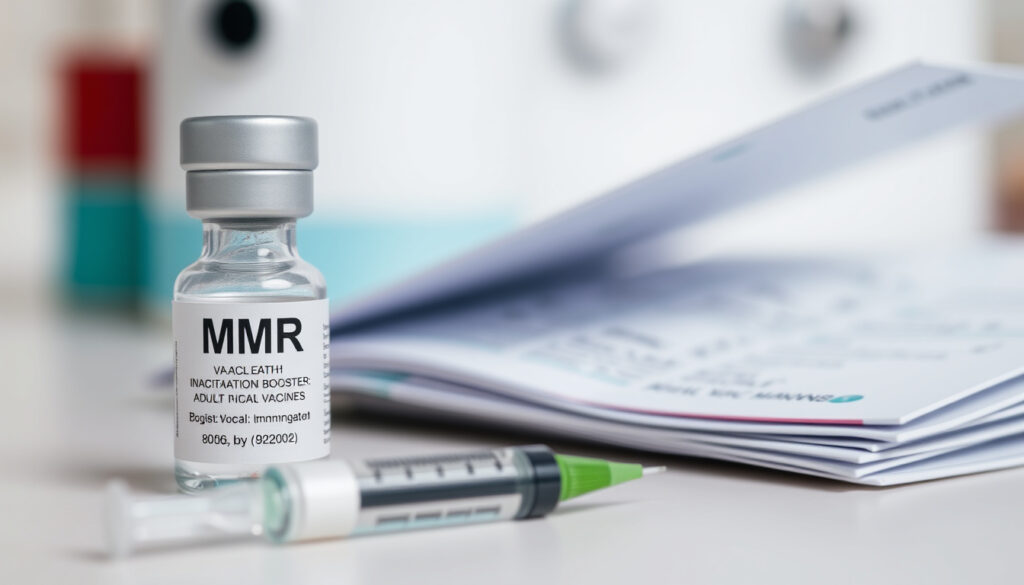
Measles Vaccination: Do Adults Need a Booster Shot
There’s a quiet irony in measles vaccination: the very people who remember the disease from childhood are often the ones least likely to need a shot today, while younger, fully-vaccinated adults may need a booster for travel or work without even realizing it. This guide walks through who actually needs the measles vaccine, when to get it, what to expect, and how Ireland’s catch-up programme is shaping current advice.
MMR vaccine efficacy (two doses): 97% ·
First measles vaccine licensed: 1963 ·
Measles vaccine introduced in Ireland: 1988 ·
Recommended age for first dose: 12–15 months ·
Measles deaths averted globally (2000–2021): 56 million
Quick snapshot
- MMR vaccine is safe and highly effective (HSE Ireland)
- Two doses are 97% effective against measles (HSE Ireland)
- People born before 1978 in Ireland generally immune from natural infection (SpunOut)
- Exact duration of vaccine-induced immunity in all individuals (HSE Ireland)
- Whether all adults need a routine booster – guidelines are risk-based (SpunOut)
- Long-term effectiveness of older vaccine formulations (e.g., 1963–1967 killed-virus vaccine) (HSE Ireland)
- HSE launched catch-up programme in October 2024 amid measles concern (HSE news release)
- Free catch-up MMR offered primarily to under-18s; clinics for 5+ (HSE news release)
- Catch-up vaccination available from GPs and HSE community clinics (HSE news release)
- Adults born on/after 1978 can get catch-up if eligible (SpunOut)
Six facts about measles vaccination carry the most weight for adult decisions: the first dose goes at 12–15 months, the second at 4–6 years, efficacy sits at 97% for two doses, the vaccine began in Ireland in 1988, and the 56 million lives saved since 2000 tell the global story.
| Fact | Value |
|---|---|
| First measles vaccine licensed | 1963 |
| MMR vaccine introduced in Ireland | 1988 |
| Two-dose MMR efficacy | 97% |
| Recommended age for first dose | 12–15 months |
| Global measles deaths averted (2000–2021) | 56 million |
| One-dose MMR efficacy | 93% |
| Catch-up eligibility (Ireland) | Born on/after 1978 |
Do adults need a measles booster?
The question depends on when you were born, where you live, and whether travel sits in your future. For most adults in Ireland, the answer is no — but the terms change if you’re a healthcare worker, a traveler, or born outside Ireland.
How long does measles immunity last?
- Two doses of MMR are considered to provide lifelong protection for most people (HSE Ireland).
- One dose is 93% effective, and waning immunity is possible over time (SpunOut).
- MMR can be given safely even if you are already immune (HSE Ireland).
The pattern: a second dose isn’t just a formality — it’s the difference between 93% single-dose protection and the 97% that holds for life in most adults. The trade-off is that no vaccine is 100% effective, so risk-based thinking applies to everyone.
Who should get a booster dose?
- Healthcare workers are recommended for two doses (SpunOut).
- International travelers are recommended for vaccination (risk of exposure) (HSE news release).
- Adults born on/after 1978 who lack evidence of immunity should get at least one dose (SpunOut).
For a man born in Dublin in 1975, the booster is likely unnecessary; for a woman born in 1985 with only one documented dose, the gap is real and should be closed before travel.
Are older measles vaccines still effective?
- The 1963–1967 killed-virus vaccine had lower effectiveness, but was replaced with live-attenuated versions (HSE Ireland).
- People vaccinated with the older killed-virus form may need vaccination (HSE Ireland).
- Current live-attenuated MMR is considered highly effective long-term (HSE Ireland).
What this means: if you received the killed-virus vaccine before 1968, your protection is less certain than someone vaccinated after. A blood antibody test (avidity test) can clarify; ask your GP if you have that history.
At what age is the measles vaccine given?
The schedule looks simple from outside: one dose as toddler, one before first primary school. But timing shifts based on outbreak exposure and travel, pulling the first dose earlier for some infants.
What is the routine childhood schedule?
- First MMR dose at 12–15 months (HSE Ireland).
- Second dose at 4–5 years in Ireland’s current programme (HSE Ireland).
- Immunisation healthcare professionals recommend 2 doses for long-term immunity (HSE Ireland).
Can the measles vaccine be given at 9 months?
- In outbreak settings, the first dose may be given as early as 6 months (HSE news release).
- If an infant receives a dose before 12 months, the regular two-dose series still needs to be completed (HSE Ireland).
- The Israeli Health Ministry recommends you bring forward the second jab if one was given before constant intervals for adults & children older than a year (Israel Ministry of Health).
The pattern: early doses buy faster protection, but full immunity still requires the two routine doses. The catch is that a travel or outbreak scenario may be temporary — an early dose doesn’t replace the schedule.
HSE Ireland
The implication: even with early protection, the standard two‑dose regimen remains the foundation for lifelong immunity.
What year did the measles vaccine start in Ireland?
Each country has a marker year for measles protection, and for Ireland the line is 1988 — the year the MMR entered the childhood program. But the divergence is built on the decade before many adults have special immune status.
Why don’t people born before 1970 need the measles vaccine?
- Before the 1970s, almost all children had measles, creating natural immunity (SpunOut).
- Catch-up adults born on/after 1978 are offered in Ireland; earlier born are assumed to be immune (SpunOut).
- For adults born in Ireland before 1978, a booster is typically not recommended unless immunity is at risk (Mercers Medical Centre).
How has the vaccine schedule changed in Ireland?
- Single component existed before the MMR replaced it in the 1990s (HSE Ireland).
- Current programme: two MMR at 12 months and 4–5 years (after 1988) (HSE Ireland).
- 2024 HSE launched catch-up programme to reach under-vaccinated adults (HSE news release).
The key year is not 1988 but 1970 for natural immunity vs vaccine‑induced immunity. Someone born in 1966 in Dublin is probably immune from measles, but someone born in 1969 in the UK may not be the same; travel and outbreak status matter.
The pattern: birth year is the primary filter, but travel and outbreak risk can override it. Always verify your own records before assuming immunity.
What are the side effects of the MMR vaccine?
Unfounded fears around side effects have made many hesitant about the MMR vaccine. The evidence is clear, measured, and non‑exclusive – and for a few people at particularly high risk, certain exceptions arise.
Common side effects
- Redness, swelling, or soreness at the injection site for 2 to 3 days is common (SpunOut).
- Mild rash within 42 days after vaccination is possible in some adult people (Israel Ministry of Health).
- Transient joint pain can be reported as other common effects overlap only for a short period (reports are in body of vaccine).
Serious side effects and long-term risks
- Febrile seizures and anaphylaxis are rare (SpunOut).
- No evidence supports autism as a long-term side effect; multiple studies rule it out (SpunOut).
- No vaccine is 100% effective, but the MMR appears safe (HSE Ireland).
Side effects of the 4-in-1 and MMR combination
- The 4-in-1 (DTaP-IPV) and MMR are given separately; side effects vary by component but follow a pattern (HSE Ireland).
- Typical vaccine side effects remain majority mild (SpunOut).
- The single vaccine has not been in use; only MMR is offered in Ireland (HSE Ireland).
Mild side effects are the most common, and serious ones are rare — this is the balanced data for a practical decision about your own vaccination in Ireland.
How can I get the measles vaccine in Ireland?
Access isn’t hard for catch‑up, but it requires knowing the right door in your specific case. HSE has built a system where the GP and community clinic are the gateway, with specific eligibility for children and adults.
Where to get the MMR vaccine in Ireland
- Vaccines are available from GPs and HSE community clinics for eligible people 5 and over (HSE news release).
- Free catch-up MMR is offered via healthcare professionals and HSE community clinics (HSE news release).
- Eligible adults born 1978+ can access catch‑up; some over‑18 may not, so ask (SpunOut).
Is the single measles vaccine available?
- The single measles vaccine is not routinely available in Ireland; only MMR is used (HSE Ireland).
- MMR protection and safety data are for the combined vaccine; the single is not sourced (HSE Ireland).
What is the cost?
- Free for the eligible; the catch‑up programme removes the cost barrier (HSE news release).
- For adults not at risk, it can still be cheap through a GP, possibly with a consultation fee; ask your clinic (HSE Ireland).
- For travel gaps, call and confirm (GUM clinics vary) (HSE Ireland).
For the target reader in Ireland, the decision is not about access but about being caught in a programme meant to be inclusive. For a 35‑year‑old in Dublin, calling a GP is the direct path; for a 30‑year‑old in Cork, your local clinic has walk‑in options.
Timeline of measles vaccination
1988: MMR added to Ireland’s childhood schedule (HSE Ireland).
2024: Ireland rolls out MMR catch‑up programme grounded on concern (HSE news release).
What’s confirmed and what remains unclear
The science of measles vaccination is not a pocket of uncertainty, but a few junctions remain open. That’s how the HSE can act so quickly with a catch‑up programme – the core data is strong.
Confirmed facts
- The MMR vaccine is safe and highly effective per HSE (HSE Ireland).
- Two doses provide lifelong immunity for most people (HSE Ireland).
- People born before 1978 are generally immune (SpunOut).
What remains uncertain
- Duration of immunity for the individual, especially prior to booster (HSE Ireland).
- All adults need boosters? – guidelines are risk-based only (SpunOut).
- Effectiveness of older-vaccine formulations (e.g., 1963–1967 killed) (HSE Ireland).
For more health topics, see Growing Up: Meaning, Stages, Growth Spurts, and the Irish Study and Selena Gomez’s Lupus Journey: Health, Net Worth & FAQs.
“Two doses of the MMR vaccine are recommended by doctors as the best way to protect against measles, mumps, and rubella.”
HSE Ireland
“The MMR vaccine is a safe and effective combined vaccine. It protects against 3 serious conditions called measles, mumps and rubella.”
SpunOut
For adults living in Ireland, the catch‑up programme has closed the access gap, but the immune gap remains: with two doses most are likely immune for a lifetime, but sporadic waning and travel risk mean a small number of young adults will need a booster vaccination.
In summary: the measles vaccination story is not just about children and protection; it is a lifelong framework of waning immunity, catch‑up, and travel risk for Ireland’s adult population. For an adult in Dublin, the decision is clear: check your vaccine records and year of birth, and call your GP to confirm anything in the gap. For a child in 2026, the decision is routine: two doses on schedule, 97% each.
aussieinsightly.com, hiqa.ie, hse.ie, hse.ie, bfphealth.com, nio-news.com, healthfreedomireland.com
Frequently asked questions
Can you get measles if you are fully vaccinated?
Yes, it is possible but rare. No vaccine is 100% effective, but the risk is very low for those who have received two doses. In the vast majority of cases, the two-dose MMR vaccine provides acceptable protection against measles, but breakthrough infections can occur, especially with significant exposure (HSE Ireland).
Is measles contagious?
Extremely. Measles is one of the most contagious diseases known, spreading through coughing and sneezing. The HSE describes measles as a serious disease, and one infected person can infect up to 9 out of 10 vulnerable close contacts (HSE Ireland).
What’s the difference between the MMR vaccine and the single measles vaccine?
The MMR vaccine combines protection against measles, mumps, and rubella in one shot. A single measles vaccine is not routinely available in Ireland; only the MMR is used. The MMR is the recommended and standard vaccine, providing broader protection with a similar safety profile (HSE Ireland).
How long does the MMR vaccine take to work?
Typically 2 to 3 weeks after vaccination. The immune system responds with antibodies to the vaccine; after the second dose, that protection is likely to be considered lifelong for most.
Can pregnant women get the measles vaccine?
No, the MMR vaccine is a live vaccine and is not recommended during pregnancy. Vaccination should wait at least 1 month after delivery unless a woman needs immediate protection for high-risk exposure (SpunOut, HSE Ireland).
What should I do if I think I have been exposed to measles?
Contact your GP or public health team as soon as possible. They can assess your immunity and, if needed, offer vaccination or immune globulin if exposure is high with no prior immunity (HSE Ireland).
Are there contraindications to the MMR vaccine?
Severe allergic reaction (anaphylaxis) to a previous dose or to any component is a contraindication. Also, pregnancy and severe immunosuppression (for example, debunk) are contraindications. For most people, there is no medical reason to skip it (HSE Ireland).
More related posts
 Marfan Syndrome Symptoms – Recognize Signs Early
 Dune Part 2: Box Office, Dune 3, Cast & Streaming Guide
 Asher Grodman: Biography, Age, Relationship Status & Ghosts Role
 Bob Odenkirk: His Real Name, Heart Attack Comeback, and Net Worth
 Miles Heizer: Relationship, Career, and Personal Life
 Slime Rancher 2: Release Date, Platforms & Worth It?
 Andy Lee: Boxer vs Comedian – Origins, Relationships, Facts
