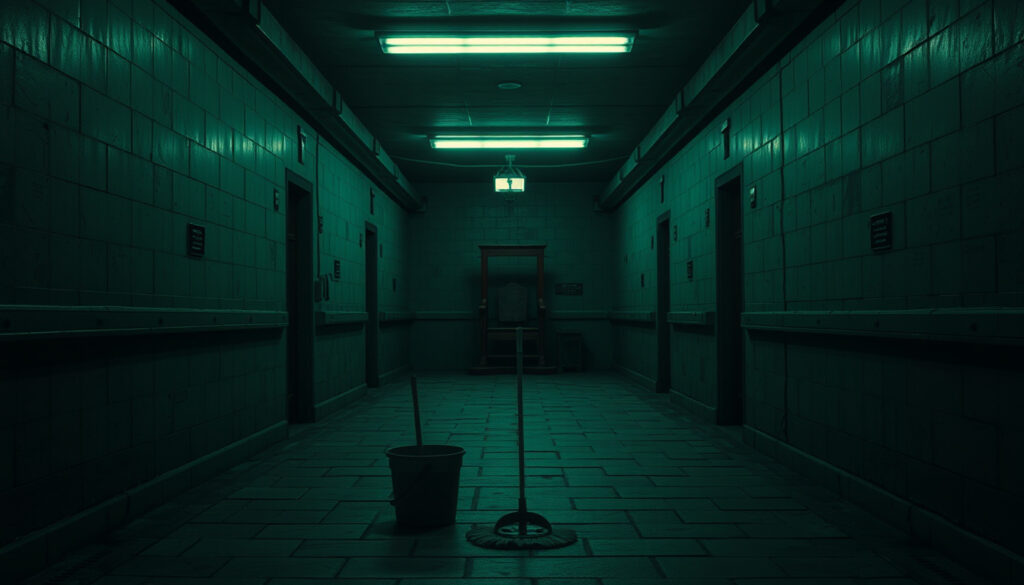
The Green Mile: True Story, Plot, Cast, and Ending Explained
There are some movies that stick with you long after the credits roll, and The Green Mile is one of them. Based on Stephen King’s serialized novel, this 1999 fantasy drama asks tough questions about innocence, justice, and the supernatural. Over two decades later, viewers still debate why John Coffey had to die and whether the film is based on a true story. Here’s everything you need to know about this enduring death row drama.
Release Year: 1999 · Director: Frank Darabont · Runtime: 189 minutes · Rating: R · Box Office: $136 million (domestic) · IMDb Rating: 8.6/10
Quick snapshot
- Director: Frank Darabont (IMDb Reference View)
- Release: 1999 (IMDb)
- Runtime: 189 min (Stephen King official site)
- Rating: R (Rotten Tomatoes)
- Set in 1935 on death row at Cold Mountain Correctional Facility (OzInsightly)
- John Coffey arrives with supernatural healing powers (Rotten Tomatoes cast)
- Guard Paul Edgecomb faces a moral crisis (OzInsightly)
- Tom Hanks as Paul Edgecomb (IMDb Reference View)
- Michael Clarke Duncan as John Coffey (Stephen King official site)
- David Morse as Brutus Howell (Rotten Tomatoes cast)
- Sam Rockwell as William Wharton (OzInsightly)
- Box office: $136M domestic (IMDb)
- Oscar nominations: 4 (OzInsightly)
- IMDb rating: 8.6/10 (Rotten Tomatoes)
- Rotten Tomatoes: 78% critics, 94% audience (Rotten Tomatoes cast)
Six key facts about The Green Mile that define its production and reception:
| Attribute | Value |
|---|---|
| Director | Frank Darabont (IMDb Reference View) |
| Release Year | 1999 (IMDb) |
| Runtime | 189 minutes (Stephen King official site) |
| Genre | Fantasy drama (Stephen King official site) |
| Rating | R (Rotten Tomatoes) |
| Box Office | $136 million (domestic) (IMDb) |
The pattern: director, runtime, and rating all align with a prestige studio drama, but the fantasy element sets it apart from typical prison films.
Is The Green Mile based on a true story?
Stephen King’s inspiration
The short answer is no. The Green Mile is a work of fiction by Stephen King, first published as a serialized novel in 1996 (Stephen King official site (primary author)). King drew on his own imagination, but he also wove in real-world death row details, such as the electric chair and the daily routine of condemned prisoners.
Real-life death row elements
While the story is invented, the setting — Cold Mountain Correctional Facility in 1935 Louisiana — reflects historical prison conditions of the era (OzInsightly). The green linoleum floor that gives the death row corridor its nickname is a fictional detail, but the emotional and moral weight of the execution process is grounded in real-world justice debates.
King built a fantasy on a foundation of real death row mechanics: the result is a story that feels true even though it isn’t.
What’s the story behind The Green Mile?
Plot overview
Set in 1935, the film follows Paul Edgecomb (Tom Hanks), head guard of death row at Cold Mountain Penitentiary. When John Coffey (Michael Clarke Duncan), a gentle giant convicted of murdering two young girls, arrives, Edgecomb and his team discover Coffey possesses a supernatural ability to heal others (Rotten Tomatoes cast). The guards face a moral crisis: execute an innocent man, or try to save him.
“I’m tired, boss. Not tired of any job, but just tired of people being ugly to each other.” — John Coffey
—
Key characters
- Paul Edgecomb – Tom Hanks – the compassionate head guard (IMDb Reference View)
- John Coffey – Michael Clarke Duncan – the condemned inmate with healing powers (Stephen King official site)
- Brutus “Brutal” Howell – David Morse – loyal guard (Rotten Tomatoes cast)
- Percy Wetmore – Doug Hutchison – sadistic guard (OzInsightly)
- William “Wild Bill” Wharton – Sam Rockwell – the real killer (OzInsightly)
- Mr. Jingles – a mouse with a special bond to inmate Delacroix (Rotten Tomatoes)
“We each owe a death. There is no exception.” — Paul Edgecomb
—
The moral weight falls on Paul Edgecomb and his men — they are the ones who must decide whether to follow the law or their conscience.
Why was John Coffey killed?
John Coffey’s conviction
John Coffey was convicted for the rape and murder of two nine-year-old girls. The film gradually reveals that Coffey is innocent — the true killer is William “Wild Bill” Wharton (OzInsightly). Despite Paul Edgecomb and the other guards learning the truth, the legal machinery is already in motion.
The reason for execution
Coffey is executed via electric chair because the system refuses to admit error. The execution scene is one of cinema’s most harrowing: Coffey, knowing his fate, asks not to be hooded because he is afraid of the dark (Rotten Tomatoes). The question hangs in the air: why does an innocent man have to die?
The implication: the film argues that capital punishment is irreversibly fallible — once the switch is pulled, there is no appeal.
Was The Green Mile a hit or a flop?
Box office performance
On a $60 million budget, the film grossed $136 million domestically and over $286 million worldwide (IMDb). That’s a solid profit, especially for a three-hour fantasy drama about death row.
Critical reception
The film earned four Academy Award nominations, including Best Picture, Best Supporting Actor for Michael Clarke Duncan, Best Adapted Screenplay, and Best Sound (Rotten Tomatoes). Critics gave it 78% on Rotten Tomatoes, while audiences rated it 94% (Rotten Tomatoes cast). On IMDb it holds an 8.6/10 rating, placing it among the top 50 films of all time (IMDb).
The film’s length (189 minutes) and heavy subject matter may have cost it at the box office compared to shorter summer blockbusters, but its critical and audience acclaim has only grown.
What is the twist in The Green Mile?
The reveal of the real killer
The central twist is that John Coffey is innocent. The real murderer, William “Wild Bill” Wharton, is already on death row alongside Coffey. Wharton’s guilt is confirmed through Coffey’s supernatural ability to psychically perceive the crime scene (OzInsightly).
The fate of Mr. Jingles
At the end of the film, Mr. Jingles — the mouse that Delacroix (Michael Jeter) trained — is still alive in the nursing home where an elderly Paul Edgecomb lives (Stephen King official site). This suggests that John Coffey’s gift of life extended to the mouse as well. Paul Edgecomb himself is 108 years old, having outlived all his family and friends (OzInsightly).
Bottom line: The twist isn’t just about who killed the girls — it’s about the cost of knowing the truth and being powerless to change the outcome.
What’s confirmed and what remains unclear
Confirmed facts
- The Green Mile is a fictional story by Stephen King (Stephen King official site)
- John Coffey is executed via electric chair (Rotten Tomatoes)
- The film was a commercial and critical success (IMDb)
- Mr. Jingles survives at the end (Rotten Tomatoes cast)
What’s unclear
- Whether the film is the “saddest movie ever” is subjective
- Whether Mr. Jingles’ survival is meant to be literal or symbolic is open to interpretation (OzInsightly)
- Whether William Wharton is definitively the killer is confirmed by the narrative, but some audiences still debate alternative explanations (OzInsightly)
- Whether Paul Edgecomb’s age of 108 is a product of Coffey’s gift or a narrative device is ambiguous (Rotten Tomatoes)
The pattern: the facts are solid, but the emotional and metaphorical questions are deliberately left open for the audience to wrestle with.
John Coffey’s execution is both the film’s most devastating moment and its most essential statement: an innocent man dies so that the audience feels the full weight of capital punishment’s finality.
deepfocusreview.com, imdb.com, stephenking.com, simple.wikipedia.org, metacritic.com, en.wikipedia.org, moviesense.io, cineamo.com
Frequently asked questions
What did John Coffey say before he died?
“I’m tired, boss. Not tired of any job, but just tired of people being ugly to each other.” He also asks not to be hooded because he is afraid of the dark (Rotten Tomatoes).
Is Mr. Jingles still alive at the end of The Green Mile?
Yes, Mr. Jingles is alive and well in the nursing home scene, and Paul Edgecomb cares for him. This implies that John Coffey’s touch bestowed long life on the mouse (OzInsightly).
What was Tom Hanks’ problem in The Green Mile?
Tom Hanks’ character Paul Edgecomb suffers from a urinary tract infection for much of the film, a condition that causes him chronic pain and embarrassment. It also becomes a plot device when John Coffey heals him (Rotten Tomatoes cast).
Which actors from The Green Mile have passed away?
Michael Clarke Duncan (John Coffey) died in 2012; Michael Jeter (Delacroix) died in 2003; Harry Dean Stanton (Toot-Toot) died in 2017; and Dabbs Greer (Old Paul) died in 2007 (IMDb Reference View).
Is The Green Mile the saddest movie ever?
It is frequently cited as one of the most emotionally devastating films. While “saddest” is subjective, the execution of an innocent man and the long, lonely life of Paul Edgecomb make a strong case (Stephen King official site).
What is the most famous line from The Green Mile?
“I’m tired, boss.” — John Coffey’s final words are the most quoted. Also famous is Paul Edgecomb’s narration: “We each owe a death. There is no exception.” (Rotten Tomatoes)
Why did John Coffey get the electric chair?
John Coffey was sentenced to death for the murder of two girls, a crime he did not commit. Despite the guards and the warden learning the truth, the execution proceeds because the legal system cannot admit its mistake (Rotten Tomatoes cast).
For viewers who still find themselves thinking about The Green Mile days later, the implication is clear: this is a film that doesn’t let go. Its questions about justice, mercy, and the cost of innocence are as relevant today as they were in 1999 — and they aren’t going anywhere soon.
More related posts
 Angela Rayner: Biography, Children, and Net Worth
 2026 Toyota Hilux: Price, Problems, Comparisons (Ireland Guide)
 All Might: Biography, Powers, and Key Moments in My Hero Academia
 Emma Navarro: Tennis Ranking, Career, and Personal Life
 Deadpool and Wolverine: Hit or Flop? Streaming and Reviews
 Wyatt Earp: Fact vs. Fiction of the Old West Lawman
 Lemon Myrtle: Uses, Benefits, and How to Grow
 Rachel Zegler: Biography, Controversies, and Political Views
