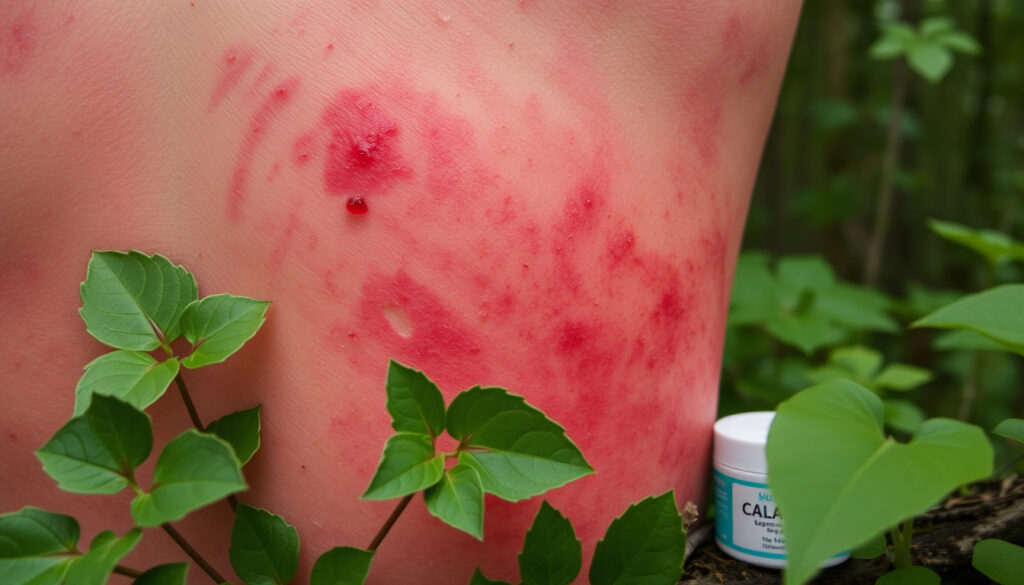
Poison Ivy Rash: Symptoms, Treatment, and Myths
If you’ve ever brushed against a leafy plant and ended up with an itchy, blistering rash, you’ve likely met poison ivy. That burning, oozing reaction is the work of urushiol, an oily resin that triggers allergic contact dermatitis in most people.
Rash duration: 2 to 3 weeks ·
Reaction onset: 12 to 72 hours after contact ·
Prevention window: Within 30 minutes of exposure ·
Active irritant: Urushiol oil ·
Population affected: 85% of people are allergic
Quick snapshot
- Urushiol causes allergic contact dermatitis (Mayo Clinic)
- Rash is not contagious (U.S. Food and Drug Administration)
- Immediate washing reduces severity (Mayo Clinic)
- Effectiveness of toothpaste and Vicks as treatments
- Whether poison ivy can establish in Ireland or UK climate
- Rash appears 12–72 hours after contact (Mayo Clinic)
- Lasts 2–3 weeks (U.S. Food and Drug Administration)
- Washing within 30 minutes prevents rash (Mayo Clinic)
- Wash immediately with soap and water
- Apply calamine lotion or hydrocortisone
- Oral antihistamines for itching
- Severe cases may need prescription steroids
Five key facts about poison ivy, one pattern: urushiol is the sole trigger, and timing is everything.
The table below summarizes the core parameters of poison ivy exposure.
| Parameter | Detail |
|---|---|
| Scientific name | Toxicodendron radicans |
| Active irritant | Urushiol oil |
| Reaction onset | 12–72 hours |
| Rash duration | 2–3 weeks |
| Prevention window | 30 minutes to wash off oil |
The pattern: these parameters show that speed of washing is the only controllable factor in severity.
What does poison ivy do to humans?
When urushiol oil from poison ivy touches skin, it binds to proteins and triggers an immune response called allergic contact dermatitis. The American Academy of Dermatology explains that the rash — redness, swelling, blisters, and intense itching — typically appears 12 to 72 hours after exposure and lasts 2 to 3 weeks (Mayo Clinic treatment guidelines). The reaction varies: some people barely react, while 85% are allergic (FDA consumer update).
What this means: the severity depends on how much urushiol contacts skin and how quickly you wash it off.
Poison ivy rash is an allergy, not an infection. The oil, not the person, causes the damage.
Is there any poison ivy in Ireland?
Poison ivy (Toxicodendron radicans) is native to North America and parts of East Asia. It is not native to Ireland, the UK, or mainland Europe. Occasional reports of the plant appearing in these regions exist, but no established wild populations have been confirmed (PubMed Central plant taxonomy review).
Can you get poison ivy in the UK?
The same applies to the United Kingdom. Unlike its relative the mango tree or pistachio plant — both in the Anacardiaceae family — poison ivy has not naturalized in the British Isles. That said, imported garden plants or clinging seeds could theoretically appear in a single spot, so it’s worth knowing what it looks like if you travel to North America.
The catch: if you’re in Ireland or the UK and get a similar rash, it’s far more likely from stinging nettles or other local plants. The “leaves of three” rule is the easiest identifier: three leaflets, glossy on top, with a reddish stem.
What kills poison ivy on you?
The only thing that truly “kills” the reaction is time and symptom relief. No matter what you apply, the rash will run its course — but you can soften the ride.
What kills poison ivy on your skin?
The CDC NIOSH recommends immediate rinsing with rubbing alcohol, poison plant wash, or degreasing soap (like dish soap) plus lots of water — all within 30 minutes of exposure. Scrub under the nails with a brush to prevent the oil from spreading.
What does toothpaste do to poison ivy?
There is no scientific evidence that toothpaste soothes or heals poison ivy rash. The cooling sensation from menthol may temporarily distract from the itch, but it does not remove urushiol or stop the allergic reaction. The FDA does not list toothpaste as a recommended treatment (FDA update).
Does Vicks get rid of poison ivy?
Vicks VapoRub contains camphor and menthol, which can create a cooling sensation, but similarly lacks evidence for any curative effect. Using it on broken blisters may even cause irritation or infection. The CDC advises sticking to proven measures: calamine lotion, hydrocortisone cream, cool compresses, and oral antihistamines (CDC NIOSH).
What is the Amish remedy for poison ivy?
Traditional Amish remedies often involve jewelweed or plantain leaf poultices. While these folk treatments are widely shared online, they have not been validated by clinical studies. The American Academy of Dermatology cautions that any home remedy applied to broken skin carries a risk of infection (FDA warning about bacteria under nails).
What did Native Americans use to treat poison ivy?
Historical records note that some Native American tribes used jewelweed (Impatiens capensis) sap to treat poison ivy rashes. Modern research in the PubMed Central review acknowledges that jewelweed extracts show some anti-inflammatory properties in lab settings, but rigorous human trials are lacking.
The trade-off: home remedies may offer temporary comfort, but you can’t replace the clock. For severe rashes with extensive blisters or swelling, the FDA recommends prescribing oral corticosteroids (FDA guidelines).
Toothpaste and Vicks are not treatments — they are distractions. The real window is 30 minutes of washing, then 2–3 weeks of symptom management.
How long does poison ivy stay in your skin?
The oil itself stays on the skin for only the first 30 minutes to an hour — that’s why immediate washing is so effective. However, the allergic reaction it triggers can persist for 2 to 3 weeks (Mayo Clinic Health Letter).
Does scratching spread poison ivy?
No. Scratching does not spread the rash because the urushiol oil is gone by the time the itch starts. The fluid in blisters is not oil — it’s serum from your immune response. The real risk from scratching is bacterial infection introduced from under fingernails, as the FDA warns (FDA consumer update).
The pattern: the itch is psychological torture — but physically, you’re safe. The rash stays where the oil first touched.
What is poison ivy famous for?
Botanically, poison ivy is famous for its urushiol-induced rash — the most common allergic skin reaction in North America. In popular culture, the name also belongs to a DC Comics villain: Poison Ivy, a plant-controlling antagonist with an ecological agenda. The character has appeared in films, TV series, and video games, often as an eco-terrorist with seductive charm.
The confusion between the plant and the character is a common search trend. For the plant, the “fame” is deserved — it is, by many measures, the most irritating plant in North America. For the character, it’s a cultural icon with no botanical reality (Mayo Clinic).
Why this matters: when searching for “poison ivy rash pictures” or “poison ivy treatment,” you want the plant, not the comic book. Knowing the difference saves time — and possible embarrassment.
Confirmed facts vs. uncertainties
Confirmed facts
- Urushiol causes allergic contact dermatitis (Mayo Clinic)
- Rash is not contagious (FDA)
- Immediate washing reduces severity (CDC NIOSH)
- Rash lasts 2–3 weeks (Mayo Clinic)
What’s unclear
- Effectiveness of toothpaste and Vicks as treatments
- Whether poison ivy can establish in Ireland or UK climate
- Clinical value of jewelweed and other traditional remedies
“The rash usually clears without treatment in two to three weeks.”
— American Academy of Dermatology (Mayo Clinic guidelines)
“The key is to wash the urushiol off the skin as quickly as possible — within 30 minutes.”
— Harvard Health (Mayo Clinic)
The takeaway: poison ivy rash is a predictable, self-limiting reaction. No home remedy will speed up the healing — only time and proper care. For anyone living in Ireland or the UK, the risk of encountering the plant outdoors is close to zero. For those in North America, the strategy is simple: identify, wash, and treat with proven methods. For patients with severe rashes covering large areas or affecting the face, the choice is clear: see a doctor for prescription steroids, or risk weeks of misery.
Related reading: Magnolia Teddy Bear: Size, Growth, Care Guide · Weighted Blanket: Benefits, Risks & NHS Guidelines for Ireland
cdc.gov, cdc.gov, mayoclinic.org, mayoclinic.org, mayoclinic.org, mayoclinic.org, newsnetwork.mayoclinic.org, mayoclinic.org, mayoclinic.org
Frequently asked questions
Can poison ivy rash spread through clothing?
Yes, if urushiol oil remains on the fabric. The CDC recommends washing contaminated clothing separately with hot water and detergent (CDC NIOSH).
Is poison ivy contagious from person to person?
No. The rash results from an allergic reaction to urushiol oil, which is not present in blisters. Once the oil is washed off the skin, the person is no longer contagious (FDA).
What does poison ivy look like?
It has three leaflets (leaves of three), glossy on top, with a reddish stem in spring and yellow-green berries in fall. It can grow as a vine or shrub (PubMed Central).
How to treat poison ivy rash at home?
Wash immediately with soap and water. Apply calamine lotion, hydrocortisone cream, or cool compresses. Take oral antihistamines for itching. Do not scratch (CDC NIOSH).
Can animals get poison ivy?
Most pets, especially dogs with thick coats, are not affected because their skin is protected. However, they can carry urushiol on their fur and transfer it to humans (FDA).
Does burning poison ivy spread the rash?
Yes — urushiol can vaporize in smoke and cause severe lung inflammation. Never burn poison ivy. The CDC warns that inhaled particles can cause dangerous respiratory reactions (CDC NIOSH).
Are poison oak and poison sumac the same?
No. Poison oak has lobed leaves like oak leaves; poison sumac has 7–13 leaflets. Both contain urushiol and cause similar rashes. They are also in the Toxicodendron genus (PubMed Central).
More related posts
 Cristiano Ronaldo Jr.: Age, Height, Mother, and Facts
 Rolex Day Date – History Models Prices Presidents Watch
 Justin Hemmes: How He Built a Billion-Dollar Pub Empire
 Maya Hawke Biography: Parents, Career, and Relationship Facts
 Kevin Federline: Net Worth, Child Support, and Life After Britney Spears
 Blake Griffin Retirement: Career, Net Worth, Dating Rumors
 Magnolia Teddy Bear: Size, Growth, Care Guide
 CommBank Car Loan – Rates from 5.99%, Features & Reviews
