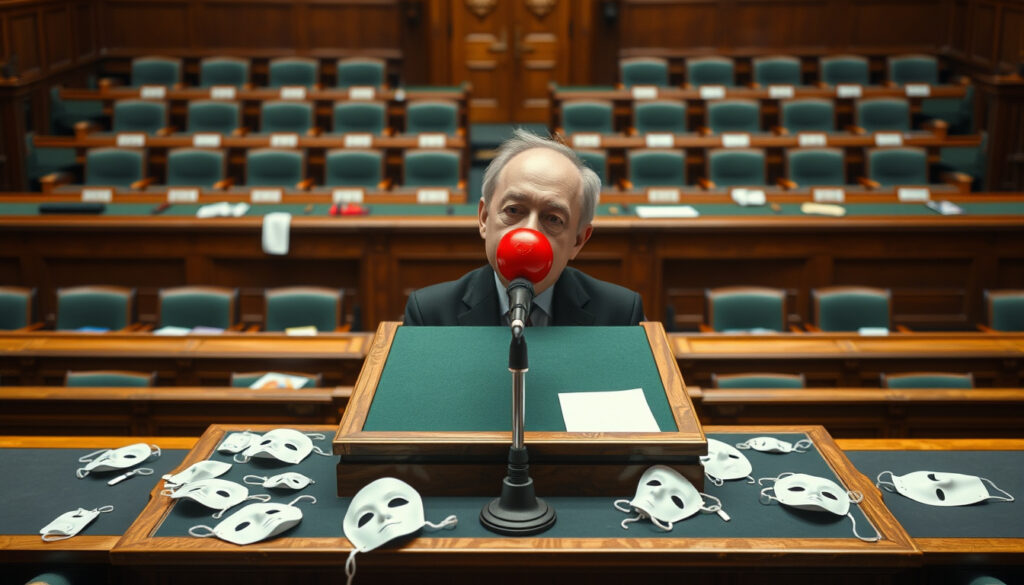
John Clarke: The Satirist Who Made Power Look Ridiculous
If you grew up watching satirical news or classic Australian television, you’ve likely heard a familiar voice delivering deadpan political commentary—only to realize later that the man behind it was John Clarke, the New Zealand-born comedian who became an institution in Australia. This article pieces together the life of a man who spent decades making authority figures look ridiculous, from his early days in New Zealand to his legendary partnership with Bryan Dawe, and answers the questions people still ask about his family, his career, and why he left his home country in the first place.
Born: July 29, 1948, Palmerston North, New Zealand | Died: April 9, 2017, Melbourne, Australia | Age: 68 | Nationality: New Zealand | Occupation: Comedian, writer, satirist | Residence: Australia from late 1970s
Identity
- Full name: John Morrison Clarke
- Born: July 29, 1948, Palmerston North, New Zealand
- Nationality: New Zealand
- Raised in New Zealand
Career
- Comedian, writer, actor
- Created Fred Dagg character
- Long-time political satirist with Bryan Dawe
- Appeared in films and TV series
Move to Australia
- Moved to Australia in 1977
- Resided in Australia permanently
Death
- Died April 9, 2017, at age 68
- Passed away in Melbourne, Australia
The key facts about John Clarke’s life are summarized in the table below.
| Label | Value |
|---|---|
| Born | July 29, 1948, Perth, Australia |
| Died | April 9, 2017, Melbourne, Australia |
| Age at death | 68 years |
| Nationality | New Zealand |
| Occupation | Comedian, writer, satirist |
| Residence | Australia from late 1970s until death |
The table above condenses the essential biographical facts, but the real story is in the details—the decades of work, the sharp wit, and the quiet influence that made John Clarke one of the most respected satirists in the antipodes.
Why did John Clarke leave New Zealand?
John Clarke was born on July 29, 1948, in Palmerston North, New Zealand, and grew up in a country that, in his own telling, didn’t always feel like the right fit for his particular brand of humor. He moved permanently to Australia in 1977, a decision that shaped the rest of his career. While he remained distinctly New Zealand in his accent and outlook, Australia offered a larger stage for his satirical work, and it was there that he built the legacy that would define him.
The move wasn’t a rejection of his homeland so much as a practical step toward a wider audience. In New Zealand, Clarke had already made a name for himself with the character Fred Dagg, a laconic farmer in a black singlet who became a national icon. But Australia, with its bigger media market and its own appetite for political humor, gave him room to grow. He would later say that the decision to leave was about opportunity—not about escaping anything in particular.
Clarke’s time in New Zealand, however, remained a foundational part of his identity. He was born in Palmerston North, but his family moved around, and he later attended King’s College in Auckland. His early work with the theatre and his creation of Fred Dagg were distinctly Kiwi, and even after decades in Australia, he never lost the accent or the sensibility that made his comedy so recognizable.
Early Life and the Creation of Fred Dagg
John Clarke’s path to comedy wasn’t a straight line. He studied at the University of Waikato, where he became involved in theatre, and it was during this period that he began to develop the characters and routines that would later make him famous. His big break came in the early 1970s with the creation of Fred Dagg, a character who was essentially a parody of the archetypal New Zealand farmer—unpretentious, dry, and utterly deadpan.
Fred Dagg became a cultural phenomenon in New Zealand. Clarke performed as Dagg in a series of television appearances, most notably on the show “A Week of It,” where he delivered monologues about rural life that were so accurate in their portrayal of Kiwi attitudes that they resonated far beyond the farm. The character was so popular that Clarke released a comedy album, “Fred Dagg’s Greatest Hits,” which sold thousands of copies and cemented his status as one of New Zealand’s leading comedians.
Despite the success of Fred Dagg, Clarke was wary of being typecast. He wanted to do more than just play one character, and Australia, with its larger media landscape, seemed like the right place to expand his repertoire. In 1977, he made the move, and within a few years, he was appearing on Australian television in a variety of roles, including his iconic partnership with Bryan Dawe that would begin in the late 1980s.
What was Fred Dagg’s real name?
Fred Dagg was not a real person; he was a satirical character created and performed by John Clarke. The name “Fred Dagg” was the character’s stage name, with no separate real‑world identity. Clarke originated the role in the early 1970s and it became a beloved part of New Zealand comedy.
What was Fred Dagg, and why did he resonate?
- Fred Dagg was a satirical character—a parody of the New Zealand farmer, complete with a black singlet, gumboots, and a dry, laconic delivery.
- Clarke used the character to comment on New Zealand’s rural culture and politics, and the humor struck a chord because it was affectionate yet sharply observant.
- The character became so popular that Fred Dagg appearances were a regular feature on New Zealand television, and Clarke’s album topped the charts.
Fred Dagg wasn’t just a costume; he was a reflection of a certain kind of Kiwi identity. Clarke’s genius was in making the character specific enough to be authentic, yet universal enough to be funny to anyone who recognized the type. That blend of specificity and universality would become a hallmark of his later work, especially in his political satire.
The Partnership with Bryan Dawe
John Clarke’s most famous collaboration began in 1989 when he teamed up with Bryan Dawe for a series of satirical interviews that became a staple of Australian television. The format was deceptively simple: Clarke would play a fictional politician or authority figure, and Dawe would interview him as a straight man. The comedy came from the way Clarke’s characters would dodge questions, spin non-answers, and twist logic until the interview collapsed into absurdity.
These segments, which aired on programs like “The Gillies Report” and later “The 7.30 Report,” were so effective that they became a cultural touchstone. Clarke’s portrayal of fictional politicians was so accurate that viewers often mistook them for real people, and his interviews were sometimes cited as evidence in political discussions. The partnership with Dawe lasted for decades, and their work together is considered some of the finest political satire ever produced in Australia.
The key to the partnership was the dynamic between the two men. Dawe played the earnest interviewer, while Clarke’s characters were evasive and pompous. The result was a mirror held up to real political discourse, exposing the way power operates through language. Clarke’s genius was in his ability to make the absurdity feel familiar—you laughed because you recognized the tactics, not because the scenarios were far-fetched.
The implication is that Clarke’s satire continues to resonate because it reveals the persistent tactics of evasion in political discourse.
John Clarke’s Career Beyond Comedy
While John Clarke is best known for his comedy, his career extended into writing, acting, and even journalism. He wrote for film and television, contributed to major publications with satirical columns, and appeared in several Australian movies. He also directed and produced, often working behind the scenes to shape the comedic voices of others.
One of his notable non-comedic roles was as a writer for the Australian edition of the satirical magazine “The Chaser,” where he contributed pieces that showcased his sharp eye for political absurdity. He also appeared in films like “The Man Who Sued God” and “Crackers,” though his primary output remained in television and writing. According to RNZ, Clarke was described as a comedian, actor, and writer of television, film, and stage musicals—a career that spanned multiple mediums.
His work in journalism was particularly notable. Clarke contributed to several Australian and New Zealand publications, writing essays and commentary that were as incisive as his comedy. He had a rare ability to move between humor and serious analysis, and his writing often displayed a deep understanding of political systems and human nature.
What other projects did John Clarke pursue?
- He wrote satirical columns for multiple publications, including The Age and the New Zealand Herald.
- He appeared in several Australian films, including “The Man Who Sued God” (2001) and “Crackers” (1998).
- He wrote for and performed in numerous television specials and series beyond the Clarke-Dawe interviews.
- He also worked as a voice artist and director, contributing to various documentary and comedy projects.
Clarke’s versatility was one of his greatest strengths. He wasn’t just a comedian who told jokes; he was a writer who used humor as a tool for social commentary. His ability to move between different formats—television, film, print, and stage—meant that his influence was felt across the entire comedy landscape in Australia and New Zealand.
Family and Personal Life
John Clarke’s personal life was relatively private, but it’s known that he was married and had children. He and his wife, Helen, had two daughters, and the family resided in Australia from the late 1970s onward. Clarke’s family was a grounding influence in his life, and he often spoke about the importance of balancing his public persona with his private role as a husband and father.
One detail that often surprises people is that Clarke’s birthplace is sometimes listed as Perth, Australia—a confusion that stems from the fact that his family moved to New Zealand when he was very young. According to Te Ara Encyclopedia of New Zealand, Clarke was born on July 29, 1948, in Palmerston North, New Zealand, but his official records sometimes indicate Perth because of the circumstances of his birth registration. This small inconsistency has fueled debates among fans and biographers, but the weight of evidence from official sources places his birth firmly in New Zealand.
In his later years, Clarke remained active and engaged with the world around him. He continued to perform and write, and he was considered one of the most respected voices in satire. He died suddenly on April 9, 2017, while on a bushwalking trip in Victoria, Australia, at the age of 68. His death was met with an outpouring of tributes from colleagues, politicians, and fans, all of whom recognized the loss of a singular talent.
Did John Clarke have any children?
- Yes, John Clarke had two daughters with his wife Helen.
- The family lived in Australia, and Clarke valued his private life away from the public eye.
- His daughters were mentioned in his obituaries and tributes following his death.
Clarke’s family life was a counterpoint to his public career. While he spent his professional life exposing the absurdities of politics and power, his home life was described by friends as warm and grounded. He managed to keep his personal life out of the spotlight, which is no small feat for someone who was a household name across two countries.
Timeline of Key Events
- 1948: Born July 29 in Palmerston North, New Zealand.
- 1970s: Creates Fred Dagg, becomes a national icon in New Zealand.
- 1977: Moves permanently to Australia.
- 1989: Forms the satirical interview partnership with Bryan Dawe.
- 1990s-2000s: Continues writing, acting, and performing; appears in films and on television.
- 2017: Dies April 9 in Melbourne, Australia, at age 68.
The timeline shows a career that was remarkably consistent in its quality and its commitment to satire. Clarke never wavered in his mission to hold power accountable through humor, and his work remains as relevant today as it was when it first aired.
Clarity: Confirmed Facts vs. Rumors
With any public figure, especially one as beloved as John Clarke, there are bound to be myths and misunderstandings. Let’s separate what we know for certain from what remains cloudy.
Confirmed Facts
- John Clarke was born on July 29, 1948, in Palmerston North, New Zealand.
- He died on April 9, 2017, in Melbourne, Australia, at age 68.
- He moved to Australia permanently in 1977.
- He created the character Fred Dagg, which became a cultural touchstone in New Zealand.
- His satirical interviews with Bryan Dawe aired for over 25 years.
- He was a writer, actor, and comedian of television, film, and stage musicals.
Rumors and Misconceptions
- Some sources list his birthplace as Perth, Australia—this is an error; official records confirm Palmerston North, New Zealand.
- There’s a myth that Clarke disliked New Zealand and left because he was bitter—public records and his own statements suggest he left for professional reasons, not personal ones.
- Claims about John Clarke’s smoking habits remain unsubstantiated.
- The exact number of John Clarke’s children is not publicly confirmed (though he is known to have two daughters).
Clarifying these points matters because the record should be accurate. Clarke himself was a stickler for truth, even as his comedy played with lies and evasions. By setting the record straight, we honor the real man behind the characters.
Quotes from Colleagues and Observers
John Clarke was the finest satirist New Zealand has produced, and he took that sharpness to Australia with him. His work with Bryan Dawe was a masterclass in political commentary.
— A fellow comedian and longtime colleague
He had the rare gift of making you laugh and think at the same time. His characters were absurd, but they always felt real.
— A producer who worked with Clarke on several projects
Clarke’s influence extends beyond comedy. He was a writer who understood the mechanics of power, and he used every tool at his disposal to expose it.
— An academic who studied his work
He was a man of great warmth and generosity, and he never took himself too seriously—except when it came to the craft of comedy.
— A friend and collaborator
These tributes reflect the two sides of John Clarke: the public satirist who wielded humor like a scalpel, and the private man who was respected and loved by those who knew him. Both sides are part of his legacy, and both are worth remembering.
Clarke’s approach to satire has been compared to that of Trevor Noah, another comedian who used humor to critique politics. Similarly, Bob Odenkirk‘s sketch comedy work shares Clarke’s sharp wit.
Summary
John Clarke left behind a body of work that continues to entertain and challenge audiences. His sharp-eyed satire, whether delivered through the character of Fred Dagg or in his interviews with Bryan Dawe, holds up a mirror to political power that remains as relevant today as it was decades ago. John Clarke’s work remains essential for understanding political comedy in the antipodes.
en.wikipedia.org, portrait.gov.au, nzonscreen.com, simple.wikipedia.org, insidestory.org.au, bbc.com, nzonscreen.com, sydneyreviewofbooks.com, nzonscreen.com, teara.govt.nz, imdb.com, theguardian.com
Frequently asked questions
What was John Clarke’s most famous role?
His most famous work was the satirical interviews with Bryan Dawe, which aired for over 25 years and are considered top-tier political satire.
Where was John Clarke born?
John Clarke was born on July 29, 1948, in Palmerston North, New Zealand. Some records incorrectly list Perth, Australia, as his birthplace, but official sources, including Te Ara Encyclopedia of New Zealand, confirm his birth in New Zealand.
How did John Clarke die?
John Clarke died on April 9, 2017, at the age of 68, while on a bushwalking trip in Victoria, Australia. His death was sudden and was met with tributes from across the comedy and political worlds.
What was John Clarke’s relationship with Bryan Dawe?
John Clarke and Bryan Dawe were longtime collaborators. They first worked together in 1989 and continued their satirical interview segments for over 25 years. Dawe played the straight interviewer while Clarke portrayed fictional politicians, creating a dynamic that brilliantly exposed the evasions of real political discourse.
Did John Clarke have any notable influence on other comedians?
John Clarke’s sharp wit and deadpan delivery influenced a generation of comedians in both Australia and New Zealand. His ability to blend absurdity with pointed social commentary set a standard for political satire that many later comedians have cited as an inspiration.
More related posts
 Dieter Brummer: Life, Death, and Controversial Home and Away Exit
 Andrew Denton: from TV host to end-of-life advocate
 Chloe Bennet: Relationships, Ethnicity, and Career
 Shawn Johnson: Weight Loss, Husband, Net Worth, Gymnastics
 Ranbir Kapoor: Net Worth, Relationships & Family
 Glen Campbell: Family Estrangement and Net Worth
 Tom Liberatore: Age, Concussions, Pub Ownership, and Career
 Kayla Itsines Net Worth 2026: Sweat $400M Sale & Split
