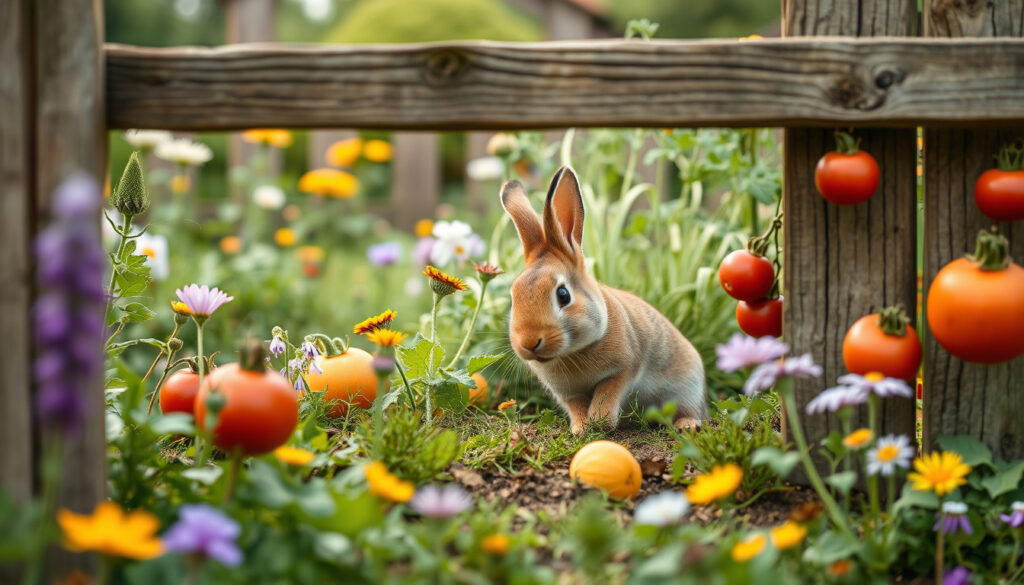
Peter Rabbit: Story, Message, and Answers for Parents
You might know Peter Rabbit as the cheeky little rabbit in a blue coat who steals vegetables. But there is a lot more to this nearly 125-year-old story, from Beatrix Potter’s own remarkable life to the very real questions parents have about what their children are watching. We have gathered answers to the most common questions about Peter Rabbit, along with verified facts about the author and her legacy.
First published story: The Tale of Peter Rabbit (1902) ·
Author: Beatrix Potter ·
Number of Peter Rabbit books by Potter: 23 ·
Peter Rabbit film (2018) worldwide box office: $351 million ·
Peter Rabbit 2 release year: 2021
Quick snapshot
- Letter first written in 1893 to a child (Wikipedia entry on The Tale of Peter Rabbit)
- Self-published 1901 (Wikipedia entry on The Tale of Peter Rabbit)
- Commercial release 1902 by Frederick Warne & Co (Wikipedia entry on The Tale of Peter Rabbit)
- Peter is a mischievous young rabbit (BBC Teach school resources)
- Disobeys mother entering Mr. McGregor’s garden (BBC Teach school resources)
- Escapes after losing his coat and shoes (BBC Teach school resources)
- Beatrix Potter (1866-1943): naturalist and illustrator (BBC Teach school resources)
- Married at 47, no children (Wikipedia entry on Beatrix Potter)
- Left property to the National Trust (Wikipedia entry on Beatrix Potter)
- Animated series (2012-present) on Nickelodeon (Wikipedia entry on Peter Rabbit TV series)
- Live-action film Peter Rabbit (2018) rated PG (BBFC classification details)
- Sequel Peter Rabbit 2: The Runaway (2021) (IMDb page for Peter Rabbit 2)
The table below consolidates the essential data about the character and its creator.
| Label | Value |
|---|---|
| First appearance | The Tale of Peter Rabbit (1902) |
| Author | Beatrix Potter |
| Original publisher | Frederick Warne & Co |
| Number of Peter Rabbit books by Potter | 23 books |
| Latest major film | Peter Rabbit 2: The Runaway (2021) |
| TV series | Peter Rabbit (Nickelodeon 2012-2016; 2 seasons) |
What is the story behind Peter Rabbit?
Who was Peter Rabbit based on?
- Peter Rabbit first appeared in an illustrated letter Beatrix Potter wrote in 1893 to Noel Moore, the young son of her former governess, to cheer him up during an illness (Wikipedia entry on The Tale of Peter Rabbit).
- Potter later expanded the letter into a book and self-published 250 copies in 1901 after several publishers rejected it. Frederick Warne & Co picked it up for commercial release in 1902 (Wikipedia entry on The Tale of Peter Rabbit).
- Peter Rabbit’s character is a mischievous young rabbit who disobeys his mother and sneaks into Mr. McGregor’s garden (BBC Teach school resources).
What happens in The Tale of Peter Rabbit?
- Mrs. Rabbit warns her four children — Flopsy, Mopsy, Cotton-tail, and Peter — not to go into Mr. McGregor’s garden. While the others obey, Peter sneaks in and gorges on vegetables (BBC Teach school resources).
- Mr. McGregor spots Peter, who loses his shoes and then his blue jacket while fleeing. He hides in a watering can and eventually escapes, returning home exhausted and ill (BBC Teach school resources).
- The story ends with his mother giving him chamomile tea while his siblings enjoy bread and milk for supper.
The implication: Potter created a story where mischief is fun for a moment but carries real consequences — loss, fear, and a sick rabbit. The pattern of disobedience followed by danger has kept the tale relevant for over a century.
What is the message behind Peter Rabbit?
What lessons do readers learn from Peter Rabbit?
- The story warns against disobedience and recklessness. Peter’s initial thrill of getting what he wants is quickly overtaken by fear and danger (BBC Teach school resources).
- Peter’s loss of his clothes — his jacket and shoes — strips him of his identity as a “civilized” rabbit, emphasizing the cost of his choices.
- His mother’s disappointment and the ending where Peter gets only tea while his siblings feast underscore the trade-off: freedom had a price.
How does the story handle consequences?
- Consequences are immediate and physical: Peter is chased, almost caught, loses his belongings, and becomes ill (BBC Teach school resources).
- There is no moralizing lecture. Potter shows through action, not words, what happens when you break the rules.
- The story offers redemption through escape, but Peter is changed: he returns home subdued and obedient.
Peter gets a moment of thrill — then pays for it with his coat, his shoes, and his health. Potter was teaching children through experience, not instruction.
This pattern means Peter Rabbit stories succeed because they let children experience the danger of rule-breaking without moralizing. Fear and relief are the real teachers.
Is Peter Rabbit appropriate for toddlers?
What age is Peter Rabbit recommended for?
- The original book is generally considered suitable for ages 2-5 with parental guidance. The text is short, the illustrations gentle, and the peril mild in context.
- The animated TV series (Nickelodeon, 2012-2016) is rated TV-Y, designed for preschool children with minimal threat.
- The 2018 live-action film is a different story: the Raising Children Network review says it is not recommended for children under 7, and advises parental guidance for ages 7 to 12.
Are modern adaptations scarier than the book?
- The British Board of Film Classification (BBFC) describes the 2018 film’s violence as comic and slapstick but cautions it may be too intense for the very young.
- Common Sense Media review notes the film contains mild language (stupid, idiot, imbecile), plus references to drinking and possible intoxication.
- The animated TV series and the 1991 HBO musical adaptation remain far gentler than the live-action film. The HBO version, part of Storybook Musicals, kept the original story’s tone (Wikipedia entry on The Tale of Peter Rabbit).
Parents of children under 7: the 2018 live-action film is not the cozy bedtime story you remember. The BBFC itself warns about intensity. Stick to the book or TV series for young children.
Why this matters: A family watching the 2018 film expecting gentle Beatrix Potter charm will face something quite different — slapstick violence, mild language, and drinking references that do not appear in any book.
What illness did Beatrix Potter have?
- Beatrix Potter suffered from chronic symptoms including fatigue and pain, though the exact nature of her illness was never diagnosed during her lifetime (Natural History Museum biographical overview).
- Modern scholars suggest she may have had a form of autoimmune disease. Biographer Linda Lear, in Beatrix Potter: A Life in Nature (2007), documents Potter’s health struggles.
- Her health declined significantly in her later years. Potter died on December 22, 1943, at age 77 (Wikipedia entry on Beatrix Potter).
The catch: The exact diagnosis remains speculative. What is certain is that chronic health issues shaped Potter’s life and may have contributed to her deep connection with nature and solitude.
How is Beatrix Potter related to Kate Middleton?
- Beatrix Potter and Catherine, Princess of Wales (Kate Middleton) share a distant common ancestor from the 17th century. The connection traces back to the marriage of Thomas Smith and Ann Wood around the 1600s.
- The relationship is remote — genealogical research places them as several-times-removed cousins rather than close family.
- Neither Potter nor Middleton would have considered themselves related in any meaningful sense. It is a genealogical curiosity, not a practical family tie.
What this means: The connection is academically interesting but functionally irrelevant. It has no bearing on either woman’s life or legacy.
Did Beatrix Potter ever have a child?
- Beatrix Potter did not have any biological children (Wikipedia entry on Beatrix Potter).
- She married late in life at age 47, in 1913, to solicitor William Heelis. The couple had no children.
- Potter instead channeled her maternal instincts into farming, land conservation, and her many animals and pets. She raised sheep, kept rabbits and other animals, and managed extensive farmland.
A woman who created the most famous children’s rabbit in the English language never had children of her own. Her stories were letters to other people’s children.
Potter’s childlessness is often seen as a sad footnote, but she actively chose conservation over child-rearing. Her legacy is measured in preserved landscapes, not descendants.
How wealthy was Beatrix Potter when she died?
- At her death in 1943, Potter’s estate was valued at over £200,000 — equivalent to roughly £10 million today when adjusted for inflation (Wikipedia entry on Beatrix Potter).
- She owned extensive land holdings, including 14 farms, primarily in the Lake District.
- Potter left her property to the National Trust, ensuring thousands of acres of farmland and countryside were preserved for public enjoyment.
The implication: Potter used her wealth strategically. She bought land to block developers and preserve the natural landscape she loved. Her financial legacy is measured in protected acres, not pounds.
Timeline: Key dates in Peter Rabbit and Beatrix Potter’s story
- 1866: Beatrix Potter born in London (Wikipedia entry on Beatrix Potter)
- 1901: The Tale of Peter Rabbit self-published (Wikipedia entry on The Tale of Peter Rabbit)
- 1902: Commercial publication by Frederick Warne (Wikipedia entry on The Tale of Peter Rabbit)
- 1913: Beatrix Potter marries William Heelis (Wikipedia entry on Beatrix Potter)
- 1943: Beatrix Potter dies; estate valued at over £200,000 (Wikipedia entry on Beatrix Potter)
- 2012: Animated TV series Peter Rabbit premieres (Wikipedia entry on Peter Rabbit TV series)
- 2018: Live-action film Peter Rabbit released (IMDb page for Peter Rabbit)
- 2021: Peter Rabbit 2: The Runaway released (IMDb page for Peter Rabbit 2)
Confirmed facts and what remains unclear
Confirmed facts
- Beatrix Potter wrote and illustrated The Tale of Peter Rabbit (Wikipedia entry on The Tale of Peter Rabbit)
- Peter Rabbit first appeared in a letter to a child in 1893 (Wikipedia entry on The Tale of Peter Rabbit)
- Potter married William Heelis in 1913 (Wikipedia entry on Beatrix Potter)
- Potter died in 1943 leaving property to the National Trust (Wikipedia entry on Beatrix Potter)
What remains unclear
- Exact nature of Potter’s chronic illness is not definitively diagnosed (Natural History Museum biographical overview)
- The precise genealogical relationship between Potter and Kate Middleton is distant but documented through a common ancestor from the 1600s
“Now, my dears,” said old Mrs. Rabbit one morning, “you may go into the fields or down the lane, but don’t go into Mr. McGregor’s garden.”
— Beatrix Potter, The Tale of Peter Rabbit (public domain), as presented by BBC Teach school resources
Potter’s chronic health issues shaped her daily life and her connection with nature, but the exact diagnosis was never confirmed in her lifetime.
— Linda Lear, Beatrix Potter: A Life in Nature (2007), cited by Natural History Museum
Beatrix Potter gave 4,000 acres of land and 14 farms to the National Trust, ensuring the Lake District landscape would remain protected for future generations.
The story of Peter Rabbit spans more than a century, moving from a handwritten letter to a global franchise worth hundreds of millions. For families deciding what their children watch, the choice is clear: the original book and the animated TV series preserve Potter’s gentle charm, while the live-action films trade that warmth for slapstick humor at the risk of scaring younger viewers.
kidireading.com, moviemom.com, imdb.com, screenwiseapp.com, washingtonpost.com, rottentomatoes.com
Frequently asked questions
What is the correct order of the Peter Rabbit books?
The books were written in various orders, but The Tale of Peter Rabbit (1902) is the first. The 23 books by Potter do not follow a strict chronological story arc. Most readers start with the first five: The Tale of Peter Rabbit, The Tale of Benjamin Bunny, The Tale of the Flopsy Bunnies, The Tale of Mrs. Tiggy-Winkle, and The Tale of Jeremy Fisher. The order does not matter much for young readers since each book is a standalone adventure (Wikipedia entry on Beatrix Potter).
Are the Peter Rabbit movies suitable for 2-year-olds?
No. The 2018 film is rated PG and the Raising Children Network review explicitly recommends against it for children under 7. The animated TV series is rated TV-Y and is suitable for preschoolers. For 2-year-olds, the original picture book is the best choice (BBFC classification details).
Does Peter Rabbit have any siblings?
Yes. Peter has three sisters: Flopsy, Mopsy, and Cotton-tail. They appear in The Tale of Peter Rabbit and several later stories. His cousin Benjamin Bunny is also a recurring character (BBC Teach school resources).
Who is Mr. McGregor in Peter Rabbit?
Mr. McGregor is the gardener who owns the vegetable patch Peter Rabbit invades. He chases Peter with a rake and is the main antagonist of the story (BBC Teach school resources).
What animals appear in Peter Rabbit stories?
A wide range of British woodland animals: rabbits (obviously), cats, foxes, hedgehogs, mice, ducks, and more. Potter drew from her own observations of wildlife on her farm (Natural History Museum biographical overview).
Is the Peter Rabbit TV series available on Netflix?
As of 2024, the Peter Rabbit animated series is available on various streaming platforms depending on your region. It originally aired on Nickelodeon and can be found on Amazon Prime Video, YouTube, and some regional streaming services. Availability changes frequently, so check your local listings.
How many Peter Rabbit stories did Beatrix Potter write?
Beatrix Potter wrote and illustrated 23 Peter Rabbit books in total, starting with The Tale of Peter Rabbit (1902) and ending with The Story of a Fierce Bad Rabbit (1906) which is considered part of the Peter Rabbit series. She created 23 “little books” in total, most featuring the same animal characters (Wikipedia entry on Beatrix Potter).
For families getting to know Peter Rabbit for the first time, the safest approach is simple: start with the 1902 book. It is warm, short, and captures exactly why this naughty rabbit has survived for 120 years. Move to the TV series for preschoolers. Wait until age 7 for the films. Beatrix Potter would likely approve — she knew when a story should comfort and when it should warn.
More related posts
 Is Silver Surfer a Hero or Villain? Powers & Weaknesses
 Stephen King Books: List, Best, Chronological Order Guide
 Beaumaris Family Practice – Doctors Services Booking Guide
 Matthew Macfadyen: Biography, Height, Net Worth, and More
 Kelly Piquet: Family, Children and Relationships Explained
 Sanjeev Gupta: The Rise and Fall of a Steel Tycoon
 Pixel 8 Pro in 2026: Still Worth It? Full Review & Comparison
 Cash Out Day: What It Is and Why Aussies Withdraw Cash
