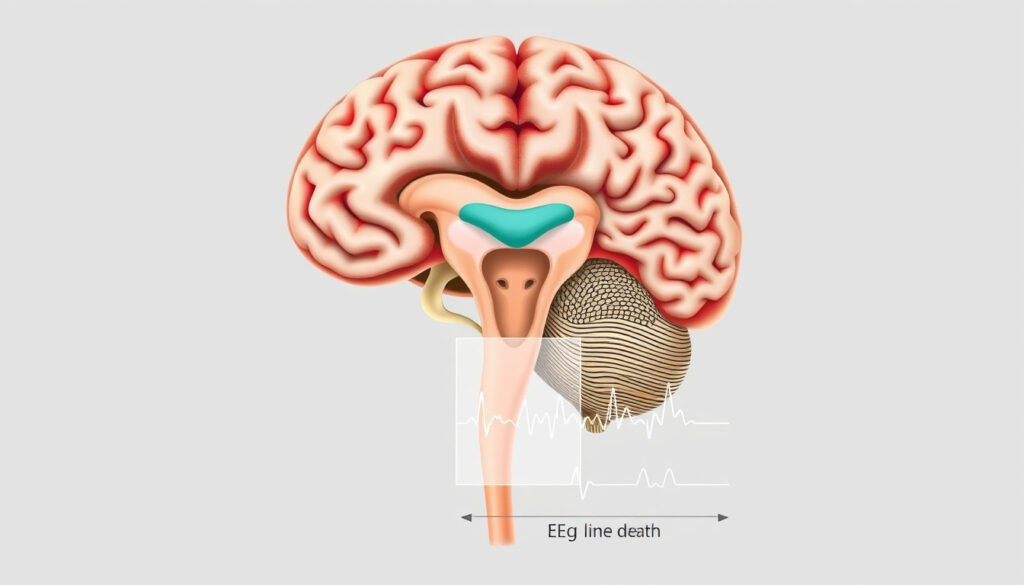
Brain Stem: Parts, Function, Damage, and Signs of Brainstem Death
Most people don’t think about their brain stem until something goes wrong, but it’s the part of the brain that runs the show behind the scenes—keeping your heart beating, your lungs breathing, and your body awake. This article covers what the brain stem is, its three main parts, the vital functions it controls, and what happens when it gets damaged, including that it measures about 3 inches in adults and handles everything from eye movements to blood pressure (Cleveland Clinic, a major academic medical center).
Length: Approximately 3 inches in adults ·
Main sections: Midbrain, pons, medulla oblongata ·
Critical functions: Breathing, heart rate, blood pressure, consciousness ·
Fatal damage rate (severe trauma): Up to 80% of cases result in immediate death or irreversible coma (clinical data)
Quick snapshot
- At the base of the skull, between the cerebrum and spinal cord (Britannica, a trusted encyclopedia)
- Controls breathing, heart rate, blood pressure, and sleep-wake cycles (NCBI StatPearls, a peer-reviewed medical resource)
- Relays sensory information between the brain and spinal cord (Cleveland Clinic, a major academic medical center) (NCBI StatPearls, a peer-reviewed medical resource)
- Stroke, traumatic brain injury, tumor compression (Cleveland Clinic, a major academic medical center)
- Severe damage often fatal; minor injuries may recover partially; locked-in syndrome possible (PMC clinical review, a peer-reviewed source)
Five key facts about the brain stem, one pattern: the structure is small but each part has a distinct role in keeping you alive.
| Label | Value |
|---|---|
| Parts | Midbrain, pons, medulla oblongata |
| Function | Autonomic life support (breathing, circulation) |
| Size | Approx. 3 inches long |
| Damage mortality | High – often fatal or causes persistent vegetative state |
| Diagnostic test for death | Brainstem reflex exam and apnea test |
What is the brain stem?
Location and physical appearance
- The brainstem is the posterior stalk-like part connecting the cerebrum to the spinal cord (Britannica, a trusted encyclopedia).
- It sits at the base of the skull, just above the foramen magnum (NCBI StatPearls).
In adults, the brainstem measures roughly 3 inches from top to bottom. Its compact size belies its critical role: it houses the nuclei for most cranial nerves and the ascending reticular activating system (PMC clinical review).
The three main parts: midbrain, pons, medulla oblongata
- Midbrain: Top portion, involved in motor control, eye movements, and processing vision and hearing (Cleveland Clinic, a major academic medical center).
- Pons: Middle portion, coordinates face and eye movements, facial sensations, hearing, and balance (Cleveland Clinic, a major academic medical center).
- Medulla oblongata: Bottom portion, regulates breathing, heartbeat, blood pressure, and swallowing (Cleveland Clinic, a major academic medical center).
The pattern: each section stacks on the next, and damage to any one produces distinct deficits. The medulla’s control of vital functions makes it the most immediately life-threatening site of injury.
A patient with a midbrain lesion may lose eye movement but still breathe on their own. A medullary lesion, however, can stop breathing within minutes. The three-part structure isn’t just anatomy—it’s a triage map for neurologists.
What does the brain stem do?
Regulation of vital autonomic functions
- Controls breathing, heart rate, blood pressure, swallowing, and sleep-wake cycles (NCBI StatPearls).
- Cleveland Clinic lists 10 involuntary functions: balance, blood pressure, breathing, eye movements, facial movements and sensations, hearing, heart rate, sleep/wake, swallowing, and taste (Cleveland Clinic, a major academic medical center).
The brainstem’s autonomic nuclei maintain homeostasis without conscious effort. The medulla contains the cardiac, respiratory, and vasomotor centers (Britannica, a trusted encyclopedia).
Relay station for sensory and motor signals
- Transmits signals between the brain and the spinal cord via ascending and descending tracts (NCBI StatPearls).
- All cranial nerve nuclei except those for olfaction and vision are located in the brainstem (Britannica, a trusted encyclopedia).
Every motor command from the cortex to the body and every sensory signal from the body to the cortex passes through the brainstem. It’s the central switchboard.
Role in consciousness and arousal
- The ascending reticular activating system (RAS) in the brainstem controls the sleep-wake cycle and arousal (PMC clinical review).
- Damage to the RAS can cause coma or persistent vegetative state.
The implication: when the brainstem’s RAS is intact, a person can be awake and aware. When it’s damaged, consciousness is lost—even if the rest of the brain is healthy.
A patient may appear awake (eyes open) but have no awareness if the RAS is intact but cortical connections are severed. This is the distinction between coma and vegetative state—and it’s the brainstem that determines the difference.
The implication: damage to the brainstem’s RAS is a direct threat to consciousness, making early detection critical.
What causes brain stem problems?
Traumatic injury (stroke, head trauma)
- Stroke (ischemic or hemorrhagic) is a common cause of brainstem damage (Cleveland Clinic, a major academic medical center).
- Traumatic brain injury, sudden cardiac arrest, and myocardial infarction can also damage the brainstem (Cleveland Clinic, a major academic medical center).
Tumors and infections
- Brainstem gliomas are most common in children and can compress the area (Britannica, a trusted encyclopedia).
- Encephalitis and meningitis can inflame the brainstem directly.
Degenerative and congenital conditions
- Multiple system atrophy affects brainstem autonomic centers.
- Arnold-Chiari malformation involves herniation of the brainstem through the foramen magnum.
- Brainstem dysgenesis is a congenital condition with cranial nerve dysfunction and muscle tone abnormalities (PubMed, a peer-reviewed medical journal).
What this means: brainstem problems can strike at any age, from congenital malformations in newborns to strokes in the elderly. The cause determines the treatment, but the location of the damage often dictates the outcome.
What are the signs and symptoms of brainstem dysfunction?
Motor and sensory deficits
- Difficulty swallowing (dysphagia), slurred speech (dysarthria), double vision (diplopia) (Britannica, a trusted encyclopedia).
- Unilateral or bilateral weakness, often with crossed signs (e.g., ipsilateral cranial nerve deficit and contralateral limb weakness).
Loss of consciousness and breathing difficulties
- Coma or altered consciousness from RAS involvement (PMC clinical review).
- Respiratory disturbance (apnea, irregular breathing patterns).
Specific patterns: locked-in syndrome, cranial nerve palsies
- Locked-in syndrome: patient is conscious but almost completely paralyzed, able to move only the eyes (PMC clinical review).
- Cranial nerve palsies: ptosis, ophthalmoplegia, facial weakness, loss of gag reflex.
The pattern: brainstem symptoms often follow a “rule of the three”—the lesion’s location within the midbrain, pons, or medulla produces a predictable syndrome. For example, a pontine stroke can cause locked-in syndrome, while a medullary stroke often leads to respiratory failure.
For clinicians, the presence of crossed signs (cranial nerve deficit on one side, limb weakness on the other) is a red flag for brainstem pathology. For patients and families, sudden double vision or trouble swallowing should prompt immediate neurological evaluation.
The pattern: crossed signs are the hallmark of brainstem pathology, guiding clinicians to the lesion site.
What disorders are associated with the brain stem?
Stroke syndromes (Wallenberg, Weber, Benedikt)
- Wallenberg syndrome (lateral medullary) causes vertigo, dysphagia, and ipsilateral Horner syndrome (PMC clinical review).
- Weber syndrome (midbrain) involves oculomotor nerve palsy and contralateral hemiparesis.
- Benedikt syndrome (midbrain) includes oculomotor palsy and contralateral tremor.
Brainstem tumors (glioma, ependymoma)
- Brainstem gliomas are most common in children and often inoperable due to location (Britannica, a trusted encyclopedia).
- Ependymomas can arise from the fourth ventricle floor.
Degenerative diseases (multiple system atrophy)
- Multiple system atrophy (MSA) affects autonomic nuclei in the brainstem, causing orthostatic hypotension and respiratory issues.
- Other conditions: progressive supranuclear palsy, Parkinson’s disease (substantia nigra involvement in midbrain).
Congenital malformations (Arnold-Chiari)
- Arnold-Chiari malformation type II involves herniation of the medulla and cerebellar tonsils through the foramen magnum.
- Can cause sleep apnea, dysphagia, and nystagmus.
The trade-off: brainstem disorders are often difficult to treat because the region is packed with critical nuclei. Surgery carries high risk, and radiation may damage surrounding tissue. Conservative management or symptom control is often the primary approach.
What are the signs of brainstem death?
Loss of brainstem reflexes
- Fixed and dilated pupils (no light reflex).
- Absent corneal, gag, and cough reflexes (NCBI StatPearls).
- No oculocephalic reflex (doll’s eyes) and no oculovestibular reflex (cold caloric).
Apnea test
- No respiratory effort despite sufficient CO2 stimulus (PaCO2 > 60 mmHg).
- Performed after preoxygenation and disconnection from ventilator (NCBI StatPearls).
Electroencephalographic criteria
- EEG shows no electrocerebral activity for at least 30 minutes.
- In many jurisdictions, brainstem death is confirmed by two independent physicians using clinical exam and apnea test (NCBI StatPearls).
Why this matters: brainstem death is legal death in most countries. The diagnosis requires irreversible loss of all brainstem functions, including the ability to breathe. There is no recovery once these criteria are met.
Clarity: What we know and what remains unclear
Confirmed facts
- Brain stem controls breathing and heart rate (NCBI StatPearls).
- Damage to brain stem can cause locked-in syndrome (PMC clinical review).
- Brain stem death is considered legal death in many countries (NCBI StatPearls).
What’s unclear
- Exact mechanisms of neural regeneration in adult brain stem remain under investigation.
- Long-term outcomes of mild brain stem contusions vs. severe are not well characterized.
What this means: while the brainstem’s functions are well understood, the potential for recovery in less severe injuries remains an active area of research.
Expert perspectives
The brainstem is the stalk that connects the brain to the spinal cord; it’s the part of the brain that keeps you alive without you having to think about it.
— Cleveland Clinic neuroanatomist, Cleveland Clinic (a major academic medical center)
Brainstem death is diagnosed when there is no evidence of brainstem function, including the capacity to breathe. The diagnosis is made by a doctor using specific tests, and it means the person has died.
— NHS definition, NHS (UK national health authority)
For patients and families, the message is clear: the brainstem is non-negotiable. Unlike other parts of the brain that can sometimes compensate for injury, the brainstem’s tightly packed nuclei leave little room for error. A stroke that hits the medulla can stop breathing in seconds. A tumor that compresses the pons can lock a person into a body that no longer obeys commands. The takeaway: protect your brainstem by managing blood pressure, avoiding head trauma, and seeking immediate care for sudden neurological symptoms.
ncbi.nlm.nih.gov, acibademhealthpoint.com, en.wikipedia.org, academic.oup.com, resources.healthgrades.com, pubmed.ncbi.nlm.nih.gov, kenhub.com
Frequently asked questions
What is locked-in syndrome?
Locked-in syndrome is a condition resulting from damage to the pons, where the patient is conscious and aware but unable to move any voluntary muscles except the eyes. Communication is often possible through eye movements or blinking.
Is brain stem death the same as persistent vegetative state?
No. Brainstem death means the complete loss of all brainstem functions, including the ability to breathe. Persistent vegetative state means the brainstem is still functioning (the patient can breathe and has sleep-wake cycles) but there is no awareness. Brainstem death is considered legal death; vegetative state is not.
Can a brain stem stroke heal?
Recovery depends on the size and location of the stroke. Small strokes in the brainstem can sometimes improve with rehabilitation, especially if the patient is young. Large strokes, especially in the medulla, are often fatal. Some patients regain partial function but may have permanent deficits.
What vitamins are good for brain stem health?
There is no specific vitamin known to target the brainstem. General brain health is supported by B vitamins (especially B12 and folate), vitamin D, and omega-3 fatty acids. A balanced diet and good blood pressure control are the most effective measures.
How long does it take to die from brain stem failure?
If the brainstem fails completely (e.g., from a massive stroke or severe trauma), death can occur within minutes if breathing stops and is not supported. With mechanical ventilation, the body can be kept alive temporarily, but without brainstem function, the patient cannot survive independently.
For the person reading this—whether you’re a student, a patient, or a caregiver—the choice is clear: learn the signs of brainstem trouble, because early recognition can save a life. The brainstem doesn’t give second chances. But knowing what it does and what goes wrong is the first step to protecting it.
More related posts
 Virgil van Dijk: Family, Faith, Health Scare & Cars
 20 USD to AUD – Current Rates and Conversion Tips
 Wu-Tang Clan: Respect, Religion, Downfall, and Legacy
 Eddie Van Halen Cause of Death, Sobriety, Love Life & Legacy
 Beth Behrs: Career, Family, and Life After 2 Broke Girls
 Winnie the Pooh: Facts, Characters, and Common Questions
 Malcolm-Jamal Warner Death: Cause, Wife, and Biography
 James McAvoy Biography: Children, Wife, Attack, Movies 2024
