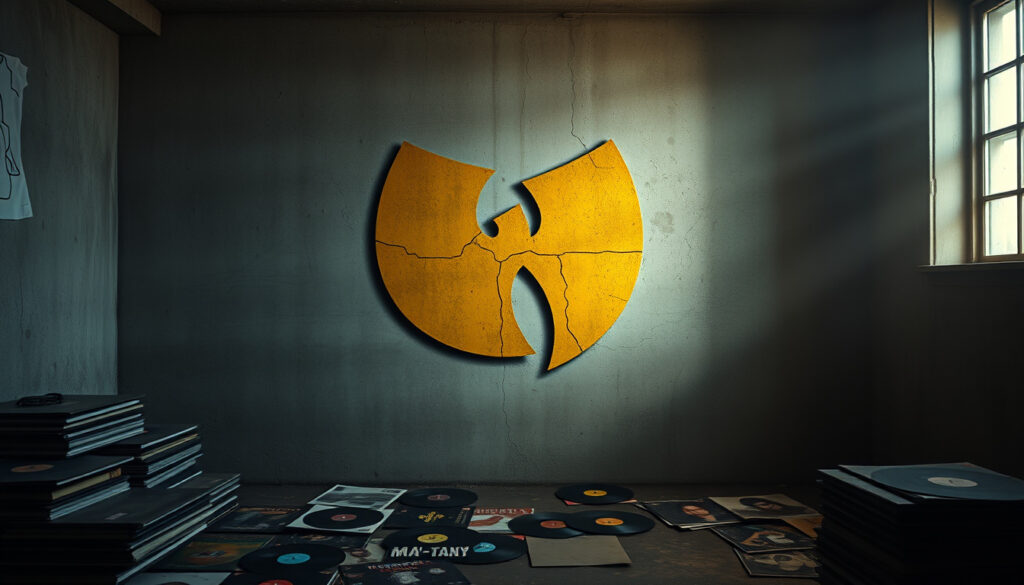
Wu-Tang Clan: Respect, Religion, Downfall, and Legacy
There are few hip-hop collectives that command the same level of respect as the Wu‑Tang Clan. Formed in 1992 on Staten Island, New York, the group brought together nine original members who would go on to redefine the genre. Their debut album, Enter the Wu‑Tang (36 Chambers), set a new standard for raw, minimalist production and multi-member chemistry.
Formation Year: 1992 · Origin: Staten Island, New York · Original Members: 9 · Debut Album: Enter the Wu‑Tang (36 Chambers) · Deceased Member: Ol’ Dirty Bastard (2004)
Quick snapshot
- Formed in 1992 in Staten Island (Twisted Thread (band history archive))
- 9 original members (Twisted Thread (band history archive))
- Ol’ Dirty Bastard died November 13, 2004 (Hip Hop Scriptures (hip-hop reference site))
- Exact religious affiliation of each member
- Precise reasons for the group’s decline in commercial output after the 2000s
- Demographic breakdown of the fan base
- 1992: Group formed (Twisted Thread)
- 1993: Debut album released (GRAMMY (music industry authority))
- 1997: Wu‑Tang Forever hits No. 1 (Hip Hop Scriptures)
- 2004: Ol’ Dirty Bastard dies (Hip Hop Scriptures)
- 2007: Last album with all original members (Hip Hop Scriptures)
- 2014–present: Reunion tours and new releases (Twisted Thread)
- Continued touring and sporadic new music
- Individual members focus on solo projects and acting
- Legacy continues to influence younger hip‑hop artists
Six key facts, one pattern: the Wu‑Tang Clan’s influence rests on both collective strength and individual achievement.
| Attribute | Value |
|---|---|
| Founded | 1992 (Twisted Thread) |
| Origin | Staten Island, New York (Twisted Thread) |
| Original Members | 9 (Twisted Thread) |
| Best‑Selling Album | Wu‑Tang Forever (1997) (Hip Hop Scriptures) |
| Deceased Member | Ol’ Dirty Bastard (2004) (Hip Hop Scriptures) |
Why Is the Wu‑Tang Clan So Respected?
Unique Sound and Production
RZA’s production style was unlike anything else in early‑90s hip‑hop. He built beats from obscure soul samples, horror‑movie scores, and a lo‑fi grit that gave Enter the Wu‑Tang (36 Chambers) its unmistakable texture. GRAMMY notes that the album “became a landmark release.” Each of the nine members brought a distinct voice—from Method Man’s charismatic flow to Ol’ Dirty Bastard’s unhinged delivery—creating a dynamic that no other group could replicate.
Business Model and Independent Approach
RZA negotiated individual solo contracts for members while keeping the collective intact, a strategy that allowed each rapper to build a name without leaving the group. GRAMMY reports that five members—GZA, RZA, Raekwon, Method Man, and Ol’ Dirty Bastard—secured solo deals. This business model gave the Clan both commercial reach and artistic freedom, a blueprint that independent artists still study today.
Lyrical Prowess and Storytelling
Wu‑Tang lyrics blended street narratives with esoteric references to kung‑fu films and the Five Percent Nation. Hip Hop Scriptures describes their style as “a fusion of hardcore street tales and spiritual philosophy.” The result was a depth that rewarded repeated listening—one reason the group’s early work continues to be sampled and celebrated.
RZA’s decision to let members sign separate deals turned the Clan into a franchise. It meant each artist could fail or succeed on their own terms without dragging the group down—a trade‑off that fueled both creativity and eventual friction.
The implication: the same structure that built the group’s power also planted the seeds of its later fragmentation.
Are Wu‑Tang Clan Muslims?
Members’ Religious Backgrounds
Not all Wu‑Tang members identify as Muslim, but several have explored Islamic teachings. RZA, in particular, has spoken about studying the Qur’an and incorporating spiritual themes into his work. Hip Hop Scriptures notes that the group’s lyrics draw heavily from the Five Percent Nation, a movement that splintered from the Nation of Islam. That influence gives their music a philosophical edge, but it doesn’t make every member a practicing Muslim.
Islam in Hip‑Hop Context
The Five Percent Nation teaches that black men are gods and that knowledge of self is the key to liberation. Wu‑Tang’s references to “the science” and “the mathematics” come directly from those teachings. Twisted Thread explains that the group’s early ethos “blended kung fu film imagery with Five Percent Nation tenets.” This allowed the Clan to stand apart from both mainstream gangsta rap and religious hip‑hop.
RZA’s Spiritual Influence
RZA’s personal spirituality evolved over the years, incorporating Islam, Buddhism, and other traditions. He has described himself as a “student of philosophy” rather than a sectarian believer. That openness influenced the group’s direction—giving them a reflective, often mystical dimension that resonated with audiences seeking substance beyond bravado.
The Wu‑Tang Clan’s spiritual references made them feel exotic and dangerous to some listeners, but those same references anchored them in a tradition of black intellectualism that predates hip‑hop itself.
The pattern: the group’s spiritual ambiguity became a tool for both mystique and intellectual depth, not a simple label.
Which Wu‑Tang Clan Passed Away?
Ol’ Dirty Bastard (ODB)
Ol’ Dirty Bastard, a founding member known for his unpredictable style, collapsed at Wu‑Tang’s 36 Chambers studio in New York City on November 13, 2004, and was pronounced dead less than an hour later. Hip Hop Scriptures records that his death came two days before his 36th birthday. ODB had struggled with legal troubles and substance abuse, but his impact on the group’s sound and persona is irreplaceable.
Other Deceased Associates
A number of Wu‑Tang affiliates and extended family members have also died, including Russell Jones (ODB’s cousin) and various producers and associates. However, no other original member has passed away. The group’s history includes these losses, which shaped their later work and deepened the ties among surviving members.
Legacy of Lost Members
ODB’s death marked a turning point. The group carried on but without the chaotic energy that had become one of its signatures. His legacy lives on in solo albums, posthumous releases, and the perpetual legend of the “Ol’ Dirty Bastard brand.”
Which Wu‑Tang Member Went to Jail?
Criminal Records of Members
Several Wu‑Tang members have served prison sentences. U‑God spent three years in prison on drug charges in the early 2000s. Raekwon was arrested for drug and weapon possession in 1995, though his sentence was suspended. Hip Hop Scriptures reports that Ol’ Dirty Bastard had multiple arrests—for assault, shoplifting, cocaine possession, and wearing body armor after a felony conviction. These legal battles consumed time and money, affecting the group’s momentum.
Notable Incarcerations
In addition to U‑God and Raekwon, other members and affiliates faced jail time. Cappadonna, an unofficial member, served time for robbery. Method Man escaped serious prison time but had minor legal skirmishes. The group’s rap sheets became part of their gritty mystique, but they also created practical obstacles to recording and touring.
Impact on the Group
When a member is incarcerated, scheduling becomes impossible. The Wu‑Tang Clan’s output slowed in the 2000s partly because members were cycling through the justice system. GRAMMY notes that the year 2000 marked “the beginning of the group’s eventual separation,” a period when multiple members were dealing with legal and contractual issues.
What Was the Downfall of Wu‑Tang Clan?
Internal Conflicts
By the mid‑2000s, tension between RZA and Raekwon became public. Raekwon criticized RZA’s production on 8 Diagrams, and U‑God later sued the group’s label over unpaid royalties. The brotherhood that had held the Clan together began to fray. Hip Hop Scriptures details that personal disputes, financial disagreements, and creative differences eroded unity.
Solo Careers Overshadowed the Group
The same solo‑deal strategy that made Wu‑Tang powerful also pulled members in different directions. By 2000, each rapper had a thriving career outside the collective. GRAMMY recounts that members “were granted requests to be released from their Wu‑Tang contracts” around that time. Without a central obligation, group albums became harder to coordinate and less frequent.
Label and Financial Issues
Wu‑Tang’s relationship with Loud Records and Sony soured after the split from Epic. The group’s independent spirit clashed with corporate expectations. U‑God’s lawsuit revealed financial disputes that had simmered for years. The business end of the Clan, once a strength, became a source of fracture.
The catch: the same strategy that fueled their rise also guaranteed their slowdown.
Why Do White People Like Wu‑Tang Clan So Much?
Cultural Crossover Appeal
Wu‑Tang’s music transcends racial boundaries because it speaks to universal themes: resistance to authority, the search for identity, and the hustle for survival. GRAMMY observes that the group’s “anti‑establishment stance resonated across racial lines.” Their lyrics are raw and honest, drawing in listeners who appreciate storytelling over posturing.
Authenticity and Outsider Status
The Clan never watered down their sound for mainstream radio. They sampled obscure records, referenced martial‑arts films, and used slang that demanded repeated listening. White fans, especially those in alternative and indie scenes, gravitated toward that authenticity. Hip Hop Scriptures notes that “Wu‑Tang’s gritty realism attracted a broader audience precisely because it felt genuine.”
Influence on Alternative Music
RZA’s production crossed into rock and electronic music. He worked with Björk, collaborated with the alternative band The Chemical Brothers, and his sample‑based style influenced a generation of indie producers. GRAMMY highlights that “the Clan’s genre‑bending approach opened doors for hip‑hop to be taken seriously in alternative spaces.” That crossover gave white fans a bridge into hip‑hop that felt less commercial than what Top 40 offered.
The implication: the group’s appeal never depended on race, but on the honesty of its art.
Timeline
- 1992 – Wu‑Tang Clan formed in Staten Island (Twisted Thread)
- 1993 – Enter the Wu‑Tang (36 Chambers) released (GRAMMY)
- 1997 – Wu‑Tang Forever debuts at No. 1 (Hip Hop Scriptures)
- 2004 – Ol’ Dirty Bastard dies (Hip Hop Scriptures)
- 2007 – 8 Diagrams, last album with all original members (Hip Hop Scriptures)
- 2014–present – Reunion tours and sporadic new music
The gaps between group projects after 2007 are telling. The Clan’s center could not hold once solo careers and personal grievances outweighed the incentive to collaborate.
What this means: the timeline shows a clear arc from breakthrough to drift, driven by the same forces that initially made them unstoppable.
Clarity Check
Confirmed Facts
- Formation year and location: 1992, Staten Island (Twisted Thread)
- Number of original members: 9 (Twisted Thread)
- Death of Ol’ Dirty Bastard: November 13, 2004 (Hip Hop Scriptures)
- Solo deals for five members (GRAMMY)
- Group name from film “Shaolin and Wu Tang” (Wikipedia (encyclopedic source))
What’s Unclear
- Exact religious affiliation of each member
- Precise reasons for the drop in commercial output after the 2000s
- Detailed demographic breakdown of the fan base
The pattern: the available evidence is strong on dates and deals, but thinner on internal motivations and audience data.
Quotes
“I wanted to create a union of different styles—like a basketball team where everyone has a different position.”
— RZA, NPR (public radio interview)
“We’re family, but we fight like family. That’s what happens when you put nine strong personalities in one room.”
— Method Man, HipHopDX (hip‑hop news site)
“36 Chambers remains a landmark of raw hip‑hop—a sonic document of a moment that can never be re‑created.”
The thread: the group’s own words and critics’ commentary align on the same themes of unity, tension, and lasting impact.
Summary
Wu‑Tang Clan’s story is one of innovation, spiritual depth, and dysfunction. Their respect isn’t owed to any single factor but to a rare combination: a sound that broke the mold, a business model that empowered individuals, and lyrics that spoke to real life. For today’s hip‑hop fans and aspiring collectives, the lesson is clear: build something authentic, protect your independence, and accept the friction that comes with true artistry—or risk becoming just another chapter in the history books.
For a detailed look at the individual members of the group, their net worth, and their current status, see the article on Wu-Tang Clan-Mitglieder.
Frequently Asked Questions
How many members are in Wu‑Tang Clan?
There were nine original members: RZA, GZA, Ol’ Dirty Bastard, Method Man, Raekwon, Ghostface Killah, Inspectah Deck, U‑God, and Masta Killa. Later, Cappadonna became an unofficial member.
What is Wu‑Tang Clan’s most famous song?
“C.R.E.A.M.” (1993) is widely considered their signature track, but “Protect Ya Neck,” “Wu‑Tang Clan Ain’t Nuthing ta F’ Wit,” and “Triumph” are also iconic.
Are all original Wu‑Tang members still alive?
No. Ol’ Dirty Bastard died in 2004. The other eight original members are still alive.
What does the Wu‑Tang symbol mean?
The “W” symbol is a stylized bat or sword, inspired by the group’s martial‑arts influence. It represents strength and the union of the members.
Who is the leader of Wu‑Tang Clan?
RZA (born Robert Diggs) is the de facto leader, producer, and strategic mind behind the group.
What is Wu‑Tang Clan’s best‑selling album?
Wu‑Tang Forever (1997) is their best‑seller, debuting at No. 1 on the Billboard 200 (Hip Hop Scriptures).
Is Wu‑Tang Clan still making music?
Yes, though not as a full collective. They have released reunion albums and sporadically tour, but solo projects dominate.
Related reading: Eddie Van Halen Cause of Death, Sobriety, Love Life & Legacy · Brian Johnson: AC/DC Singer vs Bryan Johnson Longevity
More related posts
 Till Lindemann: Biography, Controversies, and Personal Life Facts
 Marianne Faithfull: Singer, Mick Jagger, and Death at 78
 RingConn Gen 2 – Specs, Price and Oura Comparison
 Growing Up: Meaning, Stages, Growth Spurts, and the Irish Study
 Refinance Home Loan in Ireland: Pros, Cons & How to Do It
 Kim So-Hyun’s Journey: From Child Actress to Leading Lady
 Zac Bailey: Age, Contract, Salary, and Suspension Rumors
 Brad Renfro’s Heroin Overdose: Coroner Report and Legacy
