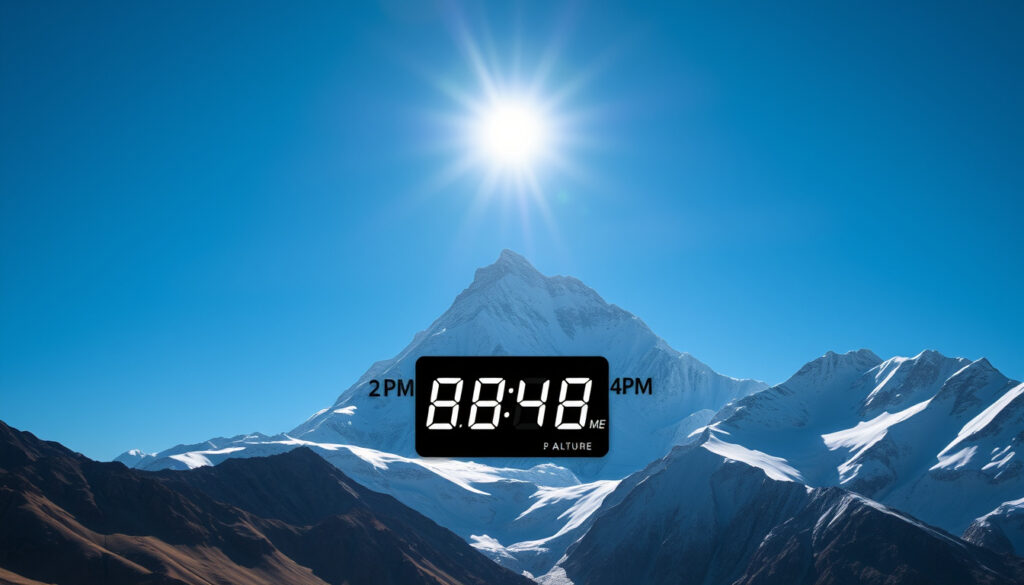
Mount Everest Peak: Height, Cost, Deaths & 2PM Rule
Few mountain names carry as much weight as Everest—the summit that defines impossibility for most of us. But the official record is dramatic on its own: 8,848.86 meters, jointly confirmed by Nepal and China in 2020 (Reuters, news agency), and this guide sorts the verified facts from the rumors.
Height: 8,848.86 m (29,031.7 ft) ·
First Ascent: May 29, 1953 ·
Climbing Cost: $40,000+ per person ·
Total Deaths: 300+ since 1922 ·
Bodies Remaining: ~200 (estimated) ·
Expedition Duration: ~2 months
Quick snapshot
- Official height: 8,848.86 m (29,031.7 ft), agreed by Nepal and China (AP News, wire service)
- First confirmed ascent: May 29, 1953 (Encyclopaedia Britannica, reference publisher)
- Eight deaths in 2024 alone (Smithsonian/ONSI, mountaineering outlet)
- How many bodies remain on the mountain
- Whether Mallory and Irvine reached the summit in 1924
- Real-world price spread across commercial operators
- 1924: Mallory and Irvine vanish near the summit (Encyclopaedia Britannica, reference publisher)
- Warming conditions are exposing more remains on the routes (Smithsonian/ONSI, mountaineering outlet)
- Expect the crowding debate to intensify as permit prices rise (Smithsonian/ONSI, mountaineering outlet)
A few key numbers from the record, collected in one place — the details behind each one follow below.
| Metric | Value |
|---|---|
| Height | 8,848.86 m (29,031.7 ft) |
| First confirmed ascent | May 29, 1953 — Tenzing Norgay and Edmund Hillary |
| Location | Himalaya range; Nepal–China border |
| Climbing season | April–May, pre-monsoon |
| Death zone | Above 8,000 m |
| Spring permit (Nepal) | $11,000 → $15,000 from September 1, 2025 |
| Deaths since 1922 | 300+ |
| 2024 fatalities | 8 (5 confirmed dead, 3 still missing) |
| Expedition duration | About 2 months, including acclimatization |
| Official measurement | 2020 joint Nepal–China survey |
What is the peak of Mount Everest?
The peak of Mount Everest is the highest point on Earth above sea level (NOAA Ocean Service, federal science agency) — 8,848.86 meters (29,031.7 feet) by the official figure Nepal and China agreed in 2020.
That agreement was a genuine act of diplomacy. Nepal and China had maintained different heights for decades; in December 2020, after both countries sent survey expeditions to the summit, they announced a single number.
Before that joint survey, the record was split. Nepal’s official height had been 8,848 meters, a figure that traced back to a Survey of India measurement in the early 1950s (Deutsche Welle, public broadcaster). The 2020 number also includes the snow and ice cap at the summit — a definitional choice that matters more than it sounds (BBC Future, science outlet).
Geographically, Everest is the border peak where the China–Nepal frontier crosses the Himalaya. Tibetans call it Chomolungma; Nepalis call it Sagarmatha. The climbing record opens with a 1921 British reconnaissance expedition, then turns to mystery: in 1924, George Mallory and Andrew Irvine disappeared near the summit, and no one knows whether they reached the top first.
What animals live on Mount Everest?
On summit day, almost none. Everest’s animal life stays far below the climbing routes, in the forested valleys around the mountain.
The wildlife question is really a question about where the mountain begins. Above Base Camp, the ground is rock, ice, and thin air — not habitat. The animals that do live in the Everest region, from hardy deer to the famously elusive snow leopard, stay in the lower valleys of the national park that protects the Nepali side. For a climber fixed on the summit, encounters are rare; the more memorable wildlife moments usually happen on the approach trek, not the climb itself.
What mountains are harder than Everest?
Harder does not mean taller. Everest’s danger comes from altitude and crowds; other peaks mix in steeper rock and worse weather.
When mountaineers compare difficulty, Everest’s height is only part of the argument. K2 and Annapurna are the names that come up most often in the “harder than Everest” debate, because they combine extreme altitude with more technical terrain and narrower weather windows. Everest, by contrast, is a high-altitude endurance problem: long, cold, crowded, and unforgiving mostly because of the Death Zone, not the climbing grade.
The pattern: Everest is the most famous peak, not the hardest one. Its real record is its combination of height, traffic, and commercial pressure — a mix no other mountain quite replicates.
That settled number is the bedrock for any conversation about Everest’s height.
Why does it cost $40,000 to climb Mount Everest?
Because the permit is the cheapest part. Nepal’s spring permit reportedly rose from $11,000 to $15,000, effective September 1, 2025 — and that fee buys nothing but permission (Places Nepal Treks, local operator).
- Permit: $15,000 from September 2025
- Gear and oxygen systems: several thousand dollars of specialized equipment
- Sherpa support and guides: the largest single labor cost on the mountain
- Flights, park permits, insurance, and contingency logistics
- All-in expedition total: $40,000+ per person
Cheaper operators exist, and they often cut the corners that make the difference in the Death Zone. The 2025 permit increase was framed by the same Nepali operators as a push to professionalize guiding and slow crowding on the mountain.
How long does climbing Everest take?
Full expedition: roughly 2 months · Acclimatization: weeks of rotation climbs · Summit push: from Camp IV, with a hard turnaround deadline
The calendar is set by acclimatization, not ambition. Climbers spend weeks moving up and down the mountain — sleeping low, climbing high — until their bodies can handle the Death Zone. The summit push itself starts long before dawn, and the 2pm turnaround rule decides the rest. Plan for two months, and treat the summit as the middle of the trip, not the end.
The trade-off: the price tag is not a luxury markup. It is the cost of the logistics that get most climbers home alive.
The economics of Everest are a filter: those who underfund the climb often end up paying with more than money.
How many climbers died on Everest?
Eight people died on Everest in 2024 — five confirmed dead and three still missing — and the all-time toll now exceeds 300 since 1922, according to a Smithsonian/ONSI mountaineering report. That number spans the mountain’s deadliest moments, including the 1996 storm that killed 12 climbers and the guides Rob Hall and Scott Fischer.
The death toll is not ancient history. It is a running number, and the bodies are part of the route, not a separate story.
Which famous person died on Everest?
- Rob Hall — expedition guide, died 1996
- Scott Fischer — expedition guide, died 1996
- “Green Boots” — nickname for a body long visible on the northeast ridge
Hall and Fischer were both expedition leaders when the storm hit in May 1996. Jon Krakauer, a journalist on the mountain that day, turned the disaster into Into Thin Air, the book that carried Everest’s death rate far beyond the climbing world. “Green Boots” is a different kind of name: not a person but a marker, a body that sat beside the northeast ridge route for years and became a grim waypoint for climbers.
Do you see bodies when climbing Everest?
Yes. Climbers on the standard routes pass remains, and the same 2024 report documented bodies being exposed as snow cover shrinks.
This is the part of Everest’s reputation that operators downplay. The mountain is not a wilderness trail; it is a line through decades of history, and some of that history is human remains. The 2024 Smithsonian/ONSI report described warming temperatures exposing what it called the world’s highest graveyard.
What this means: Everest’s risk is real, documented, and increasingly visible. The death rate is not the whole story — but it is the part most people miss until they see it themselves.
The visible remains are a stark reminder that Everest’s history is written in human terms.
Why can’t you climb Mount Everest after 2pm?
The 2pm rule is the most important non-law in mountaineering. It is not written into Nepali statute as a specific clock time; it is a turnaround convention that licensed guides apply in real time, on the mountain, according to Nepali trekking operator Places Nepal Treks.
- Summit day starts around midnight, from Camp IV, through the Death Zone
- The goal is to reach the top by mid-morning and turn around
- If the summit has not been reached by 2:00 PM, the order is: descend
- Afternoon winds and weather on the peak are the deadliest part of the day
The logic is simple. The mountain’s weather window closes in the afternoon, and a descent after dark through the Death Zone is how fatal accidents happen. Most rescues and deaths occur when climbers ignore the deadline and push for the top anyway.
The catch: a rule is only as good as the person enforcing it. When a licensed guide holds the line, the 2pm rule works; when a climber overrides it, that is exactly when the statistics catch up.
The deadline is a survival tool, not a bureaucratic hurdle.
Why do planes not fly over Everest?
The short answer: the mountain sits too close to the limits of safe flight. The Himalaya rise past 29,000 feet — high enough to sit near a jetliner’s operating altitude, with no room for the kind of margin aviation planners demand.
Add the jetstream. The winds that tear across the summit are strong and unpredictable, and turbulence near Everest can be violent even on a clear day. If an engine fails or cabin pressure drops while crossing the range, the options for emergency descent are brutally limited.
Everest does not need a formal no-fly zone. The terrain itself is the restriction: flight routes go around the massif because crossing it leaves no good ending for an emergency.
The result is that commercial flight paths route around the Himalaya, not over them. It is quieter, safer, and far less dramatic than a crash scene — which is exactly why the question keeps getting asked.
The implication: it is not that a plane cannot physically cross the summit on a clear day. It is that aviation rules are written for the days when everything goes wrong.
What is the biggest killer on Everest?
Altitude. Every major killer on Everest traces back to the same cause: time above 8,000 meters, in the band climbers call the Death Zone. The air is so thin that the body cannot acclimatize — it can only endure, and then descend.
The medical names for that failure are Acute Mountain Sickness and its severe forms, HACE and HAPE. They are the leading fatal causes the mountain records, alongside exhaustion, hypothermia, and falls. The underlying mechanism is always the same: oxygen deprivation that outruns the body’s ability to compensate.
Overcrowding in the Death Zone does not just slow people down — it burns their oxygen reserves while they wait. Every minute stuck in a line above 8,000 m is a minute spent dying.
The summit is only halfway. Most fatal accidents on Everest share one detail: the climber died on the way down, after the summit, when exhaustion and oxygen debt turn a high point into a trap.
The pattern: Everest rarely kills with one dramatic event. It kills slowly, at altitude, after the summit, when the only thing left is judgment.
Everest’s height record: the numbers that mattered
Three measurements, one pattern: every generation reset the mountain’s height, and the latest one closed a gap that had split the record for decades.
| Measurement or agreement | Height | Why it matters |
|---|---|---|
| Survey of India measurement (early 1950s) | 8,848 m | Nepal’s recognized official height for decades (Deutsche Welle, public broadcaster) |
| China’s earlier published figure | about four metres lower than the 2020 joint number | AP News underlined the gap that the new agreement closed (AP News, wire service) |
| Joint Nepal–China survey (2020) | 8,848.86 m (29,031.7 ft) | Includes the snow and ice cap; announced after both countries fielded survey expeditions (BBC Future, science outlet) |
The implication: “the height of Everest” is not a static fact. It is a measurement, a negotiation, and a definition all at once — and the 2020 number is the one that counts.
How to plan an Everest climb, step by step
Everest rewards method, not bravery. The planning follows a well-worn order — and skipping a step is how the mountain filters people out.
- Choose a route and an operator. Most commercial climbers go through Nepali operators on the South Col route, where the permit system runs through Nepal’s government.
- Budget for the real cost. The spring permit reaches $15,000 from September 1, 2025; an all-in expedition with gear, oxygen, Sherpa support, and logistics typically clears $40,000 per person. Cold-weather gear alone is a serious line item (see our ski jacket buying guide for what actually matters at altitude).
- Plan for roughly two months. Acclimatization is the calendar: weeks of rotation climbs, sleeping low and climbing high, before a summit attempt makes sense.
- Treat the 2pm rule as the summit-day law. It may not be written into statute, but it is written into the risk. Turn around when the guide says turn around.
- Save energy for the descent. The mountain’s deadliest hour comes after the summit, when the oxygen debt is highest and the discipline is lowest.
The trade-off: Everest rewards preparation and punishes shortcuts. The climbers who come home treat the mountain like a long logistical problem, not a race.
Everest on the timeline
Five dates tell the story of how Everest became the world’s most famous summit — and its most visible graveyard.
- — First British reconnaissance expedition opens the mountain
- — Mallory and Irvine vanish near the summit (cited in snapshot)
- — Tenzing Norgay and Edmund Hillary make the first confirmed ascent (AP News, wire service)
- — 12 climbers die in a single storm, the disaster later chronicled in Into Thin Air
- — Overcrowding kills 11 in one season (Places Nepal Treks, local operator)
The signal: every spike in deaths on Everest follows the same pattern — a rush of climbers, a shift in weather, and a bottleneck in the Death Zone.
Confirmed vs unclear: what we actually know
Confirmed facts
- Official height: 8,848.86 m (29,031.7 ft), set in 2020
- First confirmed ascent: May 29, 1953
- Spring permit: $15,000 from September 1, 2025
- More than 300 deaths since 1922
What’s unclear
- Exact number of bodies still on the mountain
- Whether Mallory and Irvine reached the summit in 1924
- The real price spread among commercial operators
- Whether the 2pm rule should become actual law
The balance: the hard numbers are solid; the emotional facts are not. Everest’s statistics are documented, but the experience of the mountain — the bodies, the crowds, the cost — is where estimates and rumors take over.
Voices from the mountain
Two voices frame Everest better than any statistic.
“We didn’t know if we had it in us…”
Sir Edmund Hillary, on the first confirmed summit, May 29, 1953
“The turnaround time is the most important decision you make.”
Kenton Cool, Everest summiteer, on the 2pm rule
The pattern: the people who know Everest best talk about limits — physical, mental, and chronological. The summit is the goal; the limit is the skill.
Mount Everest Peak: the reality check
Everest is not a mountain you climb; it is a risk you manage. The official height is settled — 8,848.86 meters, agreed by two governments, not by legend. The cost is real, the death toll is documented, and the 2pm rule is the line between a summit story and a rescue report. For anyone considering the climb, the choice is clear: budget for the true cost, train for the descent, and respect the deadline — or save the dream until you are ready to treat Everest like the serious logistical problem it is.
education.nationalgeographic.org, en.wikipedia.org, en.wikipedia.org, bbc.co.uk
Frequently asked questions
Is Mount Everest really the tallest mountain in the world?
Yes, by the standard that counts — height above mean sea level. NOAA lists Everest as Earth’s highest point at 8,848 meters, and the 2020 joint Nepal–China survey set the official figure at 8,848.86 meters.
Can you climb Everest without oxygen?
A tiny minority have done it, but the Death Zone above 8,000 meters is exactly why most climbers use supplemental oxygen. The 2pm rule exists because time at that altitude — not the climbing itself — is the real enemy.
How long do you stay in the death zone?
On summit day, typically hours: from the final push out of Camp IV to the descent below 8,000 meters. Keeping that window short is the entire point of the 2pm turnaround.
How many people died on Everest in 2024?
Eight — five confirmed dead and three still missing, according to a Smithsonian/ONSI mountaineering report.
How much does a permit to climb Everest cost now?
Nepal’s spring permit is $15,000 from September 1, 2025, up from $11,000. That fee covers permission only; a full expedition with logistics runs past $40,000.
Why was Everest’s height updated in 2020?
Nepal and China each ran survey expeditions and agreed on a joint number — 8,848.86 meters — which includes the snow and ice cap at the summit.
More related posts
 Noel Whittaker: Biography, Key Rules & Financial Advice
 Stephen Peacocke in 2026: Home and Away return and family
 La Marzocco Linea Mini Review: Is It Worth the Cost for Home
 Tulsi Gabbard: Controversies, Religion, Family Explained
 Nick DiGiovanni: Fact vs Fiction on Net Worth & Career
 Basketball Zero Codes (June 2026) – Working List
 Nike Tech Fleece Pants Guide: Prices, Sizing & Where to Buy
 Taylor Swift and Travis Kelce: Timeline, Age, Latest
