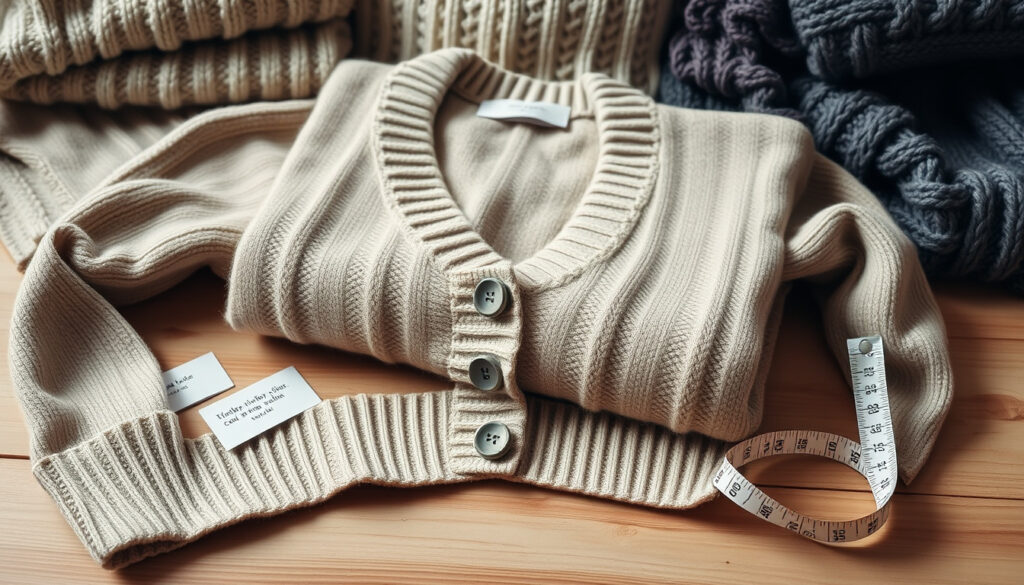
Women’s Cardigan: Styles, Fit & Care Tips
Anyone who has ever held up a cardigan and wondered whether it will make the outfit or swallow it whole already knows the struggle. The real decision sits in the fiber and the fit — breathable cotton for everyday, refined merino for warmth, and viscose blends for a soft drape, according to OUI’s knitwear guide.
Average price: $50–$300 · Most common fabric: Cotton · Available sizes: XS to 3XL · Style count: Dozens — long sleeve, oversized, cropped, and more
Quick snapshot
- Cardigans are sold in cotton, wool, cashmere, and viscose blends (OUI knitwear guide)
- The shoulder seam should align with the natural shoulder, and hems sit best between the hip and mid-thigh (How to Fashion Edition fit guide)
- Where the next trend cycle lands — cropped versus oversized — has no reliable forecast
- Whether sustainable fibers reach mainstream price points is still an open question
- The “two fingers” fit rule is one guide’s suggestion, not an industry standard
- Primary season is fall/winter; lightweight cotton carries into spring (OUI knitwear guide)
- End-of-season clearances are when the deepest discounts appear (OUI knitwear guide)
- Retailers such as & Other Stories stock wool-blend cardigans year-round
- Measure bust and length before ordering — size charts vary by brand
- Check the care label before the first wash
- Shop end-of-season for the deepest markdowns
Nine fit and fiber facts, one pattern: a cardigan only works when the shoulders, sleeves, and hem match your frame.
| Attribute | Typical value |
|---|---|
| Common fabrics | Cotton, Wool, Cashmere, Acrylic |
| Typical fits | Slim, Regular, Oversized |
| Closure types | Buttons, Zippers, Open front |
| Seasonal use | Fall/Winter primary; lightweight for spring |
| Shoulder fit | Seam aligns with natural shoulder |
| Sleeve length | Reaches the wrist bone |
| Hem position | Between the hip and mid-thigh |
| Fit ease | Close 4–7 cm · Regular 8–12 cm · Oversized 19 cm+ |
| Average price | $50–$300 |
What is a women’s cardigan?
A women’s cardigan is a knitted garment with an open front, typically fastened with buttons or a zipper. It sits between a sweater and a jacket — it gives you the warmth of a knit but the flexibility to open or close the front as the temperature shifts.
History and evolution of cardigans
- Open-front knitted construction
- Traces to the 19th century and the 7th Earl of Cardigan
- Fastened with buttons or zippers rather than pulled over the head
The garment takes its name from James Brudenell, the 7th Earl of Cardigan, who popularized a buttoned knitted waistcoat in the mid-1800s. The open front is what separates it from a pullover sweater — you step into a cardigan and button it, which is one reason the style has stayed in rotation for more than a century. Today the category has broadened into long-sleeve, short-sleeve, cropped, and oversized cuts in everything from budget acrylic to luxury cashmere.
Difference between cardigan and sweater
- Cardigan: open front with buttons or a zip
- Sweater or pullover: worn over the head, no opening
Both are knits, but the closure is the dividing line. A sweater is pulled over the head; a cardigan opens down the front. Retail examples show the practical result — a wool-blend cardigan from & Other Stories’ product line buttons up and layers like a lightweight jacket, which makes it easier to regulate temperature through the day.
What this means: the open front is the defining feature. It turns a knit into a layering piece you can throw on and take off in seconds — which is why it shows up in nearly every work and weekend wardrobe.
How to choose the right women’s cardigan?
Choosing a cardigan is a three-step decision: cut, fiber, and fit. Get the fiber and fit right, and the rest falls into place.
Types of women’s cardigans
- Long sleeve: classic, versatile, best for layering
- Short sleeve: lighter, good for spring and office air-conditioning
- Oversized: relaxed and cozy, pairs with fitted bottoms
- Cropped: shorter length, flatters high-waisted pants
Cut determines how the cardigan reads on the body. Thicker, heavier knits such as chunky cable knits add visual volume, while lightweight knits in cotton, linen blends, and thin merino create a cleaner line, according to How to Fashion Edition’s fit guide. If the goal is a sleeker silhouette, reach for a fine-gauge piece; if the goal is a cozy statement layer, a chunky knit does more.
Choosing the right material
- Cotton: breathable, skin-gentle, everyday wear
- Merino wool: warmer, refined look
- Cashmere or fine wool blends: luxury, lightweight, high comfort
- Viscose or blended fabrics: soft drape, contemporary appearance
According to OUI’s knitwear guide, cotton cardigans are breathable and suitable for daily wear, while wool and merino are positioned as warmer options with a refined finish. Cashmere and fine wool blends bring luxury and lightness, and viscose or blended fabrics give a soft drape with a more contemporary feel. Many cardigans are actually blends — a wool-and-cotton mix balances warmth and breathability instead of forcing a choice.
| Material | Feel | Best For |
|---|---|---|
| Cotton | Breathable, skin-gentle | Everyday wear, machine wash friendly |
| Merino Wool | Warm, refined | Cooler months, gentle cycle required |
| Cashmere / Fine Wool | Luxury, light, high comfort | Special occasions, hand wash recommended |
| Viscose / Blends | Soft drape, contemporary | Dressy looks, delicate cycle |
| Acrylic | Affordable, colorfast | Budget layers, machine washable |
A $50 cotton cardigan survives the machine; a $300 cashmere piece demands hand-washing. Pick based on how much care you will actually give it.
Finding the perfect fit and size
- Shoulder seam aligns with the natural shoulder point
- Sleeves reach the wrist bone when the arm is relaxed
- Hem falls between the hip and mid-thigh
- The cardigan closes without pulling, with room for a fitted layer underneath
Fit rules from How to Fashion Edition’s fit guide are concrete: the shoulder seam should sit at your natural shoulder, sleeves should reach your wrist bone, and the hem generally looks best between the hip and mid-thigh. A good cardigan should close without pulling and allow room for a fitted tee or sweater underneath, and a general check is whether you can raise your arms, sit, bend, and reach without gapping. The same guide suggests petite frames suit lengths around 24–26 inches, average frames 26–28 inches, and taller frames 28–30 inches.
Ease depends on the fit you want. Arcus AG’s merino fit guide gives measurements: a close-fit cardigan works as a fine-gauge office layer with about 4 to 7 cm of ease, a regular-fit cardigan suits everyday layering with 8 to 12 cm of ease, and an oversized cardigan acts as a fashion outer layer at 19 cm or more.
Close-fit: 4–7 cm. Regular-fit: 8–12 cm. Oversized: 19 cm+. Measure your ease tolerance before buying.
The pattern: fit is a set of numbers, not a vibe. If the shoulder seam hangs past your shoulder, no fabric choice will save it — the cut is wrong for your frame.
Where to buy women’s cardigans on sale?
Cardigans are everywhere — the trick is catching the right one at the right price.
Top online retailers for discounted cardigans
- & Other Stories carries wool-blend cardigans with frequent markdowns
- Major e-commerce stores run seasonal clearance events
- Newsletter sign-ups often unlock an extra discount
& Other Stories is a solid example of a retailer that stocks wool-blend cardigans, and its product pages list shell compositions like 50% cotton — useful if you want to know exactly what you are paying for. Beyond that, the standard play is to watch end-of-season clearances, when wool and cashmere pieces are marked down hardest because retailers need the shelf space for spring stock.
Tips for finding cardigan deals and clearance
- Shop the end of the season for the deepest discounts
- Compare fiber blends — a 50% cotton shell often means a lower price
- Read the size and care details before you buy to avoid returns
Deal timing tracks the season: autumn and winter are the demand peak, so spring is when the markdowns bite. Signing up for retailer newsletters and checking clearance sections are the reliable, low-effort ways to catch a cardigan at half price. If you are building a cold-weather wardrobe from scratch, our winter coats buying guide covers the same timing logic for outerwear.
The pattern: the cheapest time to buy a cardigan is when everyone stops needing it. If you can plan a season ahead, you can own premium wool for clearance prices.
How to style and wear a women’s cardigan?
A cardigan is the closest thing a wardrobe has to a transformer — it dresses up, dresses down, and layers over almost anything.
Layering a cardigan over dresses and tops
- Lightweight knits create a cleaner, flatter line over dresses
- A buttoned cardigan can stand in for a blazer in smart-casual settings
- Thicker knits add visual volume, so pair them with slimmer lower halves
Fit dictates how the layering looks. Lightweight knits in cotton, linen blends, or thin merino create a cleaner line, which is why they work over dresses and buttoned shirts without adding bulk. A fully buttoned fine-gauge cardigan reads almost like a blazer — sharp enough for a work call or a dinner out. By contrast, chunky cable knits add visual volume, so they pair better with skinny jeans or leggings to balance the proportions.
Wearing an oversized cardigan
- Oversized fits need 19 cm or more of ease
- They work as a fashion outer layer over fitted layers
- They replace a coat in mild weather
Oversized cardigans are the coziest option, but they demand the right proportions underneath. Because the fit carries 19 cm or more of ease, the cardigan reads as the outer statement piece, so keep the base layer fitted — a slim tee, a slip dress, or leggings. Done that way, an oversized cardigan functions as a casual coat in spring and early autumn.
Accessorizing cardigans
- Add a belt to define the waist on an oversized cardigan
- Pin a brooch on the lapel for a more formal touch
- Layer a collared shirt under a V-neck cardigan for polish
The fastest way to change a cardigan’s personality is hardware. A belt over an oversized knit cinches the waist and turns a sack-like shape into a structured look. A brooch on the lapel or a collared shirt underneath bumps a casual knit into office territory, which is the same logic that lets a buttoned cardigan replace a blazer in a pinch.
The takeaway: style is about controlling volume. Fitted base, voluminous cardigan — or the reverse — and the proportions self-correct.
How to care for a women’s cardigan?
A $300 cashmere cardigan and a $30 wool-blend can look identical on a hanger. What separates them is how they age — and that comes down to care.
Washing and drying instructions by material
- High-quality wool and cashmere: cold water, mild detergent, flat drying
- Most knits: gentle or wool cycle on the machine
- Always check the care label before the first wash
The care routine, spelled out by OUI’s knitwear care guidance, starts with the care label. High-quality wool and cashmere cardigans benefit from cold water, a mild detergent, and flat drying to preserve shape and quality. Steer clear of hot water and the tumble dryer — they are the fastest route to a shrunken, felted knit.
The expensive fibers punish carelessness. A hot wash and a dryer cycle can shrink a premium merino cardigan beyond rescue in under an hour.
Storing to avoid stretching or pilling
- Lay flat to dry to maintain shape
- Fold heavy knits instead of hanging them
- Use a fabric shaver to remove pilling
Washing is only half the job. Cardigans should be washed gently, ideally on a wool or delicate cycle, and laid flat to dry — hanging a wet, heavy knit stretches it out of shape. For pilling, a fabric shaver cleans up the little fuzz balls that form on wool and cotton blends, which keeps a cardigan looking newer for much longer.
Why this matters: care is the hidden variable in the price equation. A discounted cashmere cardigan that you hand-wash and lay flat can outlast three machine-washed cotton ones.
Six fibers, one trade-off: the warmer and softer the knit, the more careful the care routine.
| Material | Hand feel | Best for | Care notes |
|---|---|---|---|
| Cotton | Breathable, skin-gentle | Everyday wear | Machine wash friendly |
| Merino wool | Warm, refined | Cooler months | Gentle or wool cycle, lay flat |
| Cashmere / fine wool blend | Luxury, light, high comfort | Special occasions | Cold water, mild detergent, flat dry |
| Viscose / blended | Soft drape, contemporary | Dressy looks | Delicate cycle |
| Wool + cotton blend | Balanced warmth and breathability | Versatile layering | Follow the blend’s care label (& Other Stories) |
| Acrylic | Affordable, colorfast | Budget layers | Machine washable, may pill |
Confirmed facts
- Cardigans come in a wide range of materials and styles, from budget acrylic to luxury cashmere (OUI)
- Fit is measurable: shoulder seam at the natural shoulder, sleeves at the wrist bone, hem between hip and mid-thigh (How to Fashion Edition)
- Care affects longevity — cold water and flat drying preserve wool and cashmere (OUI)
What’s unclear
- Where the next trend cycle lands, cropped versus oversized, has no reliable forecast
- Whether sustainable fibers like recycled wool will reach mainstream price points
- The “two fingers” fit rule is one guide’s suggestion, not a universal standard (How to Fashion Edition)
What the guides say
“Cotton cardigans are breathable and skin-gentle and suit everyday wear, while wool and merino offer a warmer, more refined look.”
OUI knitwear guide
“A cardigan’s shoulder seam should align with the natural shoulder point rather than hanging past it or sitting inward.”
How to Fashion Edition fit guide
“A regular-fit cardigan suits everyday layering over shirts or tees with about 8 to 12 cm of ease.”
For the Australian shopper facing a wall of cardigans, the decision is clear: choose the hand-wash-only cashmere if you will treat it right, or a machine-safe cotton blend if you will not — but never buy a premium knit you are unwilling to care for.
fabriclore.com, llbean.com, stories.com, stories.com, stories.com, stories.com, pricerunner.com
Frequently asked questions
Can you wear a cardigan in summer?
Yes. A lightweight cotton or viscose cardigan works as an air-conditioning layer in summer, especially over sleeveless dresses.
How do I prevent a cardigan from pilling?
Wash on a gentle or wool cycle, lay flat to dry, and use a fabric shaver on any pills that form.
What length cardigan is most flattering?
For most frames, a hem between the hip and mid-thigh reads best; petite frames suit shorter lengths around 24–26 inches (How to Fashion Edition).
How to button a cardigan without looking bulky?
Choose a close-fit cardigan with about 4–7 cm of ease, or leave it unbuttoned over a fitted base layer (Arcus AG).
Are cardigans still in style?
Yes. Cardigans remain a wardrobe staple, with long-sleeve, oversized, and cropped cuts all popular in current retail.
Do cardigans shrink in the wash?
They can. Wool and cashmere shrink in hot water and the dryer, so use cold water and lay flat to dry (OUI).
Related reading
More related posts
 Sam Kerr: Baby, Chelsea Departure, Trial Verdict & More
 Mac Miller: Death, Ariana Grande, and Last Days
 Bobby Cannavale: Ethnicity, Partner Rose Byrne, and Kids
 Kings Cross Guide: History, Safety, and Attractions in London
 Tommy Robinson: What Happened? Wife, Net Worth & Legal Troubles
 7-Eleven Near Me: Locator, Hours, Menu, Directions
 Elizabeth Olsen: 15 Most Asked Questions Answered (2025)
 Nellie Melba Biography: Opera Star, Peach Melba & $100 Note
