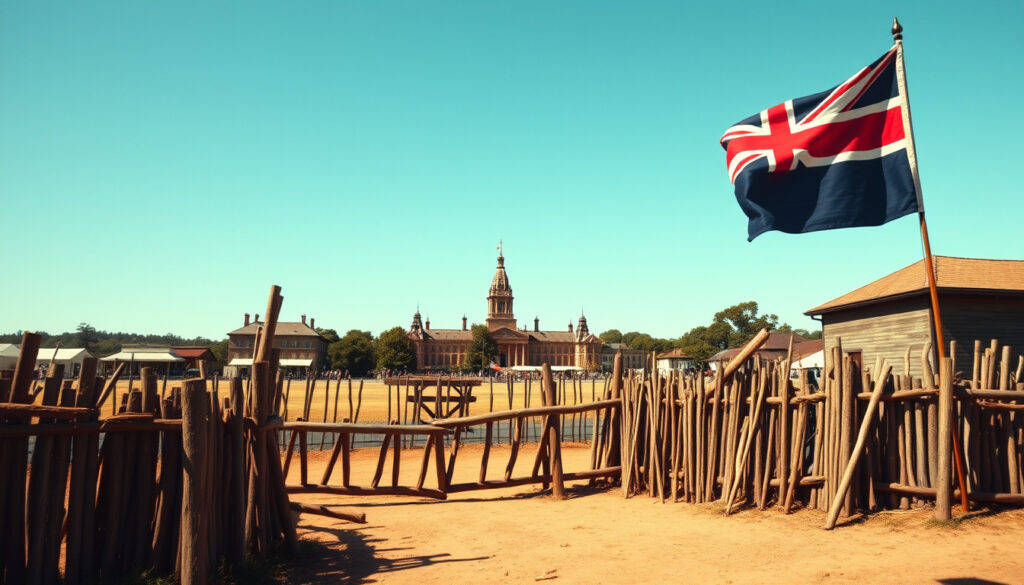
Peter Lalor: Eureka Stockade Rebel Turned Politician
There aren’t many figures in Australian history who lived two such different lives: Peter Lalor did exactly that, leading the Eureka Stockade uprising in 1854, losing an arm, and then shaping Victoria’s political landscape for decades. His story is a window into how rebellion can evolve into governance, and how one injury changed the course of a nation’s memory.
Born: 5 February 1827 ·
Died: 9 February 1889 ·
Known for: Leading the Eureka Stockade ·
Lost his arm: 3 December 1854
Quick snapshot
- Irish-Australian rebel and politician (Encyclopaedia Britannica)
- Born 1827 in Ireland (Encyclopaedia Britannica)
- Emigrated to Australia in 1852 (Australian Museum)
- Led the miners’ rebellion in 1854 (Encyclopaedia Britannica)
- Lost his left arm in the battle (Australian Museum)
- Became a symbol of resistance (IrishCentral)
- Elected to the Victorian Legislative Council in 1855 (Australian Museum)
- Served as Speaker of the Legislative Assembly (Australian Museum)
- Advocate for miners’ rights (Labour Australia, ANU)
- Remembered as a defender of democracy (Encyclopaedia Britannica)
- Eureka Stockade is a key event in Australian history (Encyclopaedia Britannica)
- Statues and memorials exist in Ballarat and Melbourne (People Australia, ANU)
Seven key facts, one pattern: from the moment of his birth until his death, Peter Lalor’s identity was rooted in Ireland, forged in rebellion, and solidified in parliament. The table below captures the official biographical record.
| Label | Value |
|---|---|
| Full name | Peter Fintan Lalor |
| Born | 5 February 1827, Tenakill, County Laois, Ireland |
| Died | 9 February 1889, Richmond, Victoria, Australia |
| Known for | Leader of the Eureka Stockade |
| Spouse | Anne (or Alicia) – records vary |
| Children | Two sons, one daughter |
| Political party | Independent, later supported liberal reforms |
Why was Peter Lalor significant to Australia?
Eureka Stockade leadership
- On 29 November 1854, a gathering of about 12,000 men at Ballarat elected Lalor to lead the rebellion (IrishCentral).
- The stockade itself housed about 130 men, the majority of whom were Irish (IrishCentral).
- The rebellion is described by Encyclopaedia Britannica as the most-celebrated rebellion in Australian history.
The trade-off: Lalor transformed a protest over mining licenses into a brief but violent showdown with colonial authorities. The stand lasted barely 20 minutes, but its political consequences stretched decades.
Political career
- After the Eureka Stockade, Lalor was elected to the Victorian Legislative Council in 1855 (Australian Museum).
- He later served as Speaker of the Victorian Legislative Assembly (Australian Museum).
- He advocated for miners’ rights and liberal reforms (Labour Australia, ANU).
The same man who swore an oath under the Southern Cross to fight the government spent the rest of his career inside that government’s chamber. Lalor’s political transformation shows how rebellion can become reform when the system bends.
Legacy
- Lalor is remembered as a defender of democratic rights (Encyclopaedia Britannica).
- The Eureka Flag remains a potent symbol of protest and democracy in Australia (IrishCentral).
- Statues and memorials stand in Ballarat and Melbourne (People Australia, ANU).
What this means: For modern Australians, Lalor’s trajectory from rebel leader to Speaker of the House embodies a national narrative: that protest and participation are not opposites, but stages in democracy’s growth.
How did Peter Lalor lose his arm?
The injury at Eureka
- Lalor was shot in the left arm during the attack on the Eureka Stockade on 3 December 1854 (Australian Museum).
- According to the Dictionary of National Biography, he received a ball near the shoulder.
- The police and military attacked the stockade at about 3 a.m. on Sunday, 3 December (Dictionary of National Biography).
Amputation details
- His left arm was amputated after the injury (Australian Museum).
- He later used a prosthetic arm (Dictionary of National Biography).
Lalor’s amputation made him visually distinct in parliament, a one-armed former rebel presiding over lawmaking. The injury became a physical marker of the transformation from insurrection to institution.
The loss of his arm did not end his public life — it redefined it, cementing his image as both rebel and statesman.
What is the place of death of Peter Lalor?
Place of death
- Lalor died on 9 February 1889 in Richmond, Melbourne, Victoria, Australia (People Australia, ANU).
- He is buried in Melbourne General Cemetery (Encyclopaedia Britannica).
Cause of death
- The exact cause is unclear, though some reports suggest diabetes (Encyclopaedia Britannica).
The circumstances of his death remain partly uncertain, but his final years were spent in the city he helped shape politically.
When did Peter Lalor arrive in Australia?
Migration from Ireland
- Lalor arrived in Australia in 1852, during the gold rush (Australian Museum).
- He sailed from Ireland to seek his fortune in the Victorian goldfields (Encyclopaedia Britannica).
Settlement in Australia
- He initially worked as a miner and later became involved in the political agitation over mining licenses (Labour Australia, ANU).
His arrival in 1852 placed him at the heart of the gold rush, setting the stage for his role in the Eureka rebellion.
What was Peter Lalor’s early life and family like?
Birth and family
- Lalor was born on 5 February 1827 in Tinakill, Queen’s County (now County Laois), Ireland (Encyclopaedia Britannica).
- He was the son of a landowner, Patrick Lalor, who later served as a Member of Parliament in the UK (Encyclopaedia Britannica).
- He grew up in the parish of Raheen, Queen’s County (Labour Australia, ANU).
Education
- He was educated at Carlow College, a Catholic seminary in Ireland (Encyclopaedia Britannica).
The implication: Lalor came from a politically active family in Ireland, where his father was a Member of Parliament. This background likely shaped his understanding of both protest and legislation, preparing him for a life straddling both.
For anyone studying Australian history, Lalor’s early life reveals that his leadership at Eureka was not a spontaneous act of desperation, but the calculated move of a man familiar with politics from childhood.
His upbringing in a political household gave him the tools to later navigate both rebellion and governance.
Confirmed facts vs. what’s unclear
Confirmed facts
- Birth date and place: 5 February 1827, County Laois, Ireland (Encyclopaedia Britannica)
- Death date and place: 9 February 1889, Richmond, Victoria (People Australia, ANU)
- Arm loss at Eureka Stockade on 3 December 1854 (Australian Museum)
- Election to the Victorian Legislative Council in 1855 (Australian Museum)
What’s unclear
- Exact cause of death (diabetes vs. other) (Encyclopaedia Britannica)
- Precise details of his early life in Ireland (Labour Australia, ANU)
- Spouse’s exact name (Anne or Alicia) (People Australia, ANU)
- Whether the Eureka Stockade is the most-celebrated rebellion in Australian history (interpretation varies)
Timeline of Peter Lalor’s life
- 5 February 1827: Born in Tenakill, County Laois, Ireland (Encyclopaedia Britannica)
- 1852: Arrived in Australia during the gold rush (Australian Museum)
- 29 November 1854: Elected leader of the rebellion at Ballarat (IrishCentral)
- 3 December 1854: Led the Eureka Stockade rebellion; lost left arm (Australian Museum)
- 1855: Elected to the Victorian Legislative Council (Australian Museum)
- 1856–1889: Served in various political roles, including Speaker of the Legislative Assembly (Australian Museum)
- 9 February 1889: Died in Richmond, Victoria (People Australia, ANU)
This timeline traces the arc from Irish birth to Australian political legacy, with the rebellion as the pivotal event.
Quotes from history
“We swear by the Southern Cross to stand truly by each other and fight to defend our rights and liberties.”
— Peter Lalor, Eureka Stockade oath, 1854 (IrishCentral)
“Lalor was shot in the left arm, which later had to be amputated.”
— Historical account, Australian Museum
Summary
Peter Lalor’s life is a case study in how a single wound can shape a political career. His left arm was lost at dawn on 3 December 1854, but that injury did not end his public life — it redefined it. For Australians examining their democratic roots, the lesson is clear: the same man who stood behind a wooden stockade with a pistol later stood in parliament with a gavel. Rebellion and governance are not opposites; they are often the same man in different decades. For historians and students of Australian democracy, the choice is not between honoring the rebel or the politician — it is understanding how one became the other.
egold.net.au, simple.wikipedia.org, en.wikipedia.org, eurekaaustralia.org.au, de.wikipedia.org, en.wikisource.org, irishstewpodcast.com
After losing his arm at the Eureka Stockade, Peter Lalor’s political journey Peter Lalors political journey led him to become Speaker of the Victorian Legislative Assembly.
Frequently asked questions
What was the Eureka Stockade?
The Eureka Stockade was a rebellion by gold miners in Ballarat, Victoria, in 1854, protesting against expensive mining licenses and lack of political representation. It is considered a key event in Australian history (Encyclopaedia Britannica).
Who was the leader of the Eureka Stockade?
Peter Lalor was the elected leader of the miners during the Eureka Stockade rebellion (Encyclopaedia Britannica).
Where did the Eureka Stockade take place?
The Eureka Stockade took place in Ballarat, Victoria, Australia, at the Eureka Lead goldfield (Encyclopaedia Britannica).
What happened to Peter Lalor after the Eureka Stockade?
After the rebellion, Lalor was elected to the Victorian Legislative Council in 1855 and had a long political career, eventually serving as Speaker of the Legislative Assembly (Australian Museum).
Did Peter Lalor have children?
Yes, Peter Lalor had two sons and one daughter (People Australia, ANU).
How is Peter Lalor remembered today?
Peter Lalor is remembered as a rebel leader and politician who played a key role in Australia’s democratic development. Statues and memorials exist in Ballarat and Melbourne (Encyclopaedia Britannica).
What is the Eureka Flag?
The Eureka Flag is a blue flag with a white Southern Cross that was flown at the Eureka Stockade. It has become a symbol of democracy and protest in Australia (IrishCentral).
Related reading
- Martin Luther King Jr.: Life, Legacy, and Key Questions Answered
- Marie Antoinette: Biography, Execution, Children, and Last Words
These related articles explore other figures who led movements and faced personal transformation.
More related posts
 Luke Hemsworth: The Forgotten Hemsworth Brother
 Flea RHCP: His Nickname, Friendship with Kiedis & Near Quit
 Work Safety in Ireland: Rules, Hazards, and Legal Requirements
 Capital Gains Tax in Ireland: Rates, Exemptions & Guide
 Anna Kendrick: Relationship, Baby & Net Worth (2025)
 Sadie Sink Spider-Man: Role, Age & Relationship Rumors
 Chris Hemsworth: Wives, Height, Net Worth, Father & Health
 Felicia Djamirze: A Miss Australia’s Fall and Redemption
