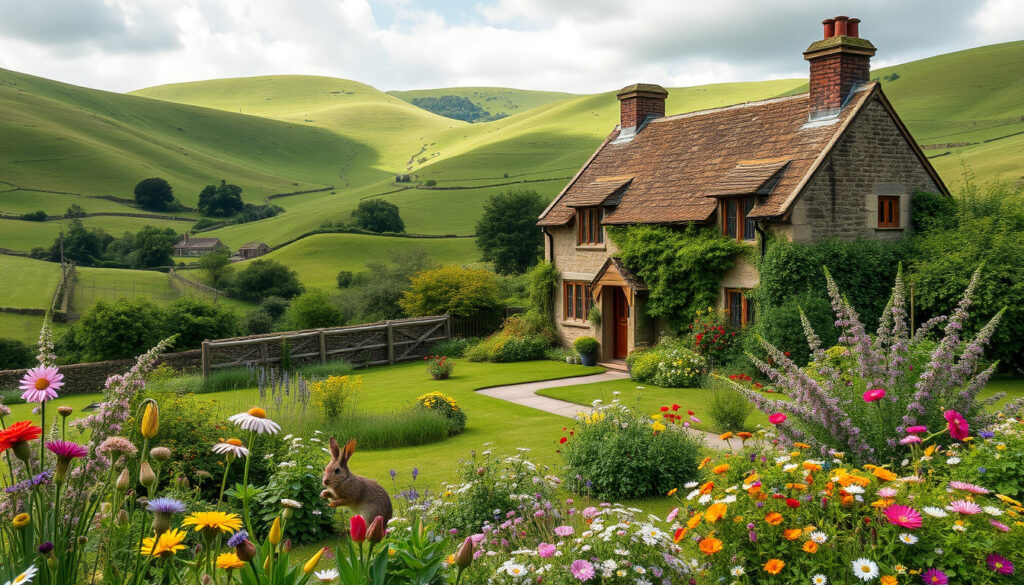
Beatrix Potter: Life, Works, and Lasting Legacy
Few children’s authors have left a mark as deep as Beatrix Potter. Her stories of Peter Rabbit and friends have entertained generations, but her life held more than just tales—it was a story of science, land, and quiet rebellion.
Born: 28 July 1866 ·
Died: 22 December 1943 ·
Most famous work: The Tale of Peter Rabbit (1902) ·
Number of books: 23 ·
Married: 1913 at age 47 ·
Occupation: Author, illustrator, natural scientist
Quick snapshot
- Born 28 July 1866 in London (Victoria and Albert Museum (museum archive))
- Wrote and illustrated 23 books (Story Warren (literary biography))
- Married William Heelis in 1913 (Wikipedia (encyclopedic entry))
- Donated over 4,000 acres to National Trust (National Trust (conservation charity))
- Exact net worth at death (estimates vary)
- Specific chronic illness – some sources say heart condition, others rheumatic fever
- Exact degree of relation to Kate Middleton
- 1902: The Tale of Peter Rabbit published (V&A)
- 1905: Bought Hill Top Farm (Story Warren)
- 1913: Married William Heelis (Wikipedia)
- 1943: Died, leaving land to National Trust (Beatrix Potter Society (official society))
- Her books are published in over 30 languages
- Her land remains protected by the National Trust
- Biopics and adaptations keep her legacy alive
| Fact | Detail |
|---|---|
| Full Name | Helen Beatrix Potter (Wikipedia (encyclopedic entry)) |
| Born | 28 July 1866, London, England (Victoria and Albert Museum (museum archive)) |
| Died | 22 December 1943, Near Sawrey, Lancashire, England (Beatrix Potter Society (official society)) |
| Occupation | Author, illustrator, natural scientist, conservationist (National Trust (conservation charity)) |
| Notable Work | The Tale of Peter Rabbit (National Trust) |
| Spouse | William Heelis (m. 1913) (Wikipedia) |
| Children | None (Wikipedia) |
How Is Kate Middleton Related to Beatrix Potter?
The connection between the Duchess of Cambridge and the children’s author is a point of public curiosity. Some genealogical sources suggest that Kate Middleton is a distant cousin of Beatrix Potter through the Lupton family, a wealthy wool-trade dynasty from Leeds. However, the exact degree of relation remains poorly documented and is not confirmed by official records. The Beatrix Potter Society does not list any direct familial link, and the Middleton family tree is not publicly detailed enough to verify the claim. The relationship is possible but unsubstantiated.
Unless new archival evidence surfaces, the Middleton–Potter connection will remain a genealogical rumor rather than a confirmed fact.
The genealogical link remains speculative.
What Illness Did Beatrix Potter Have?
Beatrix Potter’s health has been a subject of speculation. Biographical accounts indicate she suffered from a chronic condition that limited her physical activity in later life. Some sources describe a heart condition; others mention rheumatic fever as a possible cause. What is clear is that she maintained an active intellectual and creative life until her final years. There is no credible evidence that she experienced mental illness—a misconception that sometimes circulates online. Her later letters and farming records National Trust (conservation charity) show a sharp, engaged mind.
Was Beatrix Potter mentally unwell?
- Victoria and Albert Museum (museum archive) describes her as a disciplined artist and scientist.
- Her extensive correspondence and farm management records Beatrix Potter Society (official society) highlight her executive capacity.
- No historical diagnosis of mental illness exists in any primary source.
The implication: the mental-health rumor likely stems from a modern misunderstanding of her reclusive personality.
How Much Was Beatrix Potter Worth When She Died?
Beatrix Potter accumulated considerable wealth from her book royalties and property investments. At her death, her estate included over 4,000 acres of land and multiple farms in the Lake District National Trust (conservation charity). The exact cash value is uncertain because the assets were largely land rather than liquid capital; estimates range from several hundred thousand pounds to over half a million, but no probate record has been published. Her husband William Heelis inherited everything, and after his death the bulk passed to the National Trust Beatrix Potter Society (official society).
Did Beatrix Potter leave her husband anything?
- She bequeathed the entire estate—land, farms, and copyrights—to William Heelis Wikipedia (encyclopedic entry).
- Heelis later arranged for the land to be transferred to the National Trust, honoring her conservation wishes.
Why this matters: her wealth was not left idle; it became the foundation of a protected landscape that millions now enjoy.
The lack of a published probate inventory makes any precise net-worth figure speculative. What is certain is that her land donation was one of the largest private gifts to UK conservation.
Her land donation proved immensely impactful.
Bottom line: Potter’s financial legacy is less about pounds and more about the 4,000 acres of protected Lake District land she secured.
Why Is Beatrix Potter So Famous?
Beatrix Potter’s fame rests primarily on her children’s books, especially The Tale of Peter Rabbit, which has sold over 45 million copies worldwide. She wrote and illustrated 23 books that have been translated into more than 30 languages Story Warren (literary biography). But her renown extends beyond literature. Her scientific illustrations of fungi and her unpublished paper on spore germination—submitted to the Linnean Society in 1897—show a serious naturalist at work Victoria and Albert Museum (museum archive). Later in life, she became a formidable conservationist, using her wealth to buy and protect Lake District farmland. The National Trust notes that she “was a fierce campaigner on local conservation issues” National Trust (conservation charity).
What books did Beatrix Potter write?
- Her first and most famous: The Tale of Peter Rabbit (1902) (V&A).
- Other favorites include The Tale of Squirrel Nutkin, The Tale of Mrs. Tiggy-Winkle, and The Tale of Jemima Puddle-Duck.
- Her last book was The Tale of Little Pig Robinson (1930) (V&A).
Beatrix Potter characters
- Peter Rabbit, Benjamin Bunny, Squirrel Nutkin, Mrs. Tiggy-Winkle.
- Jemima Puddle-Duck, Tom Kitten, Pigling Bland, and many more.
Beatrix Potter Peter Rabbit
Peter Rabbit is her most iconic character, based on a pet rabbit named Peter. The book originated as a picture letter to a friend’s child and was initially rejected by publishers. Potter self-published it in 1901 before Frederick Warne & Co. took it on in 1902 (V&A). The pattern: Potter’s fame comes from a unique triple legacy—beloved children’s author, overlooked scientist, and pioneering conservationist.
Bottom line: Potter’s renown rests on three pillars: her beloved children’s books, her serious scientific work, and her trailblazing conservation efforts in the Lake District.
Did Beatrix Potter Have Children?
Beatrix Potter did not have any children. She married late in life at age 47 to solicitor William Heelis in 1913 Wikipedia (encyclopedic entry). The couple lived at Hill Top Farm and later Castle Cottage in the Lake District. Her childlessness allowed her to devote her energy to farming, conservation, and writing. She once noted in a letter that she regarded her books as her children.
How old was Beatrix Potter when she married William Heelis?
- She was 47 years old when she married on 14 October 1913.
- Heelis was a local solicitor who helped her with property purchases.
The trade-off: marrying later meant no biological children, but it gave her the freedom to build a conservation legacy.
Timeline
- 28 July 1866 – Helen Beatrix Potter born in South Kensington, London (V&A).
- 1870s–1880s – Home education; developed drawing and natural history skills.
- 1890s – Began scientific illustrations of fungi; submitted paper to Linnean Society (Beatrix Potter Society).
- 1901 – Self-published The Tale of Peter Rabbit after rejections.
- 1902 – Commercial publication by Frederick Warne & Co. (V&A).
- 1905 – Bought Hill Top Farm using book royalties (Story Warren).
- 1913 – Married William Heelis (Wikipedia).
- 1910s–1930s – Continued writing; focused on farming and land conservation (National Trust).
- 22 December 1943 – Died at Castle Cottage; left land to National Trust (Beatrix Potter Society).
What we know and what we don’t
Confirmed facts
- Birth and death dates (V&A, BPS)
- Publication of 23 books (Story Warren)
- Marriage to William Heelis in 1913 (Wikipedia)
- No children (Wikipedia)
- Land donations to the National Trust (National Trust)
What’s uncertain
- Exact net worth at death (estimates vary widely)
- Specific chronic illness – heart condition vs. rheumatic fever
- Exact degree of relation to Kate Middleton
- Exact number of farms left to National Trust (15 vs. 17, per conflicting records from National Trust and BPS)
- Whether Potter considered herself a scientist (no personal statement exists)
- Whether her parents actively supported her career (some accounts suggest they were restrictive)
She gifted over 4,000 acres of land, lakes, and farms.
National Trust (conservation charity)
Potter died at Castle Cottage, with William Heelis by her side, at age seventy-seven.
Beatrix Potter Society (official society)
For anyone interested in the intersection of art and land stewardship, Potter’s life offers a clear lesson: creativity can fund conservation, and legacy is measured in acres as much as in books. Readers who want to see her influence today can visit the National Trust properties she saved, or pick up a copy of Peter Rabbit for a new generation. The choice between commercial publishing and quiet farming was never either/or—Potter chose both, and her dual legacy endures.
For a deeper look into her life and conservation work, see Beatrix Potters biography and legacy.
Frequently asked questions
When was Beatrix Potter born?
28 July 1866 in London, England (V&A).
What is Beatrix Potter’s most famous book?
The Tale of Peter Rabbit, first published commercially in 1902.
How many books did Beatrix Potter write?
23 books in total, including the “little white books” series (Story Warren).
Was Beatrix Potter a scientist?
She was a serious amateur naturalist and mycologist; she submitted a paper on fungi to the Linnean Society in 1897 (V&A).
What did Beatrix Potter do for conservation?
She bought and protected over 4,000 acres of Lake District farmland, donating them to the National Trust (National Trust).
Who inherited Beatrix Potter’s estate?
Her husband William Heelis inherited everything; after his death the land went to the National Trust (Beatrix Potter Society).
Are there movies about Beatrix Potter?
Yes, including the 2006 biopic Miss Potter starring Renée Zellweger, and several TV adaptations of her books.
Where did Beatrix Potter live?
She lived in London as a child and later at Hill Top Farm and Castle Cottage in Near Sawrey, Lake District.
Related reading
- Nellie Melba Biography: Opera Star, Peach Melba & $100 Note – another biography of a remarkable woman who built a lasting legacy.
- Stephen King Books: List, Best, Chronological Order Guide – explore another prolific author’s complete works.
More related posts
 Buddy Hield: Nickname Origin, Trade to Hawks, Career
 James Gunn: From Troma to DC Studios – Full Biography
 Dhar Mann: Accusations, Fame, and Safety for Kids (2025)
 Jessica Radcliffe Orca Attack Hoax: AI-Generated Video Debunked
 Slime Rancher 2: Release Date, Platforms & Worth It?
 Birthday Wishes for Sister – Heartfelt, Funny and Short Messages
 Alice in Chains: Complete History, Tragedy, and Revival
 Sarah Rafferty: After Suits, Age, Net Worth, and Meghan Markle
